Buying a Maine Coon: How to Find Ethical Breeders & Avoid Scams#
When I decided it was finally time to bring a Maine Coon into my life, I thought it would be like adopting any other cat. I sat down at my laptop, typed “Maine Coon kittens for sale New England” into Google, and waited for the magic to happen.
Instead, I stepped into a minefield.
I found websites that looked like Amazon storefronts for live animals. I found sketchy Craigslist ads asking for Bitcoin. I found “breeders” who wouldn’t let me see where the kittens were raised. It took me six months of research, dead ends, and a few near-miss scams before I finally found the breeder who gave me Atticus.
The Maine Coon is the native American giant, originating right here in New England. Their history as rugged barn cats turned internet celebrities has made them one of the most sought-after breeds in the United States. Unfortunately, this popularity has created a “Wild West” market.
If you are looking for your own gentle giant, you need a guide through this chaos. This is exactly how I navigated the process, what red flags nearly caught me, and how to tell an ethical preservationist from a backyard breeder.
The Landscape: Where Do You Actually Buy One?#
When you start looking, you are essentially pulling from three different “pools” of cats. Understanding the difference is critical because it dictates the health, price, and lifespan of your future companion.
1. The Ethical Preservation Breeder (The Gold Standard)#
This is where I eventually found my cats, and it is the only route I fully recommend for a healthy kitten.
- The Credentials: These breeders are registered with major bodies like TICA (The International Cat Association) or CFA (Cat Fanciers’ Association).
- The Vibe: They don’t have “inventory.” They have waitlists. They breed to improve the species, focusing on health and temperament above all else.
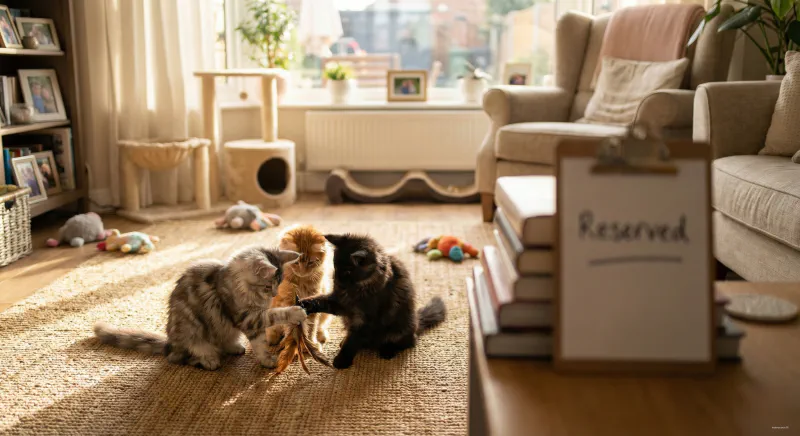
- The Environment: Kittens are raised “underfoot.” This is breeder-speak for “in the living room.” My breeder sent me videos of Atticus being vacuumed around (literally) to prove he was desensitized to household noise.
- The Health Testing: They don’t just “check” the parents. They pay for expensive DNA panels and annual heart scans (Echocardiograms) by board-certified cardiologists.
2. The Backyard Breeder (BYB)#
This is the danger zone. These people often own purebred cats, but they skip the expensive/hard parts of breeding.
- The Pitch: “Purebred kittens, parents on site, ready now! No papers.”
- The Risk: Without papers, you have no proof of lineage. But more importantly, without health testing, you are playing Russian Roulette with genetics. A Maine Coon from a BYB is significantly cheaper upfront ($600–$900) but has a high risk of developing Hip Dysplasia or severe heart disease later in life.
3. The Rescue / Shelter#
I love rescue. I volunteer with rescue. But finding a purebred Maine Coon in a general shelter is like finding a needle in a haystack.
- The “Mix” Reality: Most large, fluffy cats in shelters are labeled “Maine Coon Mix” to help them get adopted. In reality, most are Domestic Longhairs (DLH). They are wonderful cats, but they won’t grow to be 25lbs, and they won’t have the specific dog-like personality of the breed.
- Breed-Specific Rescue: There are organizations like “Only Maine Coons Rescue” that focus specifically on the breed. These are competitive but legitimate ways to adopt.
The “New England” Factor#
Living in Upstate New York, I see a lot of listings claiming “Original Maine Lines”.
- American Lines: These cats tend to be slightly more moderate. They look rugged, sturdy, and rectangular—like the barn cats they descended from.
- European Lines: If you see a cat on Instagram that looks like a werewolf—massive chin, ears that touch the ceiling, looking like it could eat a toddler—that is likely a European line (often Russian or German).
- My Take: Neither is “better.” It comes down to aesthetic preference. Atticus is a mix of both, which gives him the heavy boning of the Europeans but the sweet, goofy face of the Americans.
How to Spot a Scam (The “Amelia” Checklist)#
I nearly got scammed early in my search. I found a website with gorgeous photos, reasonable prices ($800), and a “Buy Now” button. I almost clicked it. Here is what stopped me—and what should stop you.
1. The “Buy Now” Button#
Live animals are not shoes. No reputable breeder allows you to add a kitten to a cart and check out. Ethical breeders are protective. They want to interview you. If they don’t ask about your home, your other pets, or your vet, they are either a scammer or a kitten mill.
2. The Discount#
“Black Friday Sale!” “Summer Blowout!” If you see these words, run. Raising these cats correctly costs thousands of dollars in food and vet care. Discounts do not exist in the ethical breeding world.
3. The “Shipping” Gimmick#
Scammers love to say they are in a different state (usually one far away like Ohio or Texas) and offer “discrete shipping” for an extra $200. They will take your money, and then email you asking for more money for a “temperature-controlled crate rental.” The cat never existed.
The Interview: What to Ask the Breeder#
When you finally find a breeder who looks legitimate, don’t be shy. You are hiring them. Here are the questions I asked (and why):
“Do you perform Echocardiograms on all breeding parents?”
- Correct Answer: “Yes, annually.”
- Wrong Answer: “My vet checks their hearts when they get shots.” (A general vet cannot hear early-stage HCM with a stethoscope; they need an ultrasound).
“At what age do kittens go home?”
- Correct Answer: “12 to 14 weeks.”
- Wrong Answer: “8 weeks.” (Maine Coons develop slowly. They need those extra weeks with mom to learn bite inhibition and confidence).
“Do you offer a health contract?”
- Correct Answer: “Yes, usually 1 or 2 years against genetic defects.”
- Wrong Answer: “Sold as is.”
Deep Dive: Understanding the Pedigree#
Once you find a breeder, you need to verify their claims.
- Ethics Check: Read our guide on Ethical Breeders vs. Backyard Breeders to know exactly what paperwork to ask for.
- The “Wild” Myth: If a breeder claims their cats are part bobcat, read our Bobcat Myth Buster.
- Adoption: If the breeder price tag is too high, consider Rescuing a Maine Coon.
Conclusion: Patience is the Hardest Part#
The hardest part of this entire process wasn’t the cost—it was the waiting. Good breeders have waitlists. I waited 5 months for Atticus. It felt like an eternity. But in that time, I was receiving updates, setting up my house, and knowing that my kitten was growing up in a bedroom, being loved, and getting the medical care he needed.
If you find a kitten available today that you can buy with one click, pause. The instant gratification isn’t worth the risk. Take your time, ask the hard questions, and wait for the breeder who cares as much about the cat as you do.
Resources & Further Reading#
- CFA (Cat Fanciers’ Association): Breed Standards & Breeder Referral.
- TICA (The International Cat Association): Maine Coon Breed Introduction.
- Maine Coon Cat Club: Kitten Buying Advice.
- PetMD: Maine Coon Breed Information.
- PawPeds: The Maine Coon Database.