The Dog in a Cat Suit#
If you have ever watched your Maine Coon inspect a doorknob, analyze the mechanism, and then casually open the door to let themselves out, you know that this is not an ordinary cat. Maine Coons are frequently cited as one of the most intelligent feline breeds, possessing a cognitive ability that rivals many dog breeds.
This intelligence manifests differently than it does in breeds like the Siamese, who use their smarts to vocalize needs. The Maine Coon uses its intelligence for mechanical problem solving. They are tactile thinkers. They use their paws to manipulate their environment, turning faucets on, opening cabinets, and fishing toys out of difficult crevices. While this makes them fascinating companions, it also makes them high-maintenance. A smart cat is easily bored, and a bored Maine Coon is a destructive force of nature.
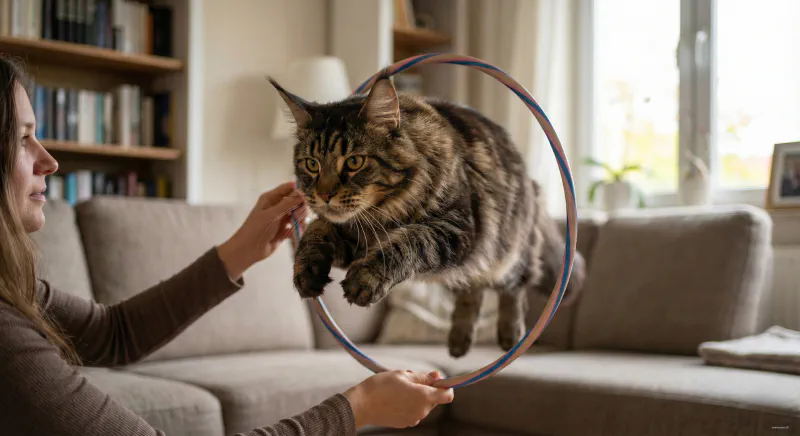
The Science of Feline Cognition#
Cognitive tests on cats have shown that they possess object permanence (knowing an object exists even when hidden) and the ability to follow human pointing gestures. Maine Coons excel in these areas. Their history as working ship cats and barn mousers required them to be independent thinkers. They had to outsmart prey and navigate complex environments without human guidance.
This evolutionary background has created a cat that is less instinct-driven and more analytical. When you try to train a Maine Coon, you aren’t just conditioning a reflex; you are negotiating with a sentient being. They learn by observation. Many owners report their Maine Coons learning to flush toilets or turn off light switches simply by watching their humans do it repeatedly. This “social learning” capability is rare in the animal kingdom and is a hallmark of high intelligence.
Clicker Training: Harnessing the Brain#
Because they are so food-motivated, Maine Coons are the easiest cat breed to clicker train. The principle is identical to dog training: you mark the desired behavior with a “click” sound and immediately follow it with a high-value treat.
The easiest trick to start with is “Sit.” Unlike most cats who will look at you with disdain, a Maine Coon will quickly make the connection that butt on floor equals chicken. Once they grasp the concept of the clicker, you can move to more complex behaviors. “High Five” is particularly natural for them because they are already “paw-first” interactors. By holding a treat slightly above their head, they will instinctively reach out with a paw. Clicking at that exact moment reinforces the behavior. Within a few sessions, you can have a cat that greets guests with a handshake.
The Necessity of “Jobs”#
The downside of this intelligence is that a Maine Coon cannot be treated like a piece of furniture. If you do not provide them with mental stimulation, they will create their own, and you will not like the results. This often takes the form of “destructive engineering”—dismantling your cupboards, unrolling all the toilet paper, or splashing water out of bowls to watch the physics of the puddle.
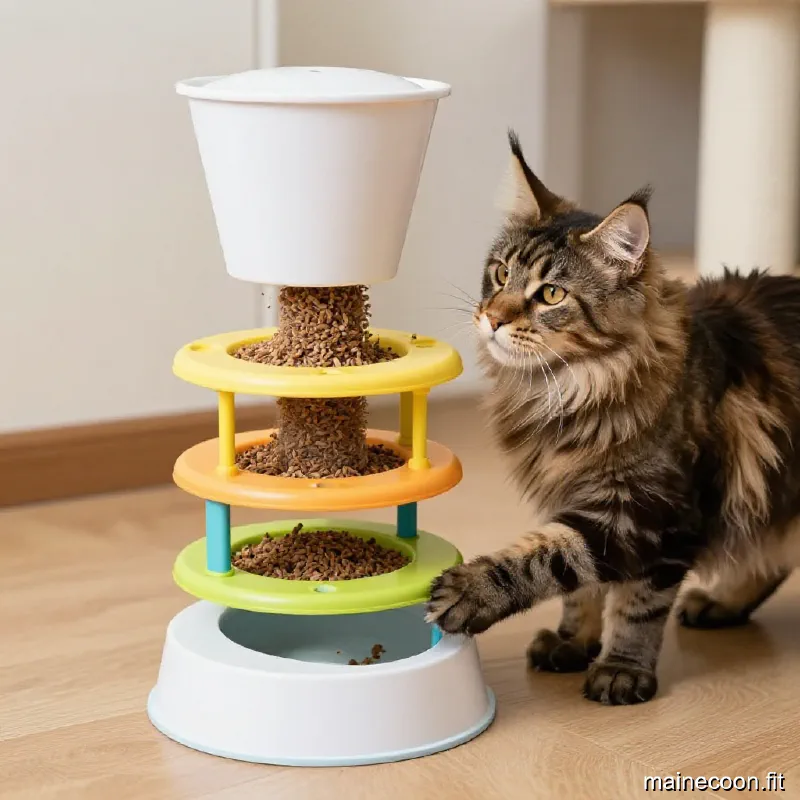
To combat this, you must provide them with a “job.” Food puzzles are an excellent way to burn mental energy. Instead of dumping kibble in a bowl, use a puzzle feeder that requires them to slide, lift, or paw at mechanisms to get their meal. As we discuss in our Toys Guide, engaging their hunting brain is essential for their mental health. Ten minutes of puzzle work can be as exhausting for them as thirty minutes of running.
Fetch and Leash Walking#
Perhaps the most famous “dog-like” trait of the Maine Coon is their natural propensity to play fetch. This is rarely taught; it is an instinct. They will bring you a toy, drop it at your feet, and wait for the throw. If you ignore them, they will often pick it up and drop it in your lap.
This willingness to work with humans extends to Leash Training. Because they are confident and curious, they take to a harness faster than other breeds. Walking a Maine Coon isn’t just about exercise; it’s about sensory enrichment. The smells and sights of the outdoors provide a massive “data download” for their brains, leaving them satisfied and tired when they return home.
Summary#
Living with a Maine Coon is like living with a toddler who can jump six feet in the air. Their intelligence requires respect and engagement. If you are willing to put in the time to train them and challenge their minds, you will find they are capable of learning almost anything—including how to wrap you around their little finger (or claw).
Trixie Pet Products Activity Board
This 5-in-1 activity board is the gold standard for feline enrichment. It forces your Maine Coon to use different problem-solving strategies to get treats.
Check Price on Amazon →References#
- The Trainable Cat - John Bradshaw and Sarah Ellis.
- Feline Cognition and Intelligence - Animal Cognition Journal.