The Jaws of a Giant#
There is a specific period in every Maine Coon owner’s life, usually when the kitten is between four and nine months old, that is affectionately known as the “Land Shark” phase. Your sweet, fluffy kitten suddenly transforms into a biting machine. They ambush your ankles as you walk down the hall, they gnaw on your fingers while you are typing, and they seem to view your arm as a chew toy.
While this behavior is frustrating and often painful, it is important to understand that it is rarely an act of malice. Maine Coons are a mouth-oriented breed. Much like a Golden Retriever, they explore the world through oral fixation. Combined with their slow maturation rate, this means you are dealing with a large, powerful animal that retains kitten-like biting behaviors far longer than a standard cat. Understanding the biological drive behind the bite is the first step to saving your skin.
The Biological Drive: Teething#
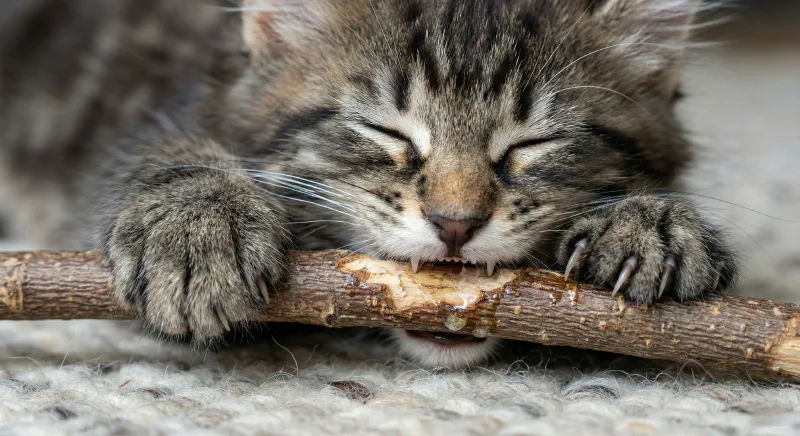
The most common culprit for excessive biting is physical discomfort. Maine Coons go through a massive teething window where their adult teeth push out the baby teeth. Because they are a large breed, their jaw development is significant. The pressure in their gums can be intense, and chewing provides the only relief.
If you look inside your kitten’s mouth during this phase, you might see red, swollen gums or even double fangs where the adult tooth is erupting before the baby tooth has fallen out. This is not behavioral aggression; it is a medical need. As we discuss in our Dental Health Guide, providing appropriate outlets for this chewing is mandatory. If you punish a kitten for chewing during teething, you are punishing them for being in pain. Instead, you must provide resistance-based toys—dense rubber or silvervine sticks—that allow them to bear down and massage their aching gums.
The “Hands Are Not Toys” Rule#
The single biggest mistake new Maine Coon owners make is roughhousing with their hands. It is tempting to tickle a kitten’s belly or let them wrestle your hand under the duvet. It seems cute when they are three pounds. It is dangerous when they are twenty pounds.
When you use your hand as a toy, you are teaching the cat that human skin is a target. You are overriding their natural inhibition against biting flesh. This creates a confused cat who bites you in play, only to be yelled at. To stop the biting, you must enact a strict “Hands Off” policy. Hands are for petting and feeding, never for wrestling. If your kitten tries to initiate a wrestling match with your hand, you must immediately go limp. Prey that stops moving is boring. Once they release you, immediately offer a kicker toy or a wand toy to redirect that predatory energy onto an appropriate target.
Teaching Bite Inhibition: The “Ouch” Method#
You will never stop a cat from using its mouth entirely, but you can teach them how to use it. This is called bite inhibition. It is the lesson they would have learned from their littermates: if you bite too hard, the game stops.
When your Maine Coon bites you too hard, do not pull away, as this triggers their chase instinct. Instead, make a sharp, high-pitched “Ouch!” or squeal sound. This mimics the cry of a wounded littermate. Then, immediately ignore the cat for ten to fifteen seconds. If you do this consistently, the cat learns a cause-and-effect relationship: hard biting results in the immediate loss of attention. Over time, they will learn to have a “soft mouth,” gently mouthing you without applying pressure.
Redirection vs. Punishment#
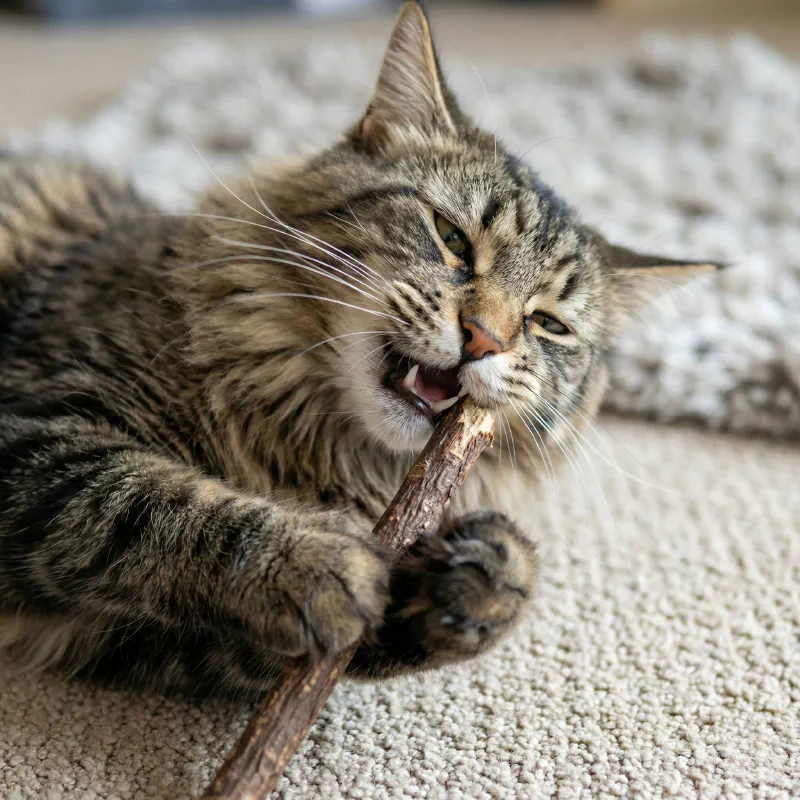
Punishing a Maine Coon for biting is often counterproductive. Swatting or yelling usually ramps up their energy level, turning the “fight” into a high-stakes game. They interpret your physical correction as rough play, and they will bite back harder.
The superior strategy is redirection. You must identify the mood before the bite happens. Is the cat’s tail twitching? Are their pupils dilated? This is the “hunting” mode. Before they launch at your ankle, throw a toy in the opposite direction. You are satisfying the predatory sequence (hunt, catch, kill) without becoming the victim. As detailed in our Toys Guide, having a supply of “prey replacement” toys on hand is essential for surviving the adolescent phase.
Summary#
The Land Shark phase is temporary, but the habits formed during it can last a lifetime. By respecting their need to chew, refusing to use hands as toys, and consistently teaching bite inhibition, you can shape your Maine Coon into a gentle giant who knows exactly where the line is drawn.
Silvervine Chewing Sticks
A safe, natural alternative to plastic or string. Promotes dental health and satisfies the urge to gnaw during the teething phase.
Check Price on Amazon →References#
- Feline Behavior: A Guide for Veterinarians - Bonnie V. Beaver.
- Cat Sense: How the New Feline Science Can Make You a Better Friend to Your Pet - John Bradshaw.