Separation Anxiety: The Dark Side of the Velcro Cat#
We love Maine Coons because they are “dog-like.” They greet us at the door. They follow us from room to room. They want to be involved in every aspect of our lives.
But there is a flip side to this intense bonding.
Unlike the stereotypical aloof cat that is happy to be left alone for 12 hours, the Maine Coon needs companionship. When that companionship is removed, they can suffer from profound Separation Anxiety.
I learned this the hard way with Atticus. When I started working from home, he was thrilled. But when I had to go back to the office for a week, my house turned into a disaster zone.
He wasn’t being “naughty.” He was having a panic attack.
If you work long hours or travel frequently, you need to understand the emotional needs of this breed before you bring one home.
The Signs of a Panic Attack#
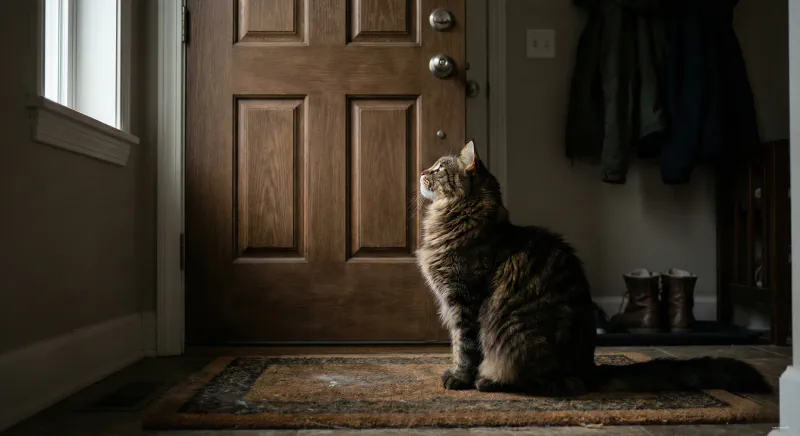
Separation anxiety in cats doesn’t always look like sadness. It often looks like destruction or illness.
1. Inappropriate Urination This is the most common symptom. You come home to find pee on your bed or on the pile of laundry you left out. The cat is mixing their scent with yours. It is a desperate attempt to feel close to you and self-soothe. They aren’t spite-peeing; they are building a scent nest.
2. Destructive Scratching If your door frames are shredded or the carpet by the front door is torn up, your cat has been trying to escape to find you. This is frantic energy released on the nearest vertical surface.
3. The “Vocal” Protest Neighbors might complain that your cat howls or cries while you are gone. This mournful yowl is a distress signal.
4. The “Welcome Home” Vomit Some cats work themselves into such a state of anxiety that they vomit bile or foam. Alternatively, they might eat too fast when you finally return (stress eating) and then throw up.
Why Maine Coons Are Susceptible#
It comes down to their social intelligence. Maine Coons are not solitary hunters. In their farm cat origins, they lived in colonies. They are wired for social interaction.
When you adopt a Maine Coon, you become their colony. If you leave, the colony is broken.
They do not have the same concept of “time” as humans, but they know routine. A disruption in routine—like you leaving at an odd time or staying away longer than usual—signals danger to them.
Solutions: How to Soothe the Savage Beast#
You cannot quit your job to stay home with your cat (tempting as it may be). You have to build coping mechanisms.
1. The “Buddy System” This is the single most effective cure. Get a second cat. A lonely Maine Coon is a sad Maine Coon. Having another heartbeat in the house—even if they just sleep in the same room—drastically reduces anxiety. It doesn’t have to be another Maine Coon; a shelter cat works perfectly.
2. Environmental Enrichment Boredom amplifies anxiety. If they have nothing to do but wait for you, they will obsess over your absence.
- Bird Feeders: Put a feeder outside their window. “Cat TV” keeps them occupied for hours.
- Puzzle Toys: Hide dry food in puzzles. Make them work for their lunch while you are gone.
3. The “No Drama” Departure Don’t make a scene when you leave. Don’t hug them and say, “Mommy misses you, be a good boy!” in a sad voice. This validates their anxiety. Instead, leave calmly. Give them a high-value treat (like a Churu) right before you walk out. Teach them that your departure = tasty snack.
4. Feliway Diffusers These plug-ins release a synthetic pheromone that mimics the “happy cat” scent moms release for kittens. It creates a subconscious chemical signal of safety in the home.
Conclusion#
If you want a cat you can leave alone for the weekend with a pile of food, do not get a Maine Coon. Get a reptile.
These cats pay for their affection with dependency. They need you. If you commit to this breed, you commit to being their emotional anchor. Whether that means getting them a sibling or hiring a pet sitter for your long workdays, you owe it to them to manage their loneliness.
Resources & Further Reading#
- IAABC: Cat Behavior Consulting Guidelines.
- Ohio State University: Environmental Enrichment for Indoor Cats.
- Jackson Galaxy: Separation Anxiety in Cats.