Hormones & Hygiene: Sexual Maturity, Stud Tail, and the Spay/Neuter Debate#
Alongside the behavioral chaos of the teenage phase comes a biological storm: Puberty.
Maine Coons mature slowly physically, but their hormones can kick in surprisingly early. For owners, this often manifests in two very unpleasant ways: a greasy, matted patch on the tail and loud, hormonally driven behavior.
There is also a massive debate in the Maine Coon community about when to fix (spay/neuter) your cat. Do you do it early to prevent bad habits? Or do you wait to ensure they grow to their maximum size?
Let’s look at the science, the hygiene, and the hormones.
The “Stud Tail” (Supracaudal Gland Hyperplasia)#
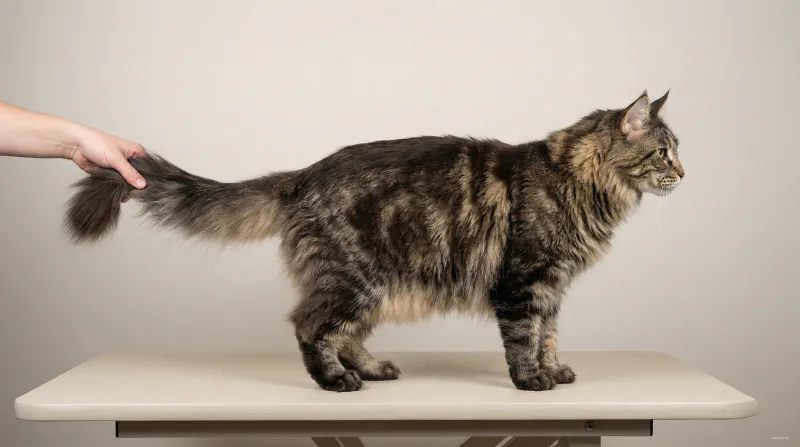
You might be petting your teenager’s magnificent tail and suddenly feel a gross, waxy patch near the base. It feels greasy, smells musky, and the fur might be matted or thinning.
This is Stud Tail.
Just like human teenagers get acne, teenage cats get overactive oil glands. There is a gland at the base of the tail (the supracaudal gland) that excretes sebum. In un-neutered males (and some females/neutered males), testosterone sends this gland into overdrive.
Why is it a problem?
- Matting: The grease acts like glue. It clumps the hair, which pulls on the skin.
- Infection: If clogged, the gland can become infected (folliculitis), causing red bumps and pain.
- Aesthetics: It looks terrible on a fluffy tail.
The Fix: You cannot wash this out with regular cat shampoo. Water just rolls off the grease.
- Degreaser: You need a groomer’s degreaser (like Groomer’s Goop or pure cornstarch). Apply it to the dry tail. Rub it in well to break down the oil.
- Rinse & Repeat: Rinse and then wash with a Dawn dish soap (safe for grease) or a salicylic acid pet shampoo.
- Frequency: You may need to do this weekly during their teenage phase.
Signs of Sexual Maturity#
Maine Coons can reach sexual maturity as early as 5-6 months, though many are later.
The Boys:
- The Yowl: A deep, guttural howling, especially at night.
- Spraying: The nightmare of every owner. They back up to a wall, tail quivering, and spray urine to mark territory. Once this habit starts, it is very hard to stop, even after neutering.
- Aggression: They may become territorial or try to dominate other pets.
The Girls:
- Calling: A female in heat is loud. She will roll on the floor, chirp constantly, and assume the “lordosis” position (butt in the air).
- Escaping: A cat in heat (or a male smelling a female) will try to escape the house with terrifying determination.
The Great Spay/Neuter Debate: Early vs. Late#
If you read forums, you will see two warring factions.
Team Early (8-12 Weeks):
- Pros: Zero chance of unplanned pregnancy. Zero chance of spraying/marking habits forming. Surgery is faster and recovery is easier.
- Cons: Some studies suggest early alteration might affect growth plate closure (making the cat taller/lankier, but potentially prone to fractures).
Team Late (6-12 Months):
- Pros: The “Growth Plate” Theory. The idea is that sex hormones tell the bones when to stop growing. If you remove the hormones too early, the bones grow longer than intended, potentially changing the “cobby” structure of the cat or increasing Hip Dysplasia risks.
- Cons: You risk spraying, calling, and accidental pregnancy. Dealing with a 15lb male cat in full rut in your house is unpleasant.
The Consensus: Most reputable breeders today perform Early Spay/Neuter (before you get the kitten). They do not trust owners to do it in time, and the risk of backyard breeding is too high.
If your breeder allows you to choose, the middle ground is usually 5-6 months. This is before the sexual behaviors typically cement themselves (especially spraying), but allows for a bit more growth.
Amelia’s Take: I have owned Maine Coons neutered at 12 weeks and 9 months. Both grew huge. Both were healthy. However, the one neutered at 9 months sprayed on my curtains once, and I never got the smell out. I vote for before puberty hits.
The “Pouch” Myth#
After neutering, many owners notice a saggy flap of skin on their cat’s belly. They think their cat is getting fat.
This is the Primordial Pouch. It is not fat; it is skin. It protects the stomach during fights and allows them to stretch fully when running. Maine Coons often have prominent pouches. Do not put your teenager on a diet just because of the pouch—feel their spine and ribs to judge weight.
Conclusion#
The teenage hormone phase is gross (greasy tails), loud (yowling), and risky (spraying). It is a rite of passage. Keep the degreaser handy, schedule the surgery before the spraying starts, and remember: this too shall pass.
Resources & Further Reading#
- Winn Feline Foundation. (2018). Effects of early-age gonadectomy on skeletal growth.
- Journal of the American Veterinary Medical Association. (2019). Spaying and neutering timing: Risks and benefits.
- National Cat Groomers Institute. (n.d.). Treating Stud Tail.