The Architecture of Health#
If you ask a veterinarian what kills the most kittens in a breeding program, they won’t say genetics. They will say “husbandry.” The design of the physical environment is the single biggest factor in preventing the spread of Feline Infectious Peritonitis (FIP) and Upper Respiratory Infections (URI).
Dr. Niels Pedersen, the renowned UC Davis researcher who pioneered FIP research, established distinct protocols for cattery design. The core principle is simple: Separation. A cattery cannot be a single open room with twenty cats. To break the viral cycle of the Coronavirus (FCoV), the physical space must be divided into distinct zones that prevent cross-contamination.

The Four-Zone System#
A professional cattery should be designed like a hospital rather than a living room, utilizing a strict four-zone system to manage biosecurity.
The first and most critical zone is The Clean Room, or Nursery. This space is reserved exclusively for pregnant queens and kittens under 12 weeks old, and it must be geographically isolated from the rest of the house to protect the naive immune systems of the newborns. Access to this sanctuary requires strict protocols; staff must wear shoe covers or dedicated footwear to prevent tracking in pathogens from the main house. The air itself should be scrubbed by a dedicated HEPA filter, and all supplies—from bowls to litter scoops—must remain in the room permanently to avoid cross-contamination.
The second zone is The Adult Quarters, where the breeding females reside. As discussed in our Overcrowding Guide, density here is the enemy of health. To mitigate stress in this communal space, the room should utilize verticality, offering high shelves and walkways that increase the usable square footage. Crucially, all furniture in this zone must be non-porous. Carpeted cat trees act as sponges for ringworm spores and calicivirus, so responsible breeders utilize PVC, metal, or sealed wood structures that can be bleached regularly.
The third zone is The Stud Quarters. Housing whole males presents a unique challenge because spraying is a biological certainty. Consequently, these rooms must be designed for heavy-duty cleaning, featuring tile or epoxy floors that can withstand daily scrubbing. It is also vital to consider olfactory isolation; if a stud can constantly smell the females, he will lose condition from pacing and calling, so his quarters should be situated to minimize this chemical communication.
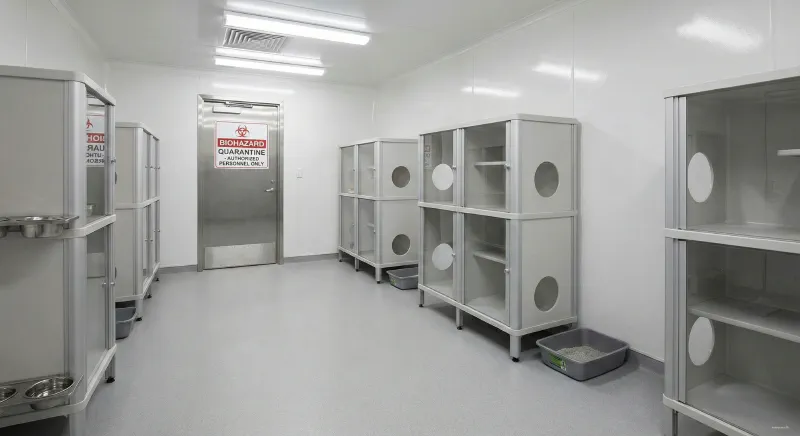
The final zone is the Quarantine or Isolation Room. This is the “dirty” room where any new cat entering the program, or any cat showing signs of sneezing or diarrhea, is housed immediately. Ideally, this room should be maintained under negative pressure, ensuring air flows into the room but not out into the rest of the facility. It should also have a separate entrance to the outdoors, allowing you to transport a sick cat to the vet without carrying them through the clean zones of the house.
Surface Materials: The “Bleach Test”#
The materials chosen for a cattery are just as important as the floor plan. When selecting finishes, you must apply the “Bleach Test” to everything: can you pour a 1:10 bleach solution on it without ruining it?
Flooring should invariably be sealed concrete, epoxy, or commercial-grade vinyl, as standard residential carpet is impossible to sanitize effectively. Walls require similar attention; semi-gloss or high-gloss paint is essential for wipe-down ability, while stud rooms often benefit from Fiberglass Reinforced Plastic (FRP) panels that are impervious to moisture. Even the bedding must be utilitarian, utilizing cheap, washable fleece throws that can be sanitized in hot water rather than expensive, foam-filled beds that harbor bacteria.
Air Quality and Ventilation#
The distinctive “smell of a cattery” is often actually the smell of poor ventilation. Ammonia buildup from urine damages the delicate cilia in a cat’s respiratory tract, making them highly susceptible to pneumonia and other infections.
To combat this, a cattery requires an HVAC system that actively exchanges fresh air rather than simply recirculating the same stale, pathogen-laden air throughout the house. Humidity control is equally vital. The environment should be maintained between 30% and 50% humidity; anything higher encourages the growth of Ringworm fungus, while anything lower dries out the cats’ mucous membranes, reducing their natural defenses against airborne viruses.
The Human Factor: Biosecurity Protocols#
Even the most perfectly designed facility will fail if the human element is sloppy. You are the primary vector for disease transmission, so your workflow must be disciplined.
Cleaning should always proceed from the cleanest area to the dirtiest. You start your day in the Nursery, move to the Adult rooms, and finish in the Quarantine room. You never go backwards, as this would track pathogens into the vulnerable nursery. Hand hygiene is non-negotiable, with sanitizer stations mounted at the door of every room. Finally, clothing protocols must be strict; wearing a dedicated “smock” or apron that stays in the quarantine room prevents you from carrying viral particles on your clothes back to the healthy population.
Summary#
Building a safe cattery is an expensive and demanding project, but treating a breakout of Panleukopenia or FIP is infinitely more costly in both money and heartache. By investing in a design that prioritizes separation, non-porous surfaces, and air quality, you are effectively building a firewall around your kittens’ health.
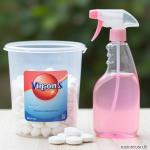
Virkon S Broad Spectrum Disinfectant
The only disinfectant proven to kill Panleukopenia and Ringworm on porous surfaces. Essential for cattery biosecurity.
Check Price on Amazon →References#
- Cattery Design and Management - Dr. Niels C. Pedersen, UC Davis.
- Shelter Medicine Standards - Association of Shelter Veterinarians.