Ethical Breeders: What to Look for in a Maine Coon Cattery#
Choosing a kitten from an ethical and responsible breeder is the single most important decision a prospective Maine Coon owner will make. A responsible breeder is not just selling a pet; they are guardians of the breed, dedicated to reducing genetic disease, promoting robust health, and ensuring optimal socialization. Given the Maine Coon’s size and predisposition to high-cost hereditary conditions, buying from a poorly screened source is a significant gamble on your kitten’s health (a risk that no Pet Insurance: A Financial Shield for the Maine Coon’s Unique Health Risks can fully mitigate if pre-existing conditions are present).
This guide provides a comprehensive checklist of mandatory requirements and red flags to help you navigate the process of selecting an ethical Maine Coon cattery.
1. Mandatory Health Screening and Transparency#
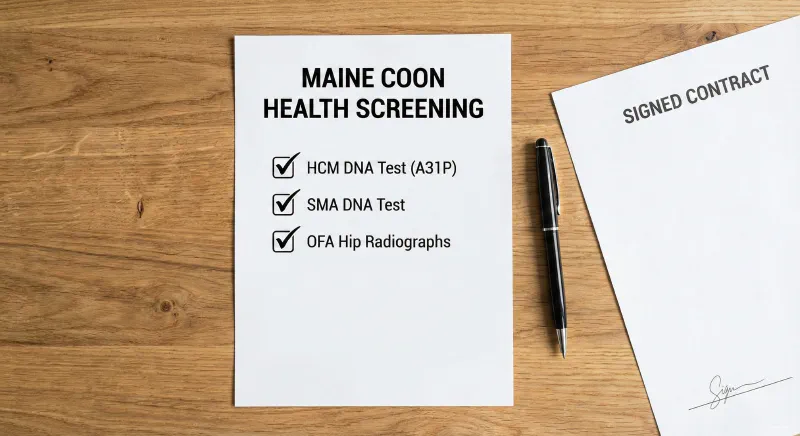
The cornerstone of ethical breeding is rigorous, transparent health testing for known hereditary diseases. Never accept a breeder’s word alone; demand documentation.
A. Cardiac Screening (HCM)#
- DNA Test: The breeder must provide DNA test results for the A31P gene mutation for both parents. The ideal pairing is “Clear” to “Clear,” though a “Clear” to “Carrier” pairing is acceptable, as it guarantees no kitten will be affected (will not be homozygous for the mutation).
- Echocardiogram (Echo): Since the HCM gene mutation is not 100% penetrant and other forms of the disease exist, the breeder must show current (within 12-18 months) cardiac ultrasound results performed by a certified Veterinary Cardiologist on the breeding cats. This is the gold standard for screening for the physical thickening (hypertrophy) (see Hypertrophic Cardiomyopathy (HCM): Understanding the Maine Coon’s Genetic Heart Risk).
B. Orthopedic and Joint Screening#
Due to the Maine Coon’s heavy boning and size, orthopedic health is crucial.
- Hip Radiographs: The breeding cats must have hip radiographs screened by an organization like the OFA (Orthopedic Foundation for Animals) or a board-certified veterinary radiologist to check for hip laxity and Hip Dysplasia (see The Hip Dysplasia Paradox: Prevention, Diagnosis, and Management in Maine Coons).
2. Pedigree Integrity and Genetic Diversity#
An ethical breeder prioritizes the long-term health of the breed over simply producing kittens for profit.
A. Pedigree Analysis#
- Transparency: The breeder must provide a full, easily readable pedigree for the kitten, typically four or five generations deep. This chart must include health notations. (Understanding the importance of this document is detailed in Pedigrees Explained: How to Read the Maine Coon’s Genetic Roadmap).
- COI (Coefficient of Inbreeding): The breeder should be able to state the kitten’s Inbreeding Coefficient (COI), which should ideally be low (e.g., under 10-15% for four generations), indicating genetic diversity and robust health.
B. Age and Frequency#
- Breeding Age: Queens (mothers) should not be bred too young (ideally after their second birthday) and should be retired by a reasonable age.
- Spreading Litters: Ethical breeders limit the frequency of litters to ensure the queen recovers fully between pregnancies.
3. Socialization and Home Environment#
The final temperament of your Maine Coon is highly dependent on its first few months of life. Ethical breeding requires a safe, enriching home environment.
A. Home Environment#
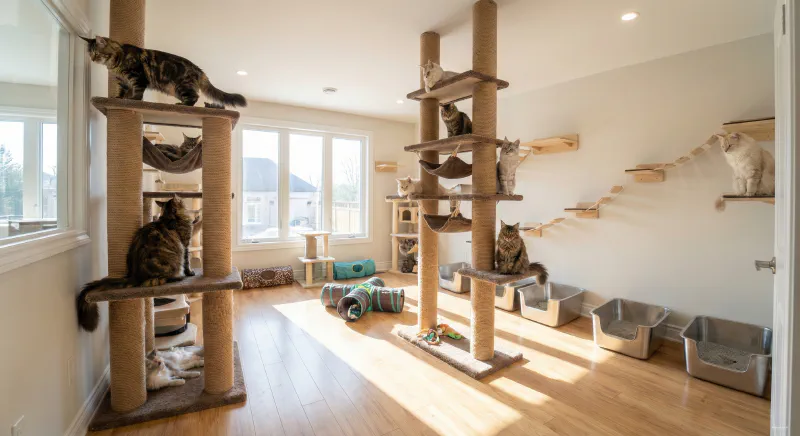
- Open Environment: Kittens should be raised underfoot in the breeder’s home, not isolated in cages, basements, or outdoor facilities. This ensures they are fully acclimated to household noises (vacuum cleaners, doorbells, human voices) and movement.
- Enrichment: The kittens and adult cats must have access to clean, multi-level climbing structures, adequate XL Litter Boxes: Sizing, Containment, and Hygiene for the Maine Coon, and a stimulating environment that encourages natural play (Image 3/3).
B. Socialization Protocol#
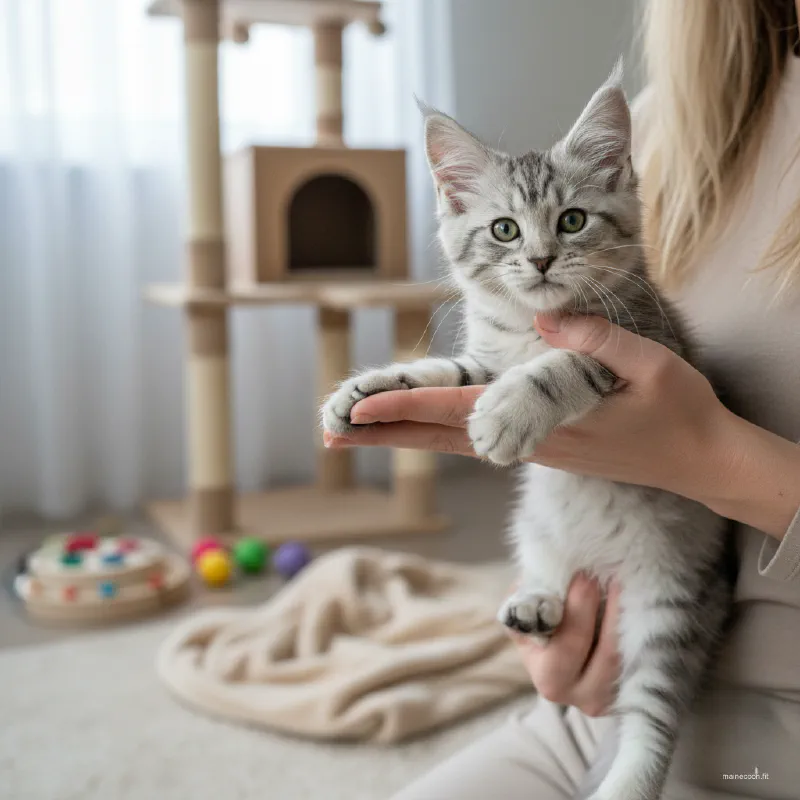
Kittens should be handled daily from birth by various people (including children, if applicable) to ensure they develop the confident, gentle temperament that defines the breed. They should never be released to their new homes before 12 to 16 weeks of age, as this allows them to learn critical social skills from their mother and siblings.
4. The Contract and Red Flags#
A. Required Guarantees#
A clear, detailed contract is a mark of a professional. The contract must include:
- Health Guarantee: A written guarantee against fatal genetic/congenital diseases (like HCM) for a specific period (e.g., 1–3 years).
- Spay/Neuter Clause: Most ethical pet contracts require the kitten to be spayed or neutered by a certain age to protect the breed’s gene pool.
B. Red Flags to Avoid#
- No Vet Records: Refusal to provide current veterinary records or genetic test results for the parents.
- Too Many Breeds: A breeder specializing in many different breeds or running a large volume operation.
- “First Come, First Served”: Refusal to interview you or screen your home environment.
- Price Discounts: Offering significant discounts if you pay cash or take the kitten early (before 12 weeks).
Conclusion#
Finding an ethical Maine Coon breeder requires due diligence, prioritizing hard evidence of health screening and genetic diversity over convenience or cost. By adhering to this comprehensive checklist—demanding full transparency in health documentation and ensuring the kittens are raised in an enriching, social environment—you are making the most responsible investment possible in the long life and robust health of your future Maine Coon companion.
Understanding the Pedigree#
When you buy from an ethical breeder, you aren’t just paying for a kitten; you are paying for genetic certainty.
- The Look: Learn why breeders select for the Ron Perlman Look or specific Breed Characteristics.
- The Myths: A good breeder will tell you the truth about the Bobcat Myth.
- Polydactyls: Some breeders specialize in the Extra Toe Trait.
- Paperwork: Always ask to see the Pedigree to ensure no inbreeding.
🔗 References & Further Reading#
- Cornell University College of Veterinary Medicine. A Guide to Responsible Cat Ownership: Selecting a Breeder. (Authoritative resource detailing the signs of a good breeder and mandatory health tests).
- Veterinary Economics Magazine. Screening for Inheritable Disease in Pedigreed Cats. (Industry guidance on the necessity of comprehensive health certification for breeding animals).
- The International Cat Association (TICA) Breeder Code of Ethics. (Guidelines outlining responsible breeding practices, socialization, and kitten placement age).
- American Veterinary Society of Animal Behavior (AVSAB). Kitten Socialization and Early Behavioral Development. (Expert advice on the critical developmental window (4-14 weeks) and why early placement is detrimental).