The Invisible Tipping Point#
When you visit a breeder’s website, you often look for the photos of champions, the ribbons, and the fluffy kittens. What you rarely see is the density of the population behind the scenes. There is a prevalent assumption in the cat fancy that if a breeder is loving and clean, the number of cats does not matter. This is a dangerous misconception.
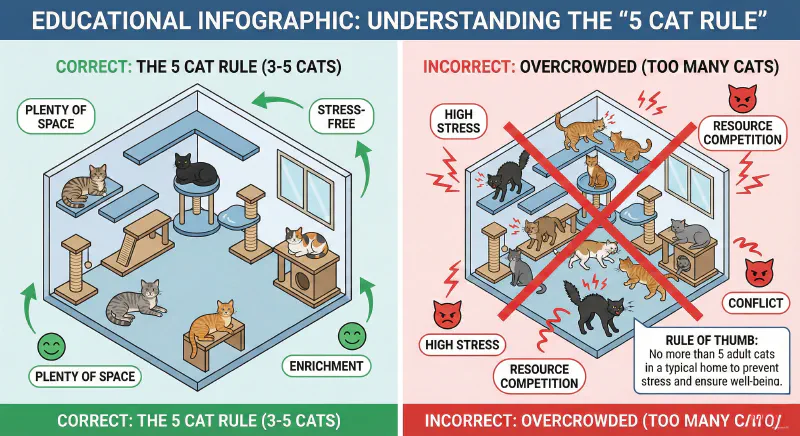
There is a biological tipping point in any population of obligate carnivores where the environment shifts from a home to a biohazard. In the world of feline husbandry, this is often colloquially referred to as “The 5 Cat Rule” or the density threshold. It suggests that once a household exceeds a small, manageable number of free-roaming cats, the viral load in the environment does not just double; it grows exponentially. Understanding this threshold is critical for buyers evaluating a breeder and for owners considering a multi-cat household.
The Science of Viral Load and the FIP Connection#
The primary enemy of the modern cattery is Feline Infectious Peritonitis (FIP). While FIP is caused by a mutation of the common Feline Coronavirus (FCoV), the rate of mutation is heavily influenced by the “viral load”—the sheer amount of virus present in the environment.
In a low-density home with two or three cats, the coronavirus is shed in feces, but the overall volume of the virus remains low. The cats’ immune systems can typically manage this low-level exposure without developing chronic stress. However, as you add more cats to the same square footage, the dynamic changes. The litter boxes become a Petri dish of constantly shedding virus. The sheer volume of FCoV in the environment overwhelms the kittens’ immature immune systems, leading to persistent diarrhea, upper respiratory infections that never quite clear up, and a statistically higher rate of FIP mutations. This is why “hoarding” situations, even well-intentioned ones, are often hotbeds for fatal disease.
The Stress Factor: Why Giants Need Space#
Beyond the microscopic viral load, there is the macroscopic issue of stress. Maine Coons are large, territorial animals. While they are known as “gentle giants,” they are still felines with a deep-seated need for territory and hierarchy.
In an overcrowded environment, the social hierarchy becomes unstable. There is no “safe space” where a cat can retreat to be alone. This constant, low-level social friction creates chronic cortisol elevation. Cortisol is the stress hormone, and it functions as an immune suppressant. A stressed cat is physically incapable of fighting off the viruses that a happy, confident cat would shrug off. When you combine the high viral load of a crowded house with the suppressed immune systems of stressed cats, you create the perfect storm for health failure. This is why you will often see “cattery colds” that cycle endlessly through a population; the herd immunity is broken by stress.
Evaluating a Breeder: The Smell Test#
For a kitten buyer, identifying an overcrowded cattery is a vital skill. It is not always about counting heads, but about observing the environment. The most immediate indicator is smell. A home with an appropriate number of cats should smell like a home, perhaps with a faint trace of litter, but it should not smell of ammonia.
Ammonia is the byproduct of breaking down urine. If the smell of ammonia hits you when you walk in the door, it indicates that the density of cats has outstripped the breeder’s ability to maintain hygiene. It means the litter boxes are saturated, and the air quality is compromised. If the air burns your nose, imagine what it is doing to the delicate lungs of a kitten living at floor level.
Cleanliness vs. Density#
It is important to distinguish between a dirty house and an overcrowded one. You can have a sparkling clean house that is still biologically overcrowded. Even if a breeder scours the floors with bleach daily, they cannot scrub the air.
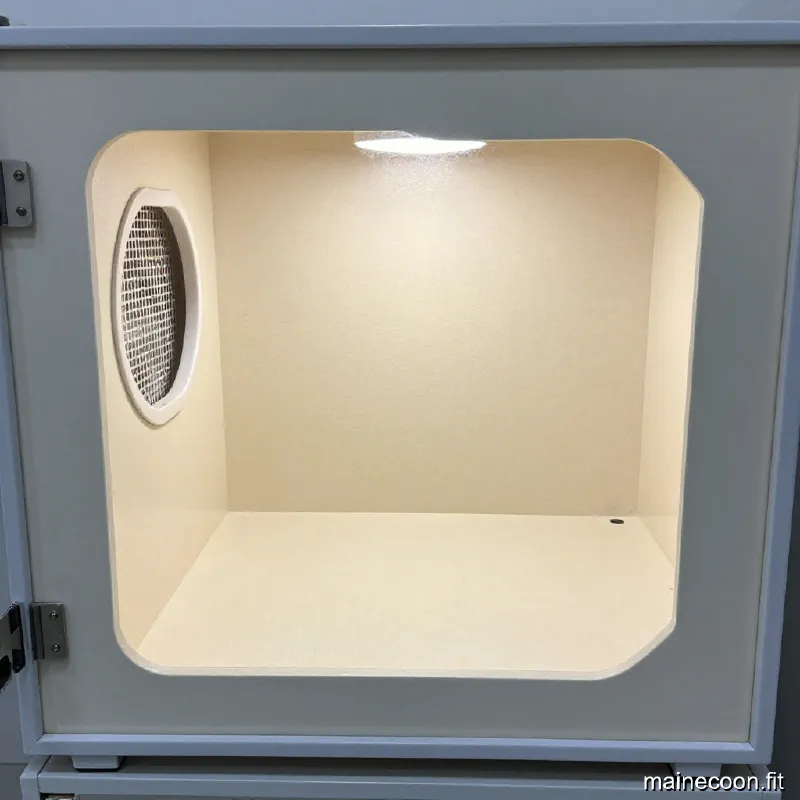
Respiratory pathogens like Herpesvirus (FHV-1) and Calicivirus spread through aerosolized droplets. In a house with twenty cats, the air itself becomes a vector for disease. This is why the best catteries utilize strict separation protocols. They do not have twenty cats roaming the living room; they have small, stable groups separated by barriers, dedicated HVAC systems, or separate buildings. They practice “cohorting,” keeping kittens of the same age together and strictly isolated from adult carriers until their immune systems mature.
The Ethical Limit#
There is no magic number that applies to every square footage, but the “5 Cat Rule” serves as a solid mental anchor. For the average home, maintaining excellent hygiene and low stress with more than five to seven distinct personalities becomes exponentially difficult.
When you are looking for your Maine Coon, ask the breeder about their population management. Do they have separate nursery quarters? do they limit the number of litters on the ground at one time? A breeder who prioritizes low density is prioritizing the long-term health of your future kitten. They understand that a smaller, healthier program is infinitely superior to a massive, sickly one.

Virkon S Broad Spectrum Disinfectant
The industry standard for killing FCoV and other stable viruses in a multi-cat environment.
Check Price on Amazon →References#
- Feline Infectious Peritonitis: Guidelines for Catteries - Dr. Niels C. Pedersen, UC Davis.
- Husbandry and Population Management in the Cattery - International Cat Care (iCatCare).
- Stress and Immune Function in Cats - Journal of Feline Medicine and Surgery.