Pedigrees Explained: How to Read the Maine Coon’s Genetic Roadmap#
A pedigree is far more than just a list of names; it is the genetic roadmap of a Maine Coon, providing a window into its health history, lineage, and potential inherited risks. For prospective owners, learning to interpret a pedigree chart is essential for selecting a kitten from an ethical breeder committed to the long-term health and vitality of the breed. For a breed like the Maine Coon, which is predisposed to specific hereditary conditions (like HCM and Hip Dysplasia), a well-documented pedigree is a primary tool for managing risk.
This guide breaks down the essential components of a Maine Coon pedigree, explaining how to interpret its critical data, including generational lineage and the crucial Inbreeding Coefficient (COI).
1. Lineage and Generational Data#
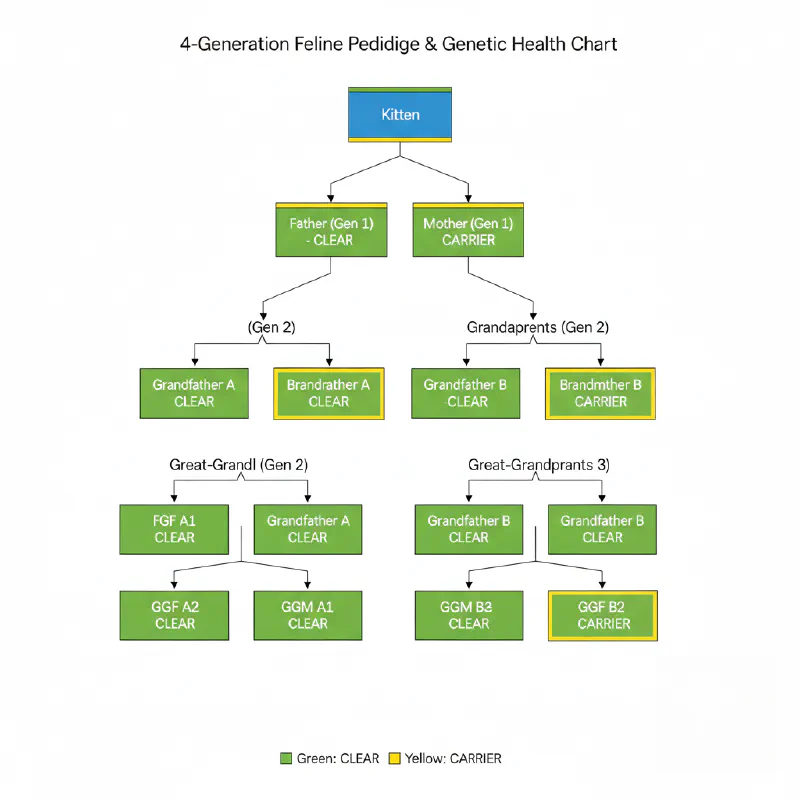
A standardized pedigree chart for a Maine Coon typically lists ancestors for four to five generations. Each box represents an ancestor and contains key information that allows tracing of specific traits and health status.
A. Key Data Points in Each Box#
- Registration Name: The full, official name registered with an association (TICA or CFA). This name often includes a cattery prefix.
- Color and Pattern: Confirms the coat genetics of the ancestor (useful for understanding the inheritance of traits like The Fiery Giant: Decoding the Genetics and Personality of the Orange Tabby Maine Coon).
- Registration Number: The unique identifier assigned by the registering body.
- Health Status: The most crucial point. This may include coded abbreviations indicating results of genetic tests (e.g., N/N for clear, N/HCM for carrier).
B. The Importance of the Fourth Generation#
While the first two generations (parents and grandparents) directly influence the kitten’s visible traits, examining the third and fourth generations is vital. Recessive genes can hide for generations, only manifesting if two carriers are mated. A deep pedigree helps identify patterns of late-onset diseases.
2. Interpreting Genetic Health Status#
Ethical breeding requires screening for known genetic faults, particularly in the Maine Coon. A pedigree should provide evidence of this screening.
A. HCM and Orthopedic Screening#
- HCM (Hypertrophic Cardiomyopathy): The pedigree should list the DNA test results (A31P mutation) and, ideally, the last known cardiac ultrasound (Echocardiogram) screening date. Since HCM can be late-onset, continuous screening is necessary. (See also: Hypertrophic Cardiomyopathy (HCM): Understanding the Maine Coon’s Genetic Heart Risk).
- Hip Dysplasia (FHD): Look for notations regarding orthopedic screening, often performed via radiographs submitted to organizations like OFA (Orthopedic Foundation for Animals).
B. Understanding Carrier Status#
A pedigree is essential for understanding genetic risk. For an autosomal dominant condition like HCM (A31P), a carrier (N/HCM) is at risk. For autosomal recessive conditions (like Spinal Muscular Atrophy, SMA), a carrier is healthy but can pass the gene to offspring.
- Breeding Ethics: Reputable breeders use the pedigree chart (Image 3/3) to ensure a carrier is never bred to another carrier, preventing the birth of an affected kitten.

3. The Inbreeding Coefficient (COI)#
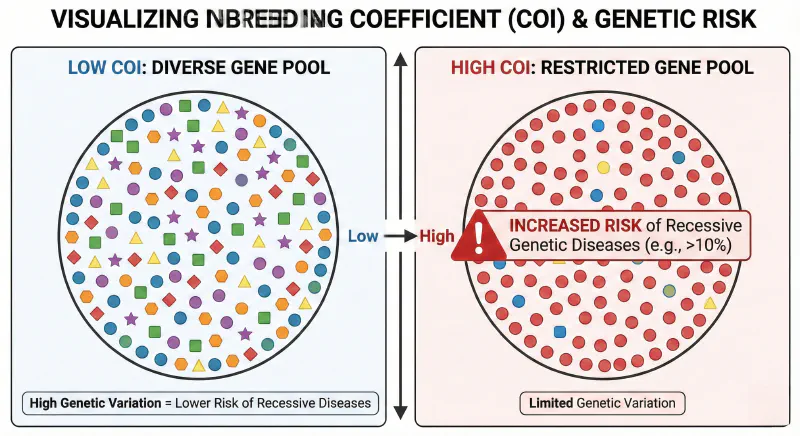
The Inbreeding Coefficient (COI) is perhaps the most critical number on a pedigree. It quantifies the degree of inbreeding and the genetic diversity within the cat’s lineage.
A. Calculation and Meaning#
The COI represents the probability that any two alleles (gene copies) inherited by the cat are identical by descent (i.e., they came from the same ancestor).
- Low COI (Optimal): A low COI (e.g., under 10% for four generations) indicates high genetic diversity, which generally correlates with greater overall health, robust immune systems, and reduced risk of expressing harmful recessive genes.
- High COI (Risk): A high COI (e.g., above 15% for four generations) suggests a high degree of common ancestry, increasing the risk of “litter blindness” and predisposing the cat to certain health issues or weakened immune function.
B. Utilizing the COI for Health#
Ethical Maine Coon breeders use software to calculate the COI based on the pedigree to ensure they are making outcross matings when necessary, protecting the breed’s genetic health. A kitten with an acceptable COI is a sign that the breeder prioritizes diversity and long-term vitality.
4. Why Pedigrees Matter to Owners#
A kitten’s pedigree is the ultimate form of consumer protection.
- Validation: It validates that the cat is a purebred Maine Coon and not a Domestic Longhair mix (a distinction analyzed in Vs. Normal Cat: What Makes the Maine Coon a Breed Apart).
- Prediction: It allows the owner to make informed choices about potential size (Size Genetics: The Factors That Determine Your Maine Coon’s Final Stature), temperament, and long-term health needs.
- Ethical Sourcing: It is the starting point for determining if a breeder is following the responsible practices necessary to reduce the incidence of hereditary diseases, linking directly to the discussion of Ethical Breeders: What to Look for in a Maine Coon Cattery.
Conclusion#
The Maine Coon pedigree is a complex but essential document. By learning to look past the impressive names and focusing on the COI, health status notations, and the depth of the lineage, prospective owners gain the knowledge necessary to choose a healthy, genetically sound companion. This transparency is the cornerstone of ethical breeding and the best investment you can make in the future health and longevity of your gentle giant.
🔗 References & Further Reading#
- Institute of Feline Genetics (IFG). Interpreting the Feline Pedigree and Coefficients of Inbreeding. (Academic source detailing the calculation and significance of COI).
- Cornell University College of Veterinary Medicine. Genetic Diversity and Risk Management in Pedigree Felines. (Resource emphasizing the link between COI and recessive disease expression).
- The Governing Council of the Cat Fancy (GCCF). Guidance on Health Records and Pedigree Documentation. (Breed association guidance on mandatory health notations).
- Veterinary Economics Magazine. The Importance of Pedigree Transparency in Kitten Sales. (Industry publication advising on the consumer protective role of pedigree charts).