The Snowshoe of the Cat World#
If you have ever shaken hands with a Maine Coon that has thumbs, you know the feeling. It is less like petting a cat and more like holding hands with a small, furry human. These are the Polydactyl Maine Coons—cats born with extra toes on their front and sometimes back paws.
While they are often famously called “Hemingway Cats” (after the writer Ernest Hemingway, whose Key West estate is still overrun with them), this trait is historically tied to the Maine Coon’s origin story. As we discuss in our History of the Breed, the Maine Coon evolved as a working ship cat and a barn mouser. In the deep snows of New England, standard cat paws would sink. The polydactyl mutation acted as a natural snowshoe, spreading the cat’s weight over a larger surface area and allowing them to traverse snowdrifts that would trap other breeds.
Genetics: The “Pd” Gene#
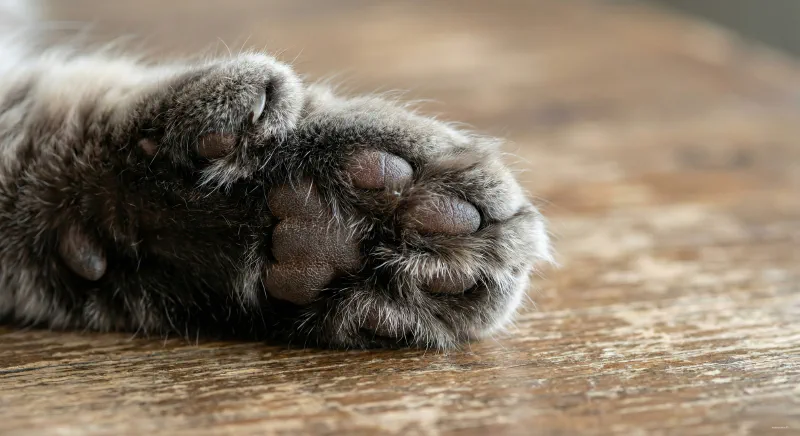
Polydactyly is a dominant genetic trait caused by the Pd gene. Unlike some genetic mutations that cause health issues (like the folded ears of the Scottish Fold, which are linked to cartilage defects), the polydactyl gene in Maine Coons is generally harmless. It is a simple variance in development that adds digits without deforming the arm or leg bones.
There are generally two types of “Poly” paws. The most common is the “Mitten Paw,” where the extra toes form a thumb-like appendage on the inside of the paw. This gives the cat incredible dexterity. Owners often report their Poly cats opening latches, turning doorknobs, and holding treats with a disturbingly human grip. The second type is the “Patty Paw,” where the extra toes are in line with the others, creating a massive, circular frying-pan shape. Both are functionally the same, providing superior balance and climbing ability.
The Controversy: Show Ring Politics#
Despite being a historical part of the breed—some estimates suggest that up to 40% of the original Maine Coon population was polydactyl—the trait is controversial in the show ring.
For decades, the “Poly” was disqualified from championship status in major associations like the CFA (Cat Fanciers’ Association), viewed as a deviation from the standard. However, TICA (The International Cat Association) has embraced the trait, allowing Polydactyl Maine Coons to be shown in their own category. This has led to a resurgence in their popularity, as breeders no longer have to “hide” their extra-toed kittens.
Care Challenges: The Ingrown Claw#
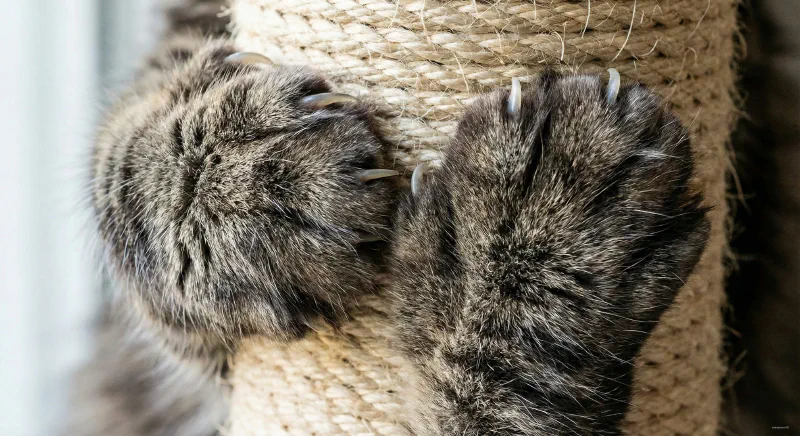
While having extra toes is not a health defect, it does create a specific maintenance requirement. In a normal paw, the claws are spaced out and wear down naturally as the cat scratches. In a polydactyl paw, the extra toes can sometimes be crowded.
The most critical issue is the claw between the “thumb” and the main paw. Because this claw often does not touch the ground or the scratching post, it does not wear down. If neglected, it can grow all the way around and pierce the paw pad, causing infection and severe pain. As detailed in our Paw Care Guide, owners of Poly cats must be diligent about checking these hidden claws every two weeks. You essentially have more nails to trim, and some of them are harder to reach.
Health and Mobility#
Contrary to myths, polydactyl cats are not more prone to arthritis than standard cats. In fact, their heavier bone structure often makes them quite robust. However, because they have more claws to get stuck in carpet or furniture, you have to be careful with the type of scratching posts you use. Sisal rope is excellent, but loop-pile carpet can snag an extra claw and cause a sprain.
If you notice your Poly cat limping, check the nails first. If the nails are clear, consult your vet about Joint Health, as their larger paws can sometimes mask gait issues until they are severe.
Summary#
The Polydactyl Maine Coon is a piece of living history, a throwback to the days when these cats were essential crew members on sailing ships. They are athletic, dexterous, and undeniably charming. If you are willing to trim a few extra nails, you will be rewarded with a cat that can high-five you with a hand the size of a catcher’s mitt.
Wahl Bravura Cordless Clippers
Sometimes the fur between the extra toes gets so long it hides the claws. Small clippers are essential for keeping Poly paws tidy.
Check Price on Amazon →References#
- The Maine Coon Polydactyl Standard - TICA (The International Cat Association).
- Feline Polydactyly: A Review - Journal of Heredity.