Polydactyl Traits: Understanding the Genetics and Legacy of the Maine Coon’s Extra Toes#
The Maine Coon is historically renowned for its association with polydactyly, a fascinating genetic trait that results in the cat having more than the usual number of digits on its paws. While the trait can occur in any breed, the sheer prevalence within the early Maine Coon population was so high that it became a recognized, cherished feature, granting the cat a unique “snowshoe” advantage. Understanding polydactyly involves exploring its simple, yet powerful, dominant inheritance pattern and appreciating the functional benefits these “extra toes” bestow upon the breed.
This article delves into the history, genetics, and function of the Maine Coon’s famous extra digits, linking back to the importance of transparent Pedigrees Explained: How to Read the Maine Coon’s Genetic Roadmap.
1. Historical Legacy and the Functional Advantage#
Polydactyly was once so common in the Maine Coon that it was often accepted in the show ring, though modern standards are more restrictive.
The Snowshoe Myth and Reality#
- Maritime Origins: The trait is strongly linked to the early New England maritime industry. Sailors believed polydactyl cats were better mousers and brought them on ships for good luck. The broader paw surface also provided better stability on rolling ships.
- Functional Advantage: The enlarged, wider paw provided a genuine functional advantage in the deep snows of Maine and New England, acting as a natural snowshoe (a feature that aids the cat’s survival in cold climates, similar to the dense coat of the Norwegian Forest Cat, as compared in Vs. Norwegian Forest Cat: Decoding the Differences Between the Two Forest Giants). The increased surface area also gives the cat a superior grip when climbing.
2. The Genetics of Polydactyly#
Polydactyly is inherited through a simple, autosomal dominant gene mutation.
Dominant Inheritance#
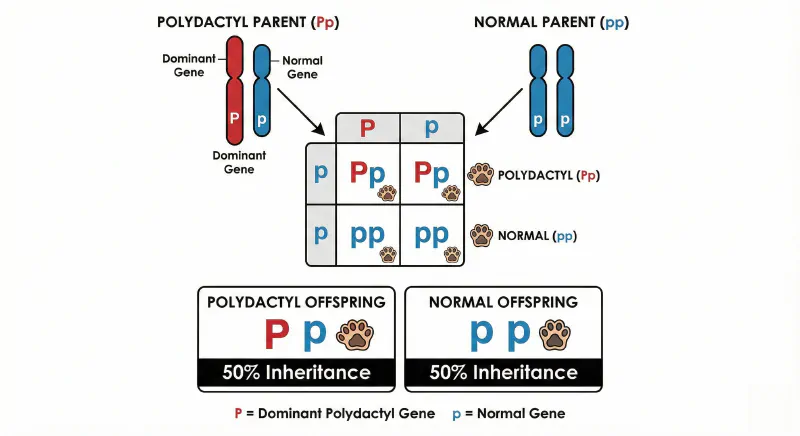
- The Gene: The trait is carried on a dominant gene, which we can label ‘P’. The normal gene is ‘p’.
- Simple Inheritance: A cat only needs to inherit one copy of the dominant ‘P’ gene to express the trait. If a polydactyl cat (Pp) is mated with a normal cat (pp), there is a 50% chance that each kitten will inherit the polydactyl trait (Image 2/3).
- Not Sex-Linked: Unlike the gene for The Fiery Giant: Decoding the Genetics and Personality of the Orange Tabby Maine Coon, which is carried on the X chromosome, the polydactyly gene is carried on a non-sex chromosome (autosome).
Forms of Polydactyly#
The extra toes can manifest in several ways:
- “Mitten Paw” (Pre-Axial): The extra toes appear on the medial (thumb side) of the paw, making the paw look like a mitten.
- “Snowshoe Paw” (Post-Axial): The extra toes appear on the lateral (pinky side) of the paw, widening the overall footprint.
3. Health Considerations and Ethical Breeding#
While polydactyly is generally harmless, ethical breeders must be vigilant to ensure the trait is expressed correctly.
Ethical Concerns#
The primary concern is ensuring the extra digits are well-formed, functional, and attached correctly to the bone. Poorly formed digits can lead to ingrown claws, mobility issues, and pain, increasing the risk of infection. This concern underscores why transparency and health screening are critical components of Ethical Breeders: What to Look for in a Maine Coon Cattery.
Claw Care#
Polydactyl cats require specific, diligent claw care.
- Hidden Claws: The extra toes often have claws that are positioned at an unusual angle and may not wear down naturally. These claws can easily curl inward and grow into the paw pad, requiring more frequent trimming than usual (a crucial part of overall grooming; see The Line Brushing Technique: Mastering the Maine Coon Triple Coat and Dematting).
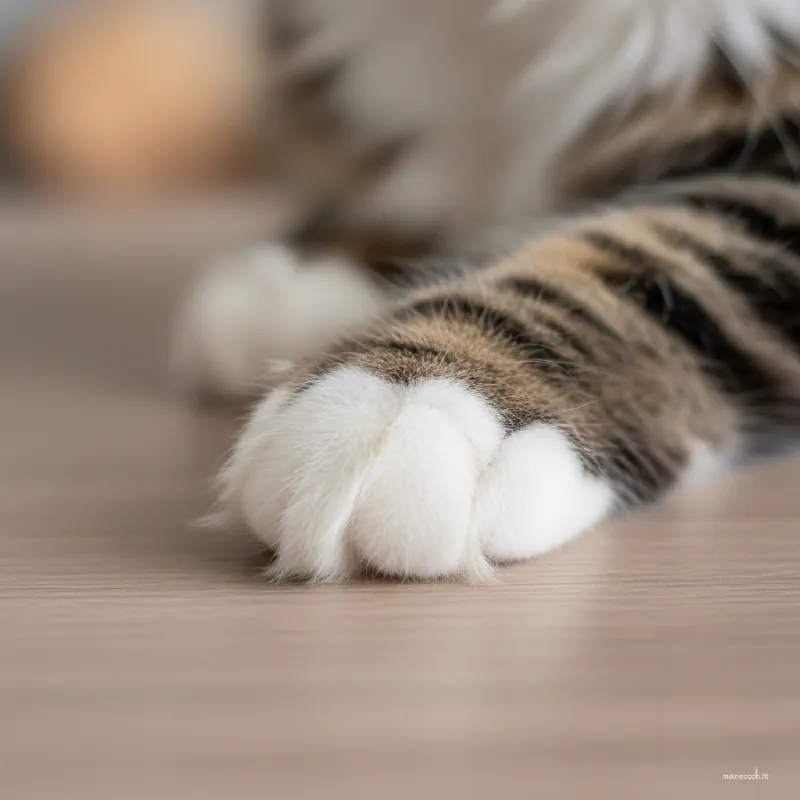
- Inspection: Owners must regularly inspect the polydactyl toes (Image 1/3) to ensure no ingrown claws or abnormal nail growth is occurring.
Conclusion#
Polydactyly is a fascinating, dominant genetic trait that is deeply woven into the history and charm of the Maine Coon breed. While offering a functional advantage for climbing and navigation, responsible ownership requires diligence in claw care to prevent injury. The Maine Coon’s extra toes are a beautiful testament to its working-cat heritage and contribute to its unique, rugged allure among domestic felines.
🔗 References & Further Reading#
- Institute of Feline Genetics (IFG). The Genetics of Polydactyly and Limb Development in Cats. (Detailed scientific source on the dominant mutation and its mechanisms).
- Veterinary Clinics of North America: Small Animal Practice. Congenital and Hereditary Diseases of the Feline Musculoskeletal System. (A clinical source discussing the need for monitoring extra digits for orthopedic issues).
- The Feline Health Organization. Managing Claw Health in Polydactyl Cats. (Guidance for owners on the specialized grooming requirements for these paws).
- Washington State University College of Veterinary Medicine. Anomalies of the Feline Paw. (Resource covering the anatomical variations and potential health risks of polydactyly).