The ‘Rufus’ Polygenes: Breeding for the Deep Red Maine Coon#
In the world of Maine Coon breeding, not all reds are created equal. You have the “Ginger” cats—a pale, sandy yellow—and then you have the “Hot” Reds—a deep, vibrant mahogany that looks like it’s on fire.
Genetically, both cats are identical at the primary color locus. They both carry the Orange (O) gene on the X chromosome. So, why do they look so different?
The answer lies in a ghostly set of genes known as Polygenes, specifically the Rufus group. If you want to breed show-stopping Red Tabbies, you have to stop thinking in terms of single genes and start thinking in terms of “accumulating paint layers.”
The Science of “Rufism”#
According to Robinson’s Genetics for Cat Breeders, “Rufism” is the term used to denote the wide variation in the expression of yellow pigmentation.
Think of the Orange (O) gene as the “On Switch.” It tells the cat to produce Phaeomelanin (red/yellow pigment) instead of Eumelanin (black/brown pigment).
- The Switch: Every red cat has the switch turned “On.”
- The Dimmer: The Rufus Polygenes act like a dimmer switch.
- Low Polygenes: The pigment granules are sparse or pale, resulting in a sandy/cream color.
- High Polygenes: The pigment granules are densely packed and rich, resulting in deep mahogany.
The “Brown Tabby” Connection#
Here is a secret that old-school breeders know: To get good Reds, you need good Browns.
The same Rufus polygenes that make a Red Tabby “hot” are responsible for the warm, auburn ground color in a show-quality Brown Tabby. If you breed a pale, cold-toned Brown Tabby to a Red, you will likely wash out the red offspring. If you breed a “warm” Brown Tabby (one that glows copper in the sunlight) to a Red, you are stacking those Rufus polygenes.
The Enemy: The “Ticked” Tabby Gene#
Another factor that kills the red color is the Ticked (Ta) or Abyssinian gene. While Maine Coons are usually Classic ($mc$) or Mackerel ($Mc$) tabbies, the Ticked gene is dominant.
A red cat with a “blurred” pattern often has a coat that looks sandy or solid because the ticking breaks up the density of the red pigment on the hair shaft. Robinson’s notes that the “contrast between the yellow ground color and black [or red] ticking is lost… resulting in a surprisingly uniform color”. To keep the red deep, you want clear, broad tabby markings where the pigment is concentrated.
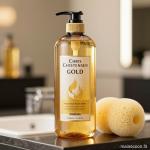
Chris Christensen Gold on Gold Shampoo
This is not a dye, but an optical enhancer. It uses pigment deposition to bring out the 'Rufus' tones in Red and Brown tabbies.
Check Price on Amazon →Conclusion#
You cannot buy a DNA test for “Rufism” yet. It is a Quantitative Trait, meaning it is controlled by many small genes acting together. The only way to get it is to select for it. Look at the parents. If they are “sandy,” the kittens will likely be sandy. If they are “mahogany,” you are on the right track.
References#
- Vella, C. et al. (1999). Robinson’s Genetics for Cat Breeders and Veterinarians. “Color Inheritance: Rufism,” p. 151.
- Walsh, L.G. (2013). The Maine Coon Cat. “The Colors of the Coon,” p. 15.
- CFA. Maine Coon Breed Standard: Red Tabby Color Class.
- Robinson, R. (1977). Genetics for Cat Breeders. Pergamon Press.
- Lyons, L.A. (2015). “DNA mutations of the cat.” Journal of Feline Medicine.
- UC Davis Veterinary Genetics Lab. Coat Color Genetics: Agouti and Tabby.
- Prieur, D.J. (1984). “Maltese dilution of domestic cats.” Journal of Heredity.
- Gebhardt, R. The Complete Cat Book. (Discussion on polygenes).