The ‘Inhibitor’ Gene: The Science of Silver and Smoke#
The Silver Maine Coon is often called the “ethereal” beauty of the breed. A shimmering, sparkling coat that looks white but is tipped with black, blue, or red.
This color is not a “color” in the traditional sense. It is a suppression of color. It is caused by a powerful genetic switch known as the Inhibitor Gene (I).
If you are breeding Silvers or Smokes, you are not painting with pigment; you are painting with an eraser.
How the “I” Gene Works#
The dominant Inhibitor gene ($I$) suppresses the development of pigment granules in the hair shaft.
- The Mechanism: As the hair grows, the $I$ gene tells the pigment cells (melanocytes) to stop producing color.
- The Result: The base of the hair grows in white. The tip, which grew first, retains the color (Black, Blue, Red, etc.).
Robinson’s Genetics notes that the gene has a “greater ability to suppress phaeomelanin [yellow/red] pigment than eumelanin [black] pigment”. This is why it is easier to get a clean Silver (black tipped) than a clean Cameo (red tipped).
Smoke vs. Silver: What’s the Difference?#
Genetically, the only difference between a Smoke and a Silver Tabby is the Agouti (A) gene.
The Smoke ($aa I-$):
- This cat is Non-Agouti (Solid) + Inhibitor.
- Because it is a solid cat, the “eraser” effect is less strong. You get a white undercoat, but a heavy colored topcoat. When the cat sits still, it looks solid black. When it moves, the white flashes through.
The Silver Tabby ($A- I-$):
- This cat is Agouti (Tabby) + Inhibitor.
- The Agouti gene already lightens the background. When you add the Inhibitor gene on top of it, it “super-erases” the ground color, turning the yellowish tabby background into stark, sparkling white.
The “Wide Band” Mystery (Chinchilla)#
How do you get a Chinchilla Silver (a cat that is 95% white with just tiny black tips) versus a Shaded Silver (50% white)?
Geneticists theorize the existence of a Wide Band ($Wb$) gene. This gene (or group of polygenes) forces the “eraser” to start working earlier in the hair growth cycle.
- Normal Silver: Pigment stops halfway down the hair.
- Wide Band: Pigment stops almost immediately, leaving only the very tip colored.
“Tarnishing”: The Bane of the Silver Breeder#
“Tarnishing” is when a Silver cat has ugly yellow or rust patches on their muzzle or paws. This is caused by Polygenes breaking through the Inhibitor’s defense. Because the $I$ gene isn’t perfectly efficient, “break-through production of phaeomelanin [red pigment]” occurs. Breeders must select rigorously against these “Rufus” polygenes to keep their Silvers pristine white.
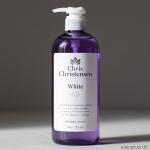
Chris Christensen White on White Shampoo
Essential for Silver and Smoke breeders. It uses optical brighteners to counteract the 'yellowing' or tarnishing on the white undercoat.
Check Price on Amazon →Conclusion#
Breeding Silvers is a high-wire act. You are balancing the Inhibitor gene against the Rufus polygenes, trying to erase the yellow while keeping the black contrast sharp. It is one of the most difficult, and rewarding, challenges in the fancy.
References#
- Vella, C. et al. (1999). Robinson’s Genetics for Cat Breeders and Veterinarians. “Inhibitor of Melanin,” p. 142.
- Walsh, L.G. (2013). The Maine Coon Cat. “The Colors of the Coon,” p. 16.
- Turner, P. & Robinson, R. (1980). “Melanin inhibitor: a dominant gene in the cat.” Journal of Heredity.
- CFA. Maine Coon Breed Standard: Silver and Smoke Division.
- TICA. Uniform Color Descriptions: Silver Tabby.
- Messybeast. Feline Genetics: The Inhibitor Gene.
- Robinson, R. (1991). Genetics for Cat Breeders.