Vs. Normal Cat: What Makes the Maine Coon a Breed Apart#
When a layperson encounters a Maine Coon, their first—and often last—impression is invariably one of astonishment at its scale. The Maine Coon is often referred to as the “Domestic Cat of Distinction,” and this article clarifies exactly why that distinction is earned. A comparison with the average “Normal Cat” (a term generally used to describe the generic Domestic Short Hair or Domestic Long Hair, which accounts for over 90% of the cat population) highlights not just size, but profound differences in development, vocalization, and genetic health risk.
Understanding these differences is crucial for anyone considering ownership, as the Maine Coon demands specialized gear, nutrition, and proactive health screening that the average domestic cat does not require.
1. Physical Difference: Size, Structure, and Development#
While most domestic cats stop growing around 12 to 18 months, the Maine Coon operates on a uniquely slow biological clock.
A. Size and Boning#
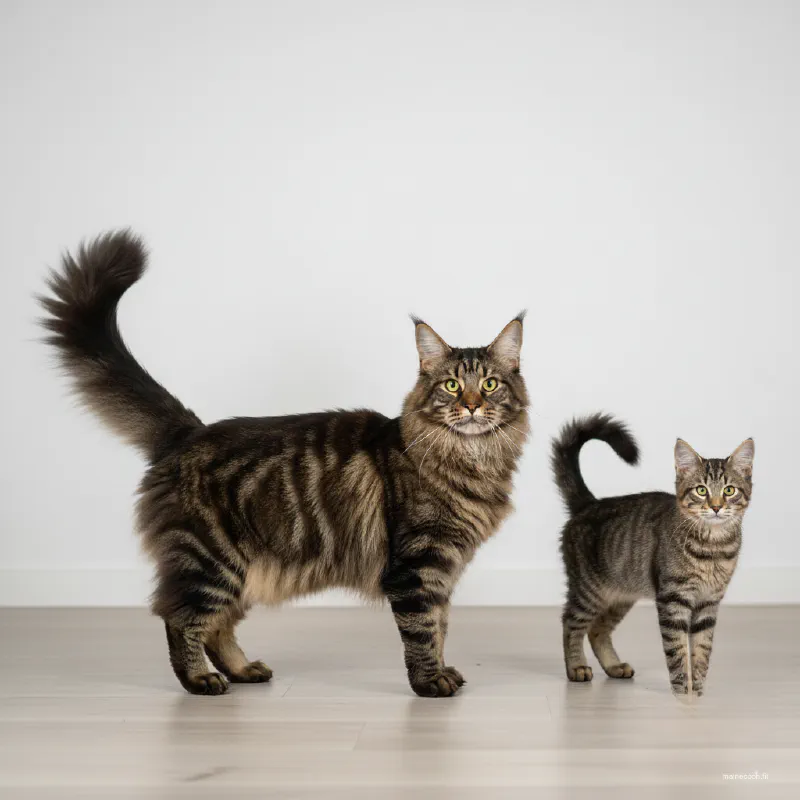
The average domestic cat weighs 8–10 pounds. An adult male Maine Coon weighs 18–25 pounds, with some reaching higher. This difference is not just fat; it is bone structure.
- Skeletal Density: The Maine Coon possesses heavy boning, meaning their skeletons are thicker, denser, and more robust than a typical cat.
- Rectangularity: The breed standard mandates a rectangular body shape, long and substantial, contrasted with the more compact, rounded physique of the average domestic cat.
B. Prolonged Growth#
The Maine Coon’s size is achieved over an extended developmental period, not rushed growth.
- Growth Timeline: They continue to gain mass and density until 3 to 5 years of age (a crucial timeline detailed in The 5-Year Journey: When Do Maine Coons Stop Growing Completely?), whereas a normal cat is fully mature by two years. This period demands specialized Fueling the Giant: The Ultimate Maine Coon Nutrition Guide (2025) to ensure proportional development.
2. Behavioral and Vocalization Differences#
Maine Coons possess a set of personality and communication traits that set them apart from the typical independent domestic cat.
A. Communication Style#
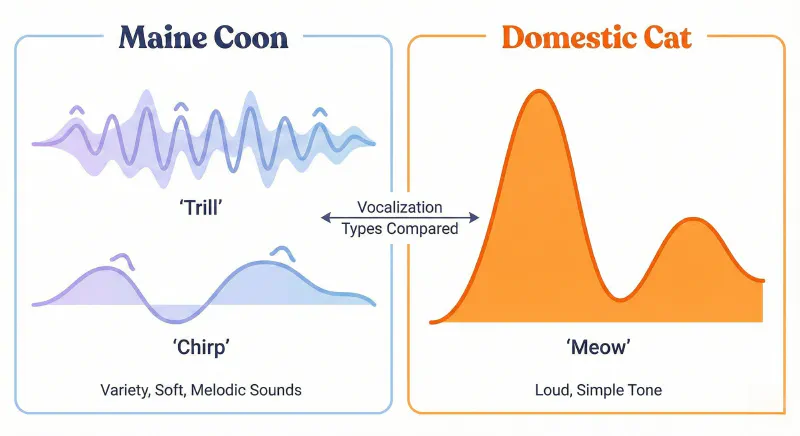
- The Voice: The most surprising contrast is their vocalization. While the domestic cat uses the conventional meow as its primary means of communication with humans, the Maine Coon primarily uses a repertoire of soft, melodic trills, chirps, and soft squeaks (detailed in The Trill, Chirp, and Meow: A Maine Coon Vocalization Dictionary). The full, loud meow is often reserved for urgent or stressful situations.
- Affection: Maine Coons are notoriously social and “dog-like.” They often exhibit the “shadow cat” behavior—following their owners from room to room simply to be near them—a level of clinginess less often observed in the average, more independent domestic cat.
B. Play and Intelligence#
Both are highly intelligent, but the Maine Coon’s play is often sustained and engaging. They retain a “kittenish” disposition well into their senior years and are highly trainable, often enjoying games like fetch (a subject explored in Training Your Gentle Giant: Leash Training, Fetch, and Clicker Commands).
3. Health Profile and Specialized Needs#
While cross-bred domestic cats benefit from genetic diversity, the purebred Maine Coon carries specific, inheritable risks that necessitate proactive management and specialized gear.
A. Hereditary Risks#
The Maine Coon is predisposed to serious, high-cost health issues, which mandate regular screening and insurance (see Pet Insurance: A Financial Shield for the Maine Coon’s Unique Health Risks):
- Hypertrophic Cardiomyopathy (HCM): A specific genetic mutation is responsible for the high incidence of heart thickening.
- Hip Dysplasia (FHD): The genetic predisposition, combined with their heavy size, makes them more vulnerable to joint issues than the average cat.
B. Gear Requirements#
The size dictates specialized needs that normal cats do not share:
- Carriers: Require Heavy Duty Carriers: Safety, Comfort, and Choosing XL Carriers for Maine Coons designed for small dogs, not standard cat crates.
- Litter Boxes: Need XL Litter Boxes: Sizing, Containment, and Hygiene for the Maine Coon to accommodate their length and prevent inappropriate elimination.
Conclusion#
The Maine Coon is more than just a large domestic cat. Its heavy-boned, rectangular structure, slow growth rate, unique vocalizations, and specific genetic predispositions firmly establish it as a breed apart. Choosing a Maine Coon means embracing a cat that is highly integrated into the family unit and committing to specialized care designed to support its massive size and complex health needs. The rewards, however, are immeasurable: a loyal, dog-like companion who remains playful and majestic throughout its extended life.
Understanding the Pedigree#
When you buy from an ethical breeder, you aren’t just paying for a kitten; you are paying for genetic certainty.
- The Look: Learn why breeders select for the Ron Perlman Look or specific Breed Characteristics.
- The Myths: A good breeder will tell you the truth about the Bobcat Myth.
- Polydactyls: Some breeders specialize in the Extra Toe Trait.
- Paperwork: Always ask to see the Pedigree to ensure no inbreeding.
🔗 References & Further Reading#
- VIN (Veterinary Information Network) Consult. Comparative Orthopedics in Domestic vs. Pedigreed Cats. (Source for differences in bone density and orthopedic risks between DSH/DLH and breeds like the Maine Coon).
- Ohio State University Veterinary Medical Center. Feline Cardiac Disease: Risk Assessment in Common Domestic Breeds. (Data contrasting the genetic risk for HCM in purebreds versus the general cat population).
- The Feline Behaviour Foundation. Vocalization and Communication in Pedigreed vs. Unpedigreed Cats. (Source for the distinct, soft vocal patterns of the Maine Coon compared to the DSH meow).
- Washington State University College of Veterinary Medicine. Growth and Development in Large Feline Breeds. (Resource detailing the specific length of growth and skeletal development in large, slow-maturing breeds).