Carrying Giants: Hard vs. Soft Carriers for 25lb Cats#
Transporting a Maine Coon is a logistical challenge that most cat owners never have to consider. A standard domestic cat weighs ten pounds and fits comfortably into almost any carrier on the market. A mature Maine Coon male can weigh twenty-five pounds and measure forty inches from nose to tail. If you attempt to force a cat of this magnitude into a standard “medium” carrier, you are not only causing them physical distress but also risking a catastrophic equipment failure. Zippers burst, plastic handles snap, and mesh rips under the strain of a panic attack.
For the Maine Coon owner, the choice of carrier is not about style; it is about structural integrity and volume. The carrier must be large enough for the cat to stand up and turn around—a critical requirement for reducing travel anxiety—yet secure enough to contain a powerful animal that decides it wants out. The debate ultimately settles into two camps: the flexibility of soft-sided bags for air travel and the absolute security of hard-sided kennels for the road.
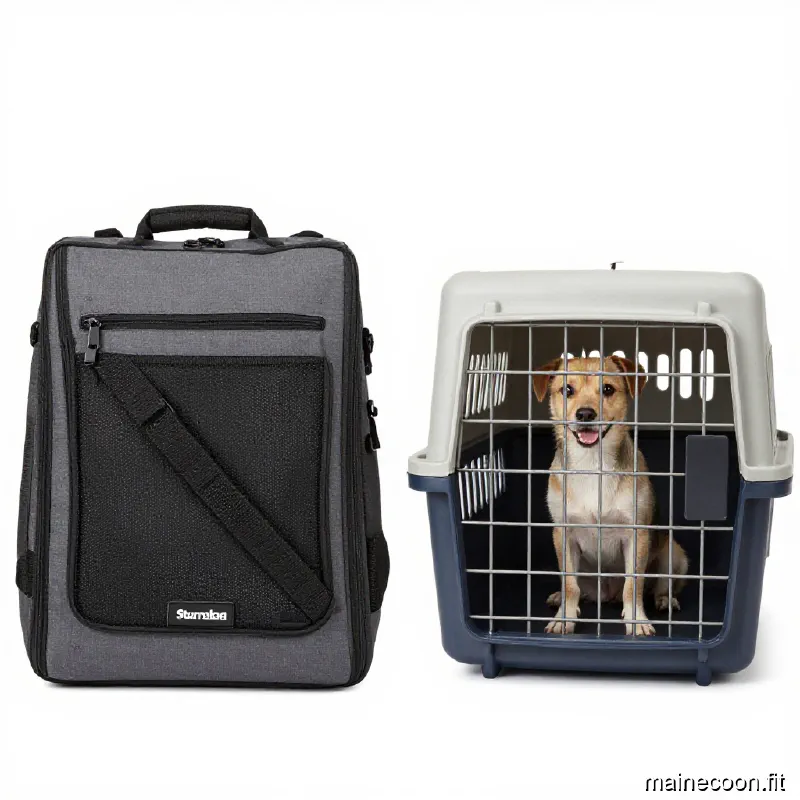
The Air Travel Gold Standard: SturdiBag Pro 2.0 (Extra Large)#
If you plan to fly with your Maine Coon in the cabin, you face a physics problem: the cat is larger than the space under the seat. Most airlines have a strict height limit for carriers, typically around eight to ten inches. A Maine Coon stands significantly taller than this. If you use a rigid carrier, it will not fit, and you will be denied boarding.
The solution utilized by nearly every professional breeder and exhibitor worldwide is the SturdiBag. Specifically, the Extra Large size. The genius of this design lies in its patented “flex-height” structure. The arched top is held up by flexible tension rods, similar to a camping tent. When you walk through the airport, the bag provides full height (16 inches), allowing your giant to sit up proudly. When you slide it under the seat in front of you, the rods flex and compress without collapsing on the cat, molding to the available space.
Crucially, the SturdiBag is rated for 50 pounds. Unlike cheap carriers that sag in the middle like a hammock, the SturdiBag features a hard foam baseboard that supports the cat’s weight evenly, preventing the “taco effect” that terrifies cats. The mesh is rubberized and claw-proof, ensuring that even a determined escape artist remains contained.
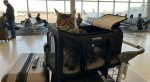
SturdiBag Pro 2.0 Extra Large
The only carrier that fits a 25lb Maine Coon and still fits under an airline seat. The 'flex-height' design is a non-negotiable for flying.
Check Price on Amazon →The Road Warrior: Petmate Sky Kennel (28-Inch)#
For car travel, soft carriers pose a risk. In the event of an accident, a soft bag offers zero impact protection. Furthermore, many Maine Coons suffer from motion sickness, and cleaning vomit out of a fabric bag is a nightmare. For road trips and vet visits, the hard-sided kennel is superior.
The Petmate Sky Kennel is the industry standard for durability. For a male Maine Coon, you must ignore the “Cat” size and look at the “Intermediate Dog” size (28 inches long). This length allows the cat to lie down fully extended, which prevents cramping and anxiety during long drives. The construction is thick, heavy-duty plastic with a metal grate door that features a four-way vault latch—far more secure than the spring-loaded pinch clips found on cheaper models.
Why the Sky Kennel over a standard carrier? Ventilation. The Sky Kennel features wire vents on all four sides, providing 360-degree airflow. Maine Coons overheat easily due to their triple coat, and a standard plastic box with only a few slits can quickly become a sauna in a warm car. The open wire design keeps them cool and allows them to see you, which can be comforting.
Petmate Sky Kennel (28 Inch)
The 'Vault' for your car. Heavy-duty plastic protection with 360-degree ventilation. Use the 28-inch size for full-grown males.
Check Price on Amazon →The Crash-Tested Alternative: Sleepypod Air#
For those who demand the absolute highest safety rating for car travel, the Sleepypod Air stands alone. It is currently the only carrier that has been crash-tested and certified by the Center for Pet Safety. It is designed to withstand a collision without ejecting the pet.
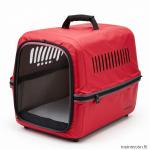
Sleepypod Air In-Cabin Pet Carrier
The 'Vault' for your car. Heavy-duty plastic protection with 360-degree ventilation. Use the 28-inch size for full-grown males.
Check Price on Amazon →While it is smaller than the SturdiBag XL (and thus a tight squeeze for the largest Maine Coon males), it is acceptable for females and smaller males up to 18 pounds. Its primary feature is its strap system, which secures deeply into the car’s seatbelt LATCH system, effectively turning the carrier into a child safety seat. If your Maine Coon fits, there is no safer way to travel by car.
The Top-Loading Advantage#
Regardless of which style you choose, prioritizing a “top-loading” option can save you from bloodshed at the vet. Maine Coons are strong. Trying to shove a resistant twenty-pound cat through a small front door is a recipe for scratches and stress. A top-loading door allows you to lower the cat gently into the carrier, letting gravity do the work. At the vet, the lid can be opened so the cat can be examined while remaining in the “safety” of their box, reducing fear aggression.
References#
- Center for Pet Safety. (2024). Crash Test Studies and Carrier Certifications.
- International Air Transport Association (IATA). Live Animals Regulations (LAR) for In-Cabin Pets.
- Journal of Feline Medicine. Reducing Travel Stress in Cats: The Role of Carrier Training.