Paw Care: Trimming Toe Tufts and Checking for Ingrown Claws#
One of the defining features of the Maine Coon is their “Snowshoes”—massive, wide paws with tufts of fur sprouting from between the toes. In the wild, these tufts acted like natural snowshoes, distributing their weight over deep snow drifts in Maine winters.
In your living room, however, they act like Swiffer mops.
They collect dust. They track litter all over your bed. And on hardwood floors, that long fur covers the paw pads, turning your cat into a drifting hovercraft with zero traction.
Paw care is often overlooked, but for a heavy breed prone to joint issues, grip matters. Here is how to manage the feet of a giant.
The “Drift” Problem: Why You Should Trim#
When the fur on the bottom of the paw grows longer than the pads, the pads cannot touch the floor. Your cat is walking on hair.
This causes:
- Sliding: When they jump down from a cat tree or turn a corner, they slip. This puts immense strain on their hips and knees, exacerbating arthritis risks.
- Litter Tracking: The tufts grab granules of litter and carry them out of the box.
- Matting: Debris (or worse, fecal matter from the litter box) gets stuck in the toe fur and forms hard, painful rocks between the toes.
The Fix: The “Flush” Trim You do not need to shave the paws bare (unless there is a medical reason). You just need to trim the fur flush with the pads.
- Use a small electric clipper (the same one from your Sanitary Trim kit).
- Gently press the paw to splay the toes.
- Run the clipper over the bottom of the foot, removing only the hair that sticks out beyond the pads.
Polydactyl Problems: The Extra Toes#
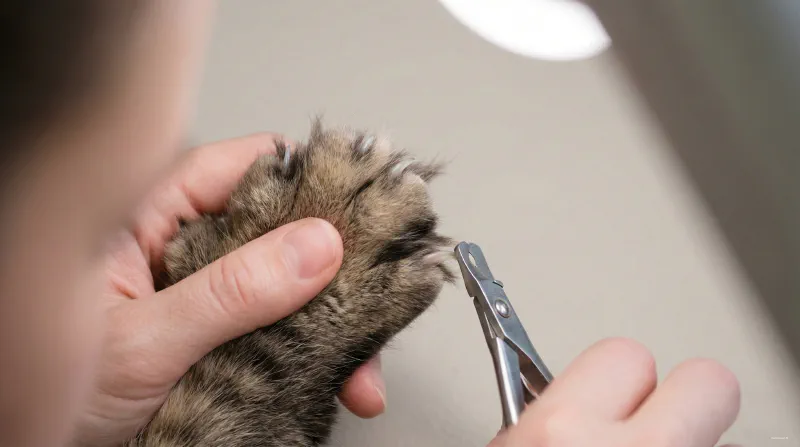
Many Maine Coons are Polydactyl (they have extra toes). These “thumb cats” have specific grooming needs.
The extra toes often sit higher on the paw or at odd angles. Because these claws do not touch the ground, they are not worn down naturally by scratching posts.
The Ingrown Danger: If you forget to clip the “thumb” claw, it will grow in a circle. Eventually, it will grow into the paw pad. This is excruciatingly painful and causes infection. I have seen polydactyls arrive at rescue with claws embedded half an inch into their flesh.
Check your polydactyl’s thumbs every 2 weeks religiously.
Clipping Thick Nails#
Maine Coon claws are not like normal cat claws. They are thick, hard, and bear-like. A standard flimsy nail clipper might crush the nail rather than cut it.
- Tool Up: Buy clippers designed for small dogs, not cats. You need the leverage.
- The “Squeeze” Technique: Maine Coons have large knuckles. You have to firmly press the top and bottom of the toe to extend the claw fully.
- The Quick: The pink blood vessel inside the nail is usually visible. Cut 2mm in front of the pink part. If you have a black smoke cat with black nails, cut very conservatively—just the hooked tip.
Dry Pads: The Winter Crack#
In winter, indoor heating can dry out their paw pads. You might notice them feeling rough or seeing visible cracks.
The Balm: Use a cat-safe paw balm (like Musher’s Secret or pure coconut oil). Rub it into the pads while they are sleeping.
- Warning: They will lick it off. That’s okay if the product is non-toxic, but try to distract them for 5 minutes so it soaks in.
Conclusion#
Your Maine Coon’s paws carry a lot of weight. By giving them traction (trimming the tufts) and keeping their weapons sharp but safe (clipping the nails), you prevent injury and keep your house slightly cleaner. Plus, is there anything cuter than holding a giant velvet paw?
Resources & Further Reading#
- Journal of Feline Medicine and Surgery. (2018). Polydactyly in the Maine Coon.
- International Cat Care. (2023). How to trim your cat’s claws.