The Sanitary Trim: How to Keep Your Maine Coon’s Behind Clean#
If you own a Maine Coon, you likely fell in love with their majestic, flowing coats. The ruff around the neck, the tufted ears, and that glorious, plume-like tail are the hallmarks of the breed. However, there is a reality to owning a giant, long-haired cat that rarely makes it onto Instagram.
We need to talk about the “fluffy butt” problem.
Atticus, my 22lb Red Tabby, is a fastidiously clean animal. He spends hours grooming. But even he cannot defy the laws of physics. When you combine extremely long, dense fur around the hindquarters with a litter box, accidents happen. “Dingleberries,” fecal mats, and general uncleanliness are not just gross; they are a health hazard for your cat and a hygiene disaster for your furniture.
This guide is about the “Sanitary Trim.” It is the single most important grooming habit you can develop to keep your gentle giant clean, comfortable, and happy. We are going to put aside the embarrassment and talk about exactly how to shave your cat’s butt safely and effectively.
The Necessity of the “Hygiene Clip”#
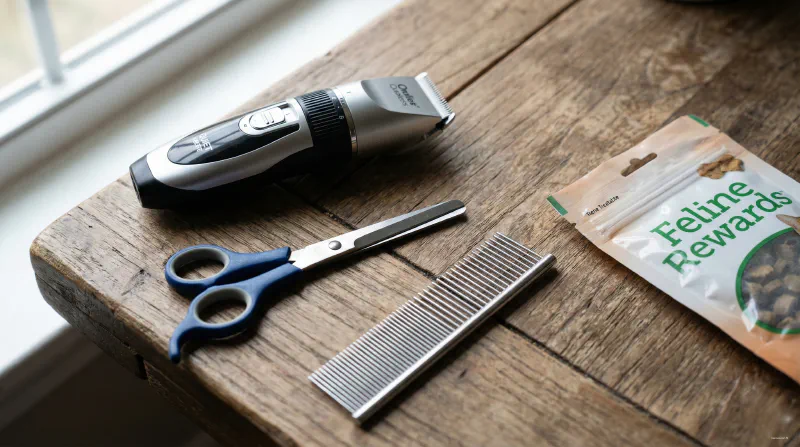
You might be wondering if cutting your Maine Coon’s hair is cruel or unnecessary. In the wild, cats manage their own coats. But the Maine Coon is not strictly a wild animal anymore; we have bred them to have coats far longer and denser than their ancestors might have possessed.
When the fur on the “pantaloons”—the long hair on the back of the thighs—and the area directly around the anus becomes too long, it acts like a net. It traps litter, dust, and inevitably, waste.
Amelia’s Note: I learned this the hard way when Penelope dragged a “souvenir” from the litter box across my white duvet. It wasn’t her fault. Her fur was simply too long to stay clean.
A sanitary trim is not for aesthetics. It is purely functional. It clears a “pathway” so that when your cat squats, nothing touches their fur. It prevents the formation of painful mats that can tug at the sensitive skin in that region, and it reduces the risk of urinary tract infections by keeping bacteria away from the urethra.
Choosing Your Weapons: Clippers vs. Scissors#
There is a fierce debate among owners about whether to use scissors or electric clippers. I will be direct with you: use clippers.
Scissors, even blunt-nosed safety scissors, are dangerous in this area. Maine Coon skin is incredibly elastic and thin. It pulls away from the body easily. If you are using scissors and your cat twitches—which they will—it is terrifyingly easy to snip the skin instead of a mat. I have seen horror stories of owners rushing to the vet for stitches because of a slip of the hand.
Electric clippers are safer. A good quality clipper usually has a guard that prevents the blade from cutting the skin directly. Furthermore, the buzzing sound, while initially scary, is consistent. The snip of scissors is silent until it pinches.
You need a “mini” clipper designed for paws and faces. The large clippers used for dogs are too bulky for the delicate curves of a cat’s rear end. Look for a model that advertises “low noise” or “whisper quiet.” Maine Coons are sensitive to sound, and a loud buzzing right next to their tail will trigger their fight-or-flight response.
The Setup: Preparation is Key#
Do not attempt this when your cat is hyperactive. The best time for a sanitary trim is after a heavy play session or a large meal, when they are in a “food coma.” You want them lethargic and relaxed.
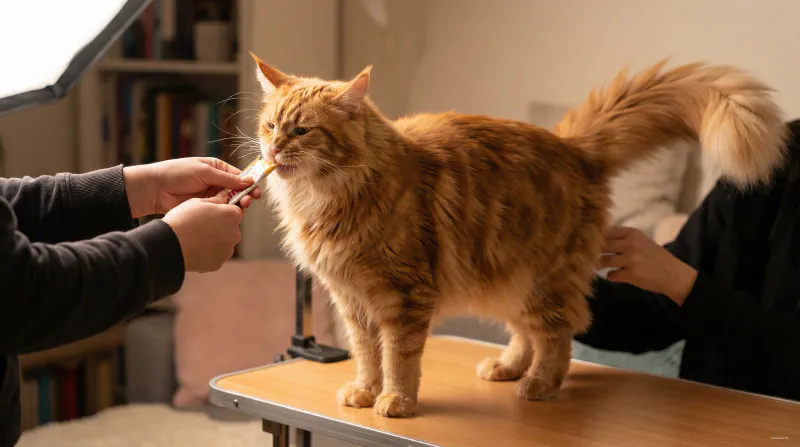
You also need a workspace. The floor is usually a bad idea because the cat can easily bolt. A waist-high table or a washing machine with a non-slip rubber mat is ideal. The height gives you control and saves your back.
If you are new to this, do not do it alone. You need a “holder” and a “trimmer.” My husband usually holds Atticus at the front, distracting him with a Churu paste treat, while I work at the back. Bribery is not just encouraged; it is mandatory.
Step-by-Step: The Execution#
Start by acclimating your cat to the sound of the clippers. Turn them on and lay them on the table while you feed the cat treats. Do not touch the cat with them yet. Let them associate the buzzing sound with the delicious taste of salmon paste.
Once they are calm, lift the tail gently. You are not trying to shave them bald. You are not giving them a “Lion Cut.” The goal is simply to shorten the hair in the immediate “danger zone.”
Identify the area directly below the anus and the inside of the back legs. This is where the mess happens. Turn on the clippers and gently glide them with the grain of the hair, not against it. Shaving against the grain can cause razor burn, which will make your cat scoot on the carpet to relieve the itch.
Shave a small vertical strip downwards, clearing about an inch of clearance around the opening. Then, trim the long “curtains” of hair on the inner thighs. You don’t need to go down to the skin. Leaving a quarter-inch of fuzz is perfectly fine and often more comfortable for the cat.
If you encounter a mat that is tight against the skin, stop. Do not try to shave over it. You might catch the skin. In these cases, you might need to carefully tease it apart with a comb first or use the clippers to slowly chip away at the mat from the outside in.
The Frequency: Maintenance is Easier than Repair#
The mistake most owners make is waiting until there is a problem. They wait until they see a dingleberry or a mat before they get the clippers out. By then, the grooming session is already stressful because you are dealing with a dirty, potentially painful situation.
You should perform a sanitary trim every 4 to 6 weeks. If you make it part of the routine, like nail trimming, the hair never gets long enough to cause an issue. It becomes a quick, five-minute touch-up rather than a forty-minute ordeal.
Between trims, use grooming wipes. A quick wipe down of the area once a week helps keep the skin healthy and allows you to inspect for any early signs of trouble.
When to Call a Professional#
There is no shame in admitting defeat. Some Maine Coons simply will not tolerate this. I have heard of cats that turn into 20-pound tornadoes the moment the clippers touch them.
If your cat becomes aggressive, hisses, or pants heavily, stop immediately. It is not worth the trauma to your bond or the risk of injury. Professional groomers have tools and techniques (and restraints) that can get the job done safely.
Taking your cat to a groomer once every two months for a “butt bath and trim” is a valid strategy. It costs money, but it saves your arms from scratches and your carpet from stains.
Conclusion#
Owning a Maine Coon is a privilege, but it comes with responsibilities that don’t appear in the breed standard brochures. The sanitary trim is one of those unglamorous but vital tasks. By keeping that area clean, you are ensuring your cat remains comfortable and healthy. A clean cat is a happy cat, and a happy cat makes for a clean home.
Resources & Further Reading#
- International Cat Care. (2023). Coat care: Grooming your cat.
- National Cat Groomers Institute. (n.d.). Sanitary Shave Guidelines.
- Veterinary Partner. (2022). Matting and Grooming in Long-Haired Cats.