The Bottom Line#
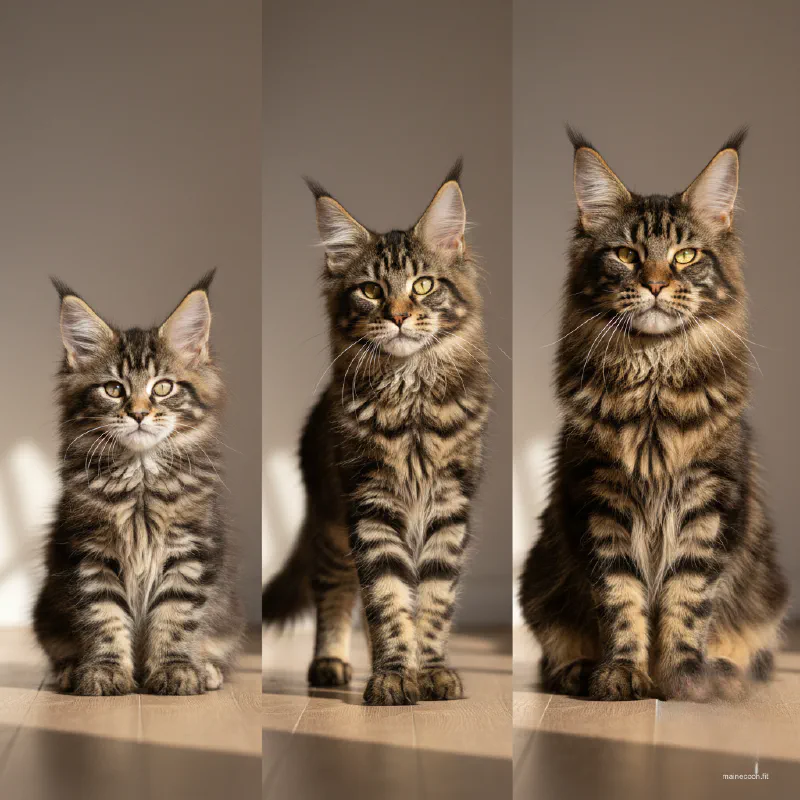
If you believe your two-year-old Maine Coon is fully grown, you are mistaken. In the world of feline genetics, the Maine Coon is a slow-burn anomaly. While the skeletal height might be close to maximum at 18 months, the cat is physiologically immature. The “filling out” process—where the chest broadens, the skull widens, and the muscle mass density maximizes—continues well into the fourth and sometimes fifth year of life. This extended growth window is not just a trivia fact; it dictates every aspect of their care, from the protein content of their diet to the height of their scratching posts.
The Physiology of Slow Growth#
Why does this breed take so long? The answer lies in the “Open Growth Plate” phenomenon. In standard cats, the epiphyseal plates (the growing ends of the long bones) fuse and calcify relatively early, usually by 12 months. In giant breeds like the Maine Coon (and similarly in large dog breeds like Great Danes), this hormonal signal to close the plates is delayed. This allows the skeleton to continue expanding, but it also leaves the joints vulnerable for a much longer window.
The Stages of Maturation#
It is helpful to visualize the Maine Coon’s development in three distinct epochs:
Epoch 1: The Skyscraper Phase (Year 0-1.5) During this time, the cat puts all its energy into vertical and horizontal length. They look like a collection of spare parts—legs too long, ears too big. The energy consumption here is massive, but it’s all directed toward bone elongation.
Epoch 2: The Bulk Phase (Year 1.5-3) Once the frame is built, the body begins to hang muscle on it. You will notice the shoulders getting thicker and the “rectangular” body shape becoming more pronounced. The “waist” disappears not because of fat, but because the ribcage expands to its full capacity.
Epoch 3: The Majesty Phase (Year 3-5) This is the final polish. The coat changes texture, developing the heavy, water-resistant undercoat and the long, silky guard hairs. The “ruff” or mane fully develops, framing the face. The “Muzzle Box”—the square part of the snout—often becomes more defined during this late stage, giving the cat its characteristic feral look.
Dietary Implications of Long-Term Growth#
The most common mistake owners make is switching to “Adult Maintenance” food too early. A maintenance diet is designed to keep a static body weight. A 3-year-old Maine Coon is not static; they are still building tissue.
- Protein Requirements: Maintain high protein (high biological value meat sources) well past the 2nd birthday.
- Caloric Intake: Monitor body condition, but do not restrict calories arbitrarily. A growing 3-year-old male needs significantly more energy than a static 10-year-old female.
High-Protein Joint Support Kitten Food
Supports the prolonged growth plates and heavy boning of a Maine Coon during the crucial bulk phase (Years 1-3).
Check Price on Amazon →Joint Health and Longevity#
The downside of being a giant is gravity. The force exerted on the hip joints (coxofemoral joints) is significant. Because the growth plates stay open longer, the window for developing Hip Dysplasia is wider. It is advisable to begin Glucosamine, Chondroitin, and Omega-3 fatty acid supplementation early (around 2 years), rather than waiting for signs of arthritis in old age. Furthermore, environmental modification is key: prevent frequent jumping from extreme heights (like top-of-door landings) onto hard surfaces. Provide “steps” or ramps to help them down from high perches to reduce the concussive force on their shoulders and hips.
Conclusion#
The Maine Coon is a study in patience. Their majestic size is the result of a slow, biologically expensive process. By understanding the five-year timeline, you can adjust your expectations and your husbandry practices to support their unique physiology. Do not rush the process with overfeeding, and do not panic during the lanky phases. A full-grown Maine Coon is worth the wait.
References#
- Pedersen, Niels C. Feline Husbandry: Diseases and Management in the Multiple-Cat Environment. American Veterinary Publications, 1991.
- Walsh, Liza Gardner. The Maine Coon Cat. Down East Books, 2013.
- “Hip Dysplasia in Maine Coon Cats.” Orthopedic Foundation for Animals (OFA).