The 5-Year Journey: When Do Maine Coons Stop Growing Completely?#
The question of when a Maine Coon stops growing is one of the most common—and misunderstood—topics in the breed community. If you were expecting your cat to reach full maturity by 12 months, you are in for a long, rewarding wait.
The overwhelming majority of domestic cats reach their skeletal and physical peak between 12 and 18 months of age. Maine Coons, however, follow a unique biological clock.
Research and extensive breeder data confirm that the Maine Coon’s growth period extends significantly, with final physical and skeletal maturity achieved between three and five years of age. This slow, deliberate process is what allows them to achieve their massive, robust stature.
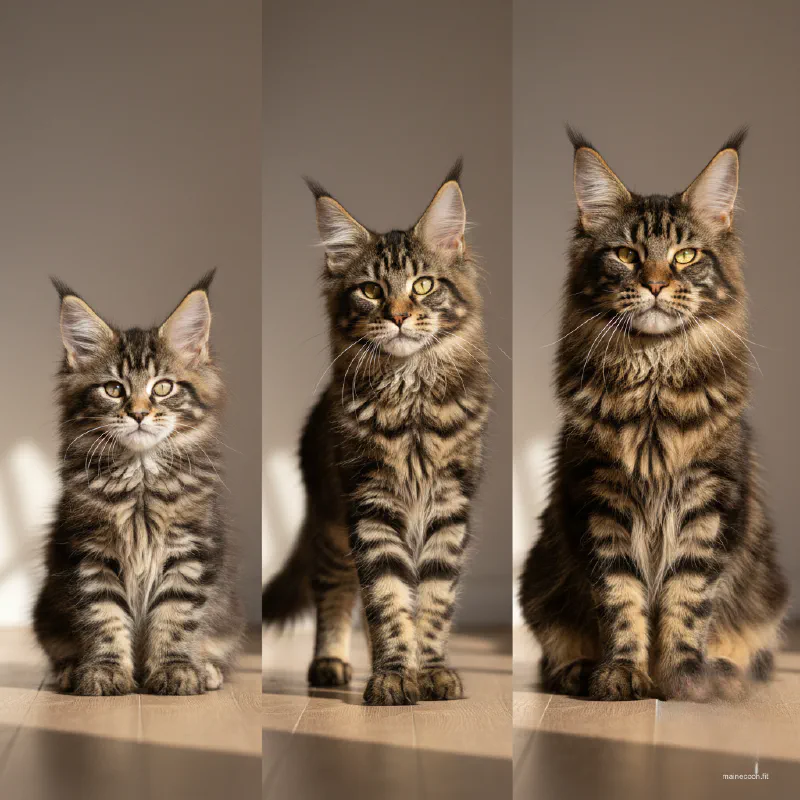
1. The Growth Cycle: Five Distinct Phases#
Understanding the five-year journey helps owners tailor their diet and environmental protection protocols to the correct stage.
Phase 1: Kittenhood (0 – 6 Months)#
This is the most rapid weight gain phase. Your kitten will gain, on average, about 1 pound (0.45 kg) per month. They are all curiosity and clumsy energy.
- Skeletal Foundation: Bone density and linear growth are prioritized.
- Critical Action: Maintain strict control over food quality (high protein, proper Calcium:Phosphorus ratio) to support bone growth without promoting dangerous obesity.
Phase 2: Adolescence (6 Months – 2 Years)#
This is often called the “lanky teenager” phase. Growth slows down, but is continuous. Skeletal growth plate fusion is still ongoing.
- The Look: The cat is tall and long but often appears thin, with the famous “lion’s mane” still sparse and underdeveloped.
- The Risk: This stage coincides with the highest risk for orthopedic conditions like SCFE (Slipped Capital Femoral Epiphysis) due to heavy body weight combined with vulnerable, still-open growth plates.
- Critical Action: Transition to the appropriate food and ensure joint support begins.
Phase 3: Young Adulthood (2 – 3 Years)#
Skeletal growth has largely completed, but the cat is now focusing on muscle density and girth.
- The Look: The cat starts to “fill out.” The chest broadens, and the body takes on the robust, rectangular shape defined by the TICA and CFA breed standards.
- Coat Development: The coat’s heavy, double-layered density becomes fully apparent.
Phase 4: Maturity (3 – 5 Years)#
This is the final phase of development.
- The Final Touches: The facial profile matures, with the large eyes and square muzzle becoming more prominent. The full, dense ruff and tail plume achieve their maximum volume.
- Final Weight: The cat settles into its adult weight (18-25 lbs for males, 12-18 lbs for females).
2. The Orthopedic Significance of Slow Growth#
The prolonged growth of the Maine Coon is directly linked to its major health challenge: orthopedic fragility during its youth.
The Physis: A Weak Link in the Bone#
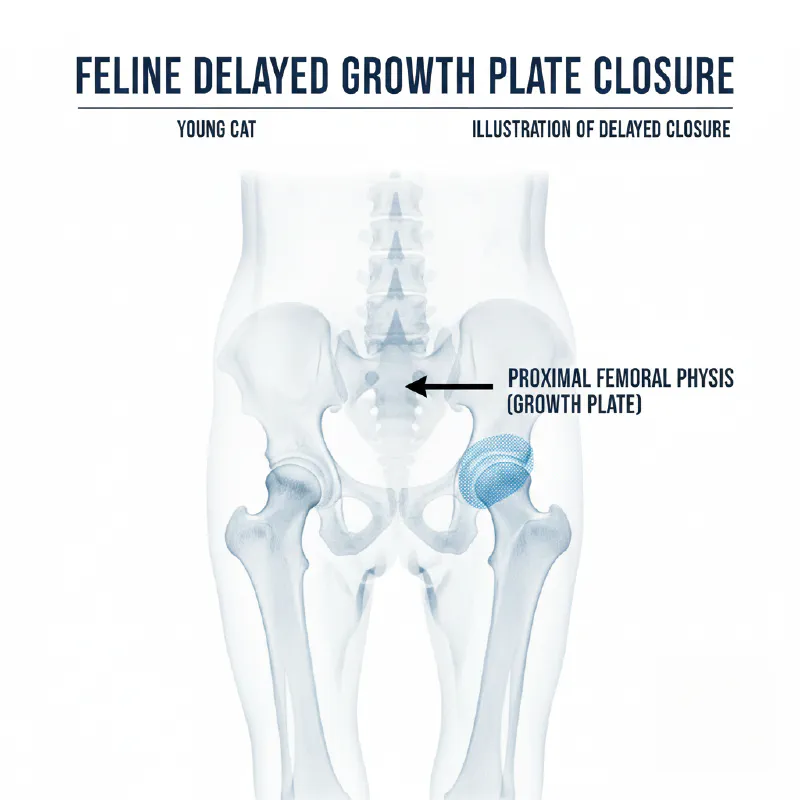
The growth plates (or physes) are soft, cartilaginous layers near the ends of long bones. Research on domestic cats shows that while many growth plates close around 7–9 months, others, such as the proximal femur (hip), can remain open up to 24 months of age in some individuals.
- The Problem: The Maine Coon’s enormous size means that these soft growth plates are supporting 2-3 times the weight of a standard cat, making them extremely prone to trauma or shearing fractures, such as SCFE.
- The Evidence: Studies confirming the late closure of growth plates are a key factor in the high incidence of hip problems within the breed.
The SCFE / Neutering Debate#
As detailed in our Comprehensive Health Guide, sex hormones play a vital role in signaling the closure of these growth plates.
- Actionable Insight: Delaying neutering until 6–8 months allows the cat’s body to receive the hormonal cues necessary for the physes to stabilize, reducing the risk of conditions like SCFE and promoting sound skeletal development.
3. The “Teenage” Experience (6 Months to 2 Years)#
This is the most critical period for owner intervention, often leading to confusion.
The “Lanky” Look#
Owners often worry when their 14-month-old kitten is long, lean, and lacks the majestic presence of an adult. This is the adolescent lanky phase—the frame is built, but the muscle and coat density have not arrived yet.
- Mistake to Avoid: Over-feeding during this time to “bulk them up.” This leads to fat accumulation that stresses the joints, not muscle growth. Focus on lean protein and measured feeding.
The “Kittenish” Disposition#
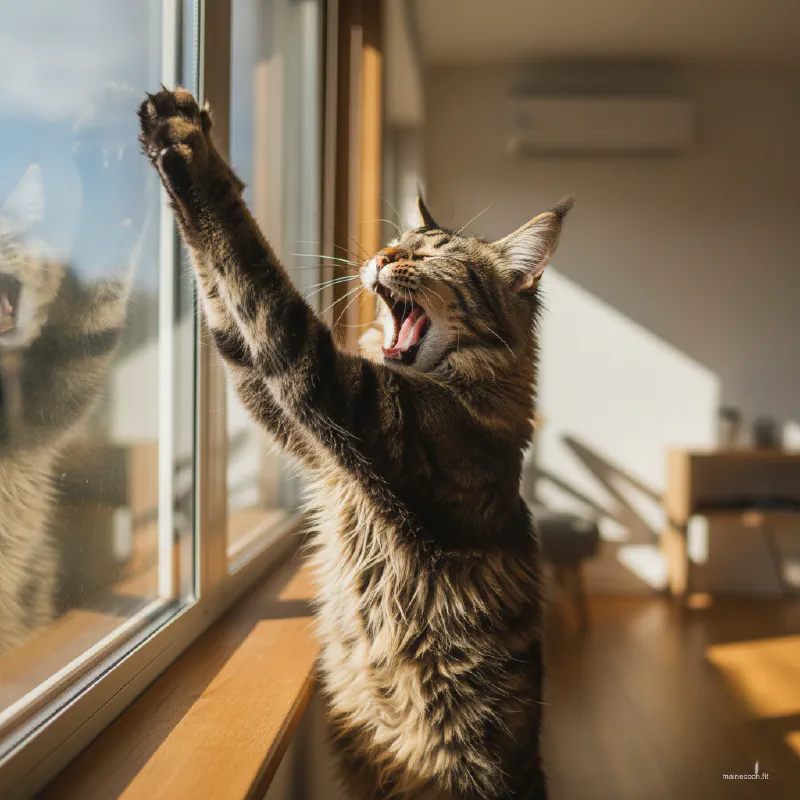
Despite their imposing size, Maine Coons retain their playful, good-natured disposition well into adulthood. They are often active well past their third birthday, continuing their “goofball” behavior. This playful nature, while endearing, must be channeled safely through interactive play that avoids high, risky jumps.
Conclusion#
The Maine Coon’s slow growth is a feature, not a bug. It is a biological gift that results in a massive, healthy frame, but it requires patience and a focused strategy from the owner. By recognizing that their growth continues deep into their third, fourth, and even fifth year, you move past the anxiety of “Is my cat big enough?” and focus instead on the essential task: providing the nutrient density and orthopedic protection necessary for a large body still under construction. The key to a long life is respecting this unique timeline and enjoying the majesty of your gentle giant’s gradual, five-year transformation.
📚 References#
- PetsCare.com. Maine Coon Growth Timeline and Size Expectations. (Source for 3-5 year timeline and growth stages).
- PubMed. Radiographic study of the development of the pelvis and hip in domestic cats. (Source for physis closure times in domestic cats).
- Untamed Cat Food. Maine Coon growth chart—how big is too big? (Source for 1 kg per month gain and slowing after 9 months).
- Vet Help Direct. When do cats stop growing? (Source for 4-5 years full maturity timeline in large breeds).
- TICA (The International Cat Association). Maine Coon Breed Profile. (Source for long growth period and kittenish disposition).
- ResearchGate. Effect of neutering and breed on femoral and tibial physeal closure times in male and female domestic cats. (Source for delayed physeal closure link).
Disclaimer: This guide is for educational purposes. Always consult your veterinarian for specific health advice.