The “Possessed” Cat#
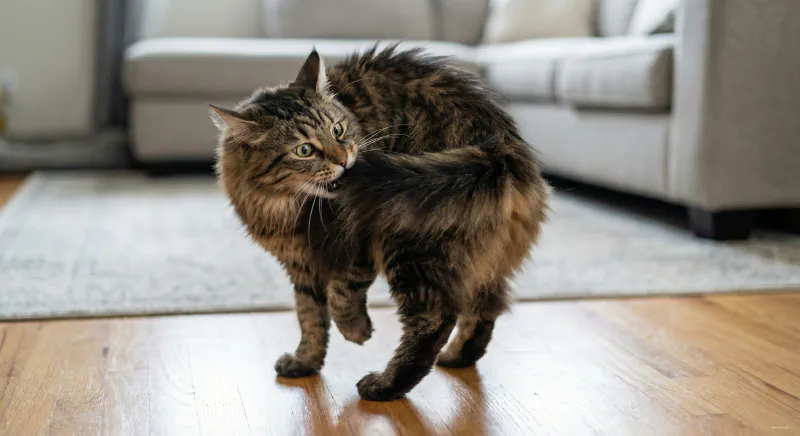
It starts out of nowhere. Your Maine Coon is sleeping peacefully, and then suddenly their eyes dilate, their ears pin back, and they stare at their own flank as if it is under attack. The skin along their spine begins to ripple and roll uncontrollably. Then, the frantic grooming starts—biting at the tail, chasing an invisible enemy, and sprinting through the house as if escaping a predator.
This is the hallmark presentation of Feline Hyperesthesia Syndrome (FHS), also known as “Rippling Skin Syndrome” or “Rolling Skin Disease.” For an owner witnessing it for the first time, it is terrifying. It looks like a seizure, or a hallucination. In many ways, it is both. FHS is a complex neurological disorder that sits on the fence between a compulsive behavioral issue and a seizure activity. Because Maine Coons are a sensitive, high-strung breed, they are disproportionately represented in FHS cases.
Symptoms: More Than Just “Zoomies”#
It is easy to dismiss a mild episode of FHS as the “zoomies” (FRAPs), but there are distinct differences. Normal play behavior is voluntary; the cat can be distracted with a toy or a treat. An FHS episode is involuntary. The cat often looks confused or frightened by its own body.
The primary symptom is the rippling of the cutaneous trunci muscle—the sheet of muscle just under the skin along the back. It looks like waves rolling down the spine. This is often accompanied by extreme sensitivity to touch. If you pet a cat in the middle of an episode, they may hiss, growl, or bite, reacting as if your hand caused them physical pain. This is “hyperesthesia”—an extreme sensitivity to sensory stimuli. Other signs include frantic tail chasing (sometimes resulting in self-mutilation), dilated pupils, and vocalizing loudly for no apparent reason.
The Neurological Link: Is It a Seizure?#
Veterinary neurologists have long debated the root cause of FHS. Current research suggests it is a form of partial seizure activity. Unlike a grand mal seizure where the cat loses consciousness and paddles its legs, a partial seizure affects only a specific part of the brain—in this case, the area controlling sensory processing and grooming behaviors.
This theory is supported by the fact that many Maine Coons with FHS respond well to anti-convulsant medications like gabapentin or phenobarbital. It implies that the “glitch” is electrical. The brain is firing random pain or itch signals to the lower back, causing the cat to attack the area in a desperate attempt to stop the sensation.
Triggers and Stress#
While the root cause may be neurological, the triggers are almost always environmental. FHS is strictly tied to anxiety. Episodes are frequently triggered by conflict with other cats, changes in the household (like moving furniture or a new baby), or simple boredom.
As we discuss in our Behavioral Guide, Maine Coons are “emotional sponges.” They absorb the stress of their owners. An anxious home creates an anxious cat. If your cat is suffering from FHS, you must perform a stress audit of your home. Are there resource guarding issues with other pets? Is the cat getting enough Play Therapy to burn off nervous energy? Reducing the baseline anxiety level often reduces the frequency of the episodes.
Management: Medical and Environmental#
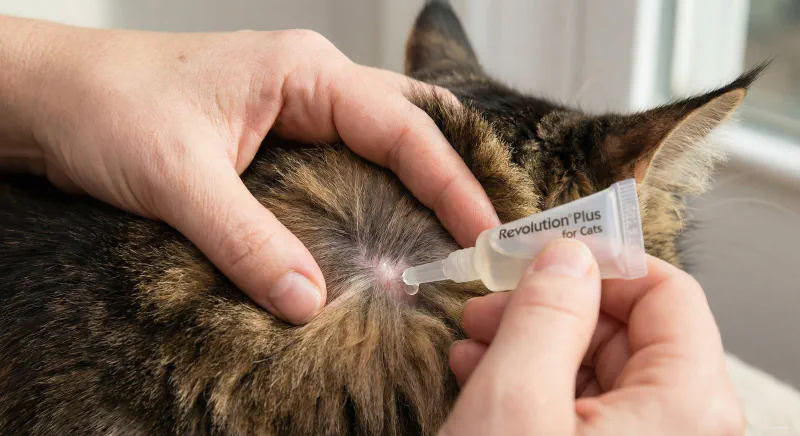
Diagnosing FHS is a process of exclusion. Your vet will first rule out simple causes like flea allergy dermatitis (which can also cause back rippling) or spinal arthritis. Once diagnosed, treatment is a two-pronged approach.
Medically, vets often prescribe Gabapentin, which acts as both a pain reliever and a mild sedative. This dampens the misfiring nerve signals. Environmentally, you must create a “Zen Zone.” This involves establishing a strict routine, as Maine Coons thrive on predictability. Interactive play is crucial—hunting behavior releases dopamine, which counters stress. However, you must avoid over-stimulation. If you notice the skin starting to twitch during a play session, stop immediately and let the cat decompress.
When to Worry: Self-Mutilation#
The most dangerous progression of FHS is self-mutilation. Some cats will attack their tails so viciously that they cause deep wounds or require amputation. If you see your Maine Coon biting its tail to the point of breaking skin, this is a medical emergency. You may need to use an E-collar (cone) temporarily while medications take effect.
Refer to our Aggression Guide for tips on handling a cat that turns its frustration onto you. Remember, a cat in an FHS episode is not “bad”; they are in distress. Punishment will only increase their anxiety and make the episodes worse.
Summary#
Feline Hyperesthesia is a lifelong condition, but it is manageable. With the right combination of medication, stress reduction, and understanding, your Maine Coon can live a happy, symptom-free life. The key is to recognize the “ripple” not as a quirk, but as a cry for help.
Feliway Classic Calming Diffuser
Synthetic pheromones can help lower the baseline anxiety in the home, reducing the frequency of stress-triggered FHS episodes.
Check Price on Amazon →References#
- Feline Hyperesthesia Syndrome - Cornell University College of Veterinary Medicine.
- Neurological Disorders in Cats - Journal of Feline Medicine and Surgery.