Hypertrophic Cardiomyopathy (HCM): Understanding the Maine Coon’s Genetic Heart Risk#
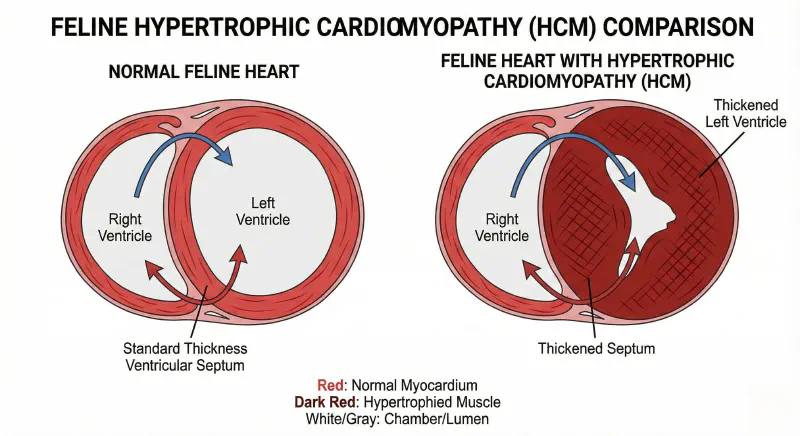
Hypertrophic Cardiomyopathy (HCM) is the most common heart disease in cats and is of particular concern to Maine Coon owners. Unlike other breeds where HCM is often acquired, the Maine Coon is highly predisposed due to a specific autosomal dominant gene mutation. This condition is characterized by the abnormal thickening of the muscular walls of the left ventricle and septum of the heart. This thickening reduces the heart’s capacity to fill with blood and function efficiently, leading to potential complications like congestive heart failure (CHF), arterial thromboembolism (ATE, or ‘saddle thrombus’), and sudden cardiac death.
Understanding the Maine Coon’s genetic vulnerability and adhering to proper screening protocols are the only effective ways to manage this serious health risk and ensure the cat’s long-term quality of life.
1. The Genetic Root: The A31P Mutation#
The high prevalence of HCM in the Maine Coon is directly linked to a mutation in the cardiac myosin binding protein C gene, specifically the A31P mutation.
- Autosomal Dominant: This mutation is inherited in an autosomal dominant manner, meaning a cat only needs to inherit one copy of the defective gene from one parent to be at risk of developing the disease.
- Not 100% Penetrant: Crucially, carrying the gene mutation does not guarantee the cat will develop severe HCM. Penetrance varies, and environmental factors, diet (especially Taurine intake—as discussed in Fueling the Giant: The Ultimate Maine Coon Nutrition Guide (2025)), and general stress levels all play a role.
- Genetic Testing: Responsible breeders use DNA testing to screen breeding animals, ensuring carriers are managed ethically to reduce the mutation’s prevalence in the population.
2. Pathophysiology: What HCM Does to the Heart#
The thickening (hypertrophy) is a progressive process that fundamentally alters the heart’s function.
- Reduced Filling: The thickened wall makes the left ventricle rigid, impeding its ability to relax and fill properly with blood during the diastolic phase. This dramatically reduces the volume of blood the heart can pump.
- Left Atrial Enlargement: Because blood cannot easily enter the rigid ventricle, it backs up into the left atrium, causing the atrium to stretch and enlarge.
- Risk of Thrombus: The resulting turbulent blood flow and stasis (pooling) in the enlarged left atrium lead to the formation of blood clots, which can break off and travel, causing the painful and often fatal Aortic Thromboembolism (Saddle Thrombus).
- Congestive Heart Failure: The backlog of blood eventually causes fluid to leak into the lungs, leading to pulmonary edema (Congestive Heart Failure).
3. Screening and Diagnosis#
Because HCM is often asymptomatic (silent) until it reaches an advanced stage, early detection is entirely reliant on screening.
Annual Echocardiograms#
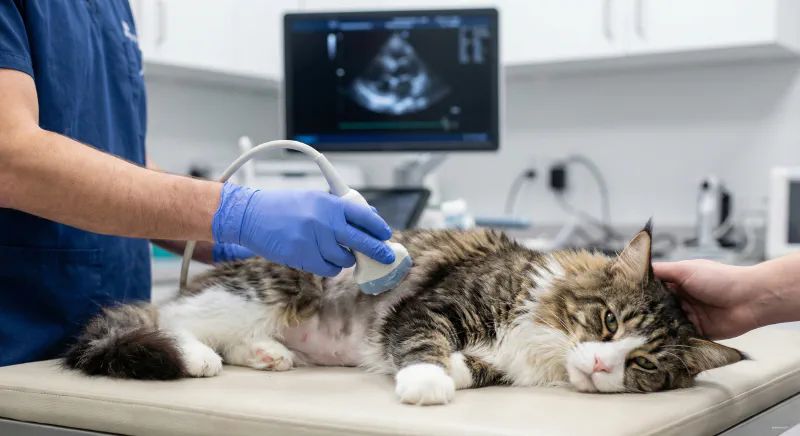
The gold standard for diagnosing HCM is the echocardiogram (cardiac ultrasound). This non-invasive test allows a veterinary cardiologist to measure the thickness of the heart walls and septum, assess the size of the atria, and evaluate blood flow.
- Protocol: Maine Coons should begin baseline echocardiogram screening by age two, with annual or bi-annual follow-up screenings based on the cardiologist’s recommendation. Early detection allows medication to begin before major clinical signs appear.
Clinical Signs (When the Disease is Advanced)#
Once clinical signs appear, the disease is often progressed. Look for these warning signs:
- Rapid or Labored Breathing (Dyspnea): The most common sign of fluid in the lungs (CHF).
- Lethargy: Reduced play, excessive sleeping, or reluctance to jump (which can also be a sign of orthopedic issues like Hip Dysplasia, as discussed in The Hip Dysplasia Paradox: Prevention, Diagnosis, and Management in Maine Coons).
- Acute Rear Leg Paralysis: A sudden sign of ATE (saddle thrombus), which is a life-threatening emergency causing intense pain and coldness in the hind limbs.
[ADSENSE-AD-PLACEMENT]
4. Medical Management and Prognosis#
While HCM is irreversible, its progression can be slowed, and its symptoms managed with medication.
Medication Goals#
Treatment focuses on three main areas:
- Improving Relaxation: Medications (like Atenolol or Diltiazem—Beta-blockers or Calcium Channel Blockers) help the heart muscle relax, improving filling.
- Diuretics: If congestive heart failure is present, diuretics (like Furosemide) are used to remove excess fluid from the lungs, relieving breathing difficulty.
- Clot Prevention: Medications (like Plavix/Clopidogrel) are administered to thin the blood and reduce the risk of forming dangerous clots in the enlarged left atrium.
Owner Compliance (Medicating Your Cat)#
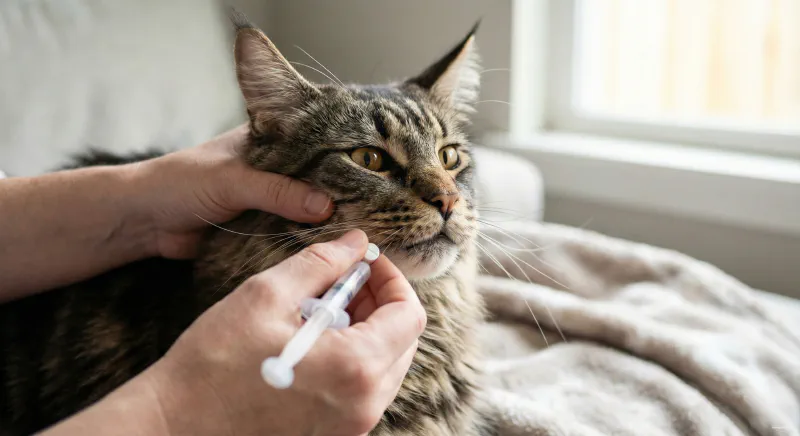
Medicating a large, intelligent cat multiple times a day is a significant commitment. Owners must master effective techniques, such as using pill pockets or specialty pilling devices (syringes) to ensure the full dose is administered smoothly and safely. Consistency in administering medication is vital to maintaining blood concentration levels and cardiac stability.
Conclusion#
Hypertrophic Cardiomyopathy is the defining health challenge for the Maine Coon breed, driven by genetics. However, it is not a death sentence. Through responsible genetic screening, early diagnosis via annual echocardiograms, and dedicated, consistent medical management, Maine Coons with HCM can often maintain excellent quality of life for many years. Ownership of this magnificent breed requires prioritizing this screening protocol as a vital component of preventative care.
🔗 References & Further Reading#
- American College of Veterinary Internal Medicine (ACVIM). Consensus Statement on the Diagnosis and Management of Feline Hypertrophic Cardiomyopathy. (The primary resource for diagnostic and treatment protocols).
- Journal of Veterinary Cardiology. Prevalence of the MYBPC3-A31P Mutation in Maine Coon Cats and Screening Protocols. (Research confirming the genetic link and necessity of DNA/Echocardiogram screening).
- Cornell Feline Health Center. Hypertrophic Cardiomyopathy. (General overview of the disease, symptoms, and treatment options in cats).
- Washington State University College of Veterinary Medicine. Aortic Thromboembolism (Saddle Thrombus) in Cats. (Detailed information on HCM’s most devastating complication).