Cooling the Giant: Heat Stroke Prevention for Maine Coons#
Atticus loves the snow. He will sit on the balcony in 20°F weather for an hour. But when the temperature hits 80°F, he turns into a puddle.
Maine Coons possess a thick, water-resistant double coat designed for the harsh winters of New England. They cannot take their coat off. In high summer, this insulation can become a trap.
Heat Stroke is a real danger, especially for cats without air conditioning or those traveling in cars. A cat’s normal temperature is around 101.5°F. At 105°F, their organs begin to shut down.
Signs of Overheating (Hyperthermia)#
- Panting: Cats do not pant to cool down like dogs unless they are in distress. If your cat is panting with their tongue out, they are overheated.
- Sweaty Paws: Cats sweat through their footpads. Look for damp footprints on the floor.
- Lethargy: Refusing to move, or stumbling.
- Red Gums: Bright red gums indicate expanded blood vessels trying to dump heat.
Cooling Gear: The “Chill” Spot#
You cannot shave every Maine Coon (see the Lion Cut Debate). Instead, give them tools to regulate their own temperature.
1. Gel Cooling Mats: These pressure-activated mats feel cold to the touch without needing refrigeration. Place one in their favorite sleeping spot.
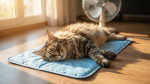
Pressure Activated Cooling Gel Mat
No electricity or freezer needed. The gel absorbs body heat instantly. Essential for summer survival.
Check Price on Amazon →2. The Ice Pod: Frozen plastic discs (often used for rabbits) stay cold for 8 hours. Wrap one in a pillowcase and put it in their bed.
3. Ceramic Tiles: Buy a single large marble or ceramic tile from a hardware store ($5). Keep it in the fridge. Put it on the floor for them to lie on.
Emergency Cool-Down Protocol#
If your cat is panting:
- Move them to a cool room/tile floor.
- Wet them down: Use cool (not ice cold) water on their ears and paws.
- Airflow: Put a fan directly on them.
- Vet: If panting continues for more than 5 minutes, go to the vet.
Conclusion#
Summer is hard on giants. Keep the AC on, keep the water fountain full, and watch for the pant.
Resources & Further Reading#
- RSPCA. (2023). Heatstroke in Pets.
- Journal of Thermal Biology. (2020). Thermoregulation in domestic cats.