Lungworm in Cats: Is Your Maine Coon Coughing?#
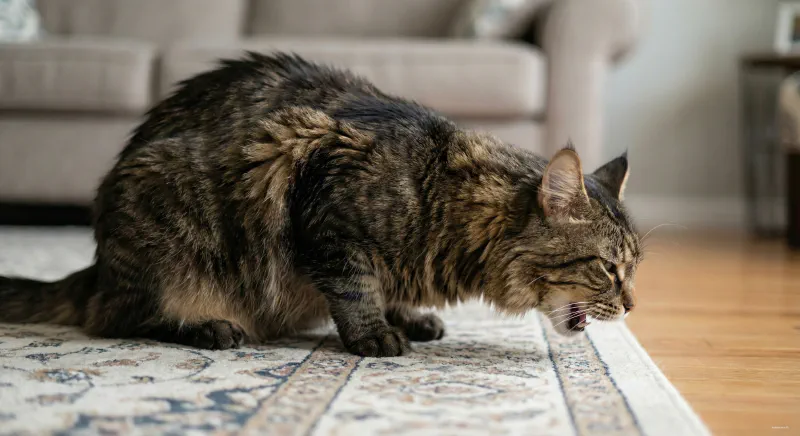
I remember the first time I heard it. Atticus was crouching low to the ground, his neck extended straight out like a turtle.
Huck… Huck… Huck…
I grabbed a paper towel, expecting a hairball. I waited. He coughed again. He swallowed hard.
And then… nothing. He stood up and walked away.
I brushed it off. A week later, it happened again.
I thought he had asthma. Maine Coons are big cats, and I knew respiratory issues could happen.
But the diagnosis wasn’t asthma. It was a parasite I had never even thought about.
Lungworm.
If you have a Maine Coon that goes outside—even just on a leash or in a Catio—you need to know about this.
It is far more common than people realize, and it mimics other diseases so perfectly that it is often misdiagnosed.
🐌 The Hidden Danger in the Garden#
Lungworm is a parasite that infects the respiratory tract of cats. The most common species is Aelurostrongylus abstrusus.
But how does a pampered house cat get a worm in its lungs?
The answer lies in the food chain. The larvae of the lungworm live in snails and slugs.
Now, you might say, “My cat doesn’t eat snails.”
Maybe not. But birds eat snails. Rodents eat snails. Lizards eat snails.
If your Maine Coon is a hunter—and let’s be honest, their prey drive is legendary—they are at risk.
If they catch a mouse that ate an infected snail, they ingest the larvae.
The larvae migrate from the cat’s stomach, through the bloodstream, and settle in the lungs. There, they develop into adult worms and lay eggs.
It is a biological horror movie happening inside your cat’s chest.
🚩 The “Hairball” Imposter#
The reason Lungworm often goes untreated for months is that it looks exactly like a hairball cough.
Maine Coon owners are used to hairballs. We see them all the time. So when we hear that rhythmic hacking sound, we tune it out.
Here is how to tell the difference.
The Hairball Hack sounds wet and retching. It usually ends with the production of a tubular mass of fur or fluid. The cat looks relieved afterward.
The Lungworm Cough sounds dry and raspy. Nothing comes up.
The cat often swallows immediately after the cough. They are swallowing the mucus and larvae coughed up from the lungs.
The posture is different, too. They crouch low, elbows out, neck extended parallel to the floor.
⚠️ Advanced Symptoms#
If the infection is mild, the occasional cough might be the only sign. But if the worm load gets heavy, the symptoms escalate.
Wheezing: You might hear a high-pitched whistle when they breathe while sleeping.
Exercise Intolerance: This is a big one for Maine Coons. They usually love to play fetch or chase wand toys.
If your cat chases the toy for 30 seconds and then lies down panting, that is not laziness. That is a lack of oxygen.
Weight Loss: Despite eating normally, they might start to lose muscle mass along the spine.
Pneumonia: In severe cases, the damage to the lung tissue leads to secondary bacterial pneumonia. This is life-threatening.
🔬 The Diagnosis Dilemma#
If you take your coughing cat to the vet, a standard check-up might miss this.
Listening with a stethoscope often reveals “crackles” in the lungs, but that sounds just like asthma.
A standard fecal float test (looking for worm eggs in poop) often misses lungworm larvae because they are heavy and sink to the bottom of the solution.
You must ask for a specific test called the Baermann Technique.
This test uses a different method to extract larvae from the stool sample. It is the gold standard for diagnosing lungworm.
If you suspect this, you have to advocate for your cat and specifically request this test.
💊 Treatment and Prognosis#
The good news? Lungworm is entirely curable.
Unlike Heartworm (which is very difficult to treat in cats), Lungworm responds beautifully to dewormers.
Your vet will likely prescribe a topical spot-on treatment like Profender, Advantage Multi, or Revolution Plus.
These medications are absorbed through the skin and kill the worms in the lungs.
Usually, the cough disappears within 2 to 4 weeks of treatment.
In severe cases where pneumonia has set in, your cat might also need a course of antibiotics and steroids. This reduces the inflammation in the lungs while the worms die off.
🛡️ Prevention Strategies#
You don’t have to lock your Maine Coon in a bubble, but you should be aware of the risks.
Regular Deworming is key. If your cat goes outside or has a history of hunting mice in the basement, keep them on a monthly preventative.
Ensure the preventative specifically targets lungworm. Not all flea meds do this. Check the label for Aelurostrongylus.
Control the Garden. If you have a Catio, try to keep the snail and slug population down.
Remove leaf litter where they hide. Elevate food bowls so slugs don’t crawl into them at night.
Watch the Water. Don’t let your cat drink from puddles or outdoor bird baths. These stagnant water sources can harbor larvae from dissolved slugs.
📝 Conclusion#
A coughing cat is not always a hairball cat.
Maine Coons are robust animals, but their lungs are vulnerable. If you hear that dry, hacking cough more than once a week, do not ignore it.
Record a video of the coughing fit on your phone. Show it to your vet. It helps them distinguish between asthma, hairballs, and parasites instantly.
Lungworm is gross, but it is fixable. A simple spot-on treatment can take your cat from wheezing to sprinting in a matter of weeks.
References & Further Reading#
- Companion Animal Parasite Council: Feline Lungworm Guidelines for Vets.
- Cornell Feline Health Center: Respiratory Parasites vs. Feline Asthma.
- Merck Veterinary Manual: Aelurostrongylus abstrusus in Cats.