FIP in Maine Coons: The ‘Internal Mutation’ Theory Explained#
For decades, Feline Infectious Peritonitis (FIP) was the most terrifying diagnosis a cat owner could receive. It was a death sentence, usually striking kittens under two years old with brutal speed. In the Maine Coon community, it is particularly devastating because the breed’s social nature often requires cattery environments where the precursor virus thrives.
Understanding FIP requires a paradigm shift. Unlike a cold or the flu, your cat likely did not “catch” FIP from a neighbor. Instead, they caught a harmless intestinal virus that mutated—due to genetics and stress—into a lethal predator. This distinction is vital for prevention. You cannot scrub FIP away; you have to manage the stress that creates it.
The Mechanism: From Harmless to Lethal#
The story of FIP begins with the Feline Enteric Coronavirus (FECV). This is a ubiquitous, highly contagious virus found in nearly every multi-cat household and cattery. Dr. Niels Pedersen, the world’s leading FIP researcher, estimates that up to 90% of cattery cats are positive for FECV.
In most cats, FECV causes mild diarrhea or no symptoms at all. It lives in the intestinal cells (enterocytes), is shed in the litter box, and is easily reinfected.
The Mutation Event: In a small percentage of cats (estimated at 1-5%), a biological accident occurs. The virus mutates within the cat’s body. It changes its structure, allowing it to leave the intestine and infect macrophages—the very white blood cells meant to destroy it. Once inside the macrophage, the virus rides the immune system like a Trojan Horse, spreading inflammation to the blood vessels throughout the body. This mutated form is FIP.
Crucially, FIP itself is rarely contagious. The mutated virus is trapped inside the body’s macrophages and is not usually shed in stool. A cat with FIP is dying from its own internal biology, not spreading the plague to others.
The Two Faces of FIP#
FIP manifests in two distinct forms, determined by how the cat’s immune system reacts to the infected macrophages.
1. Wet (Effusive) FIP#
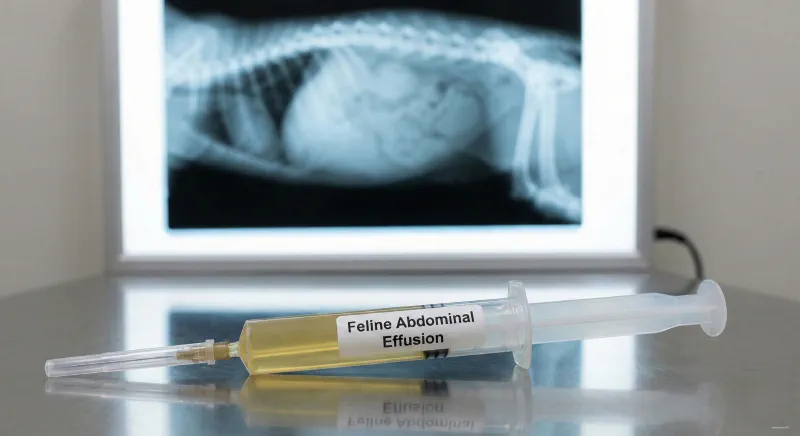
This is the acute, aggressive form. The immune system launches a massive, failed antibody attack. These antibodies bind to the virus and deposit on the walls of blood vessels, causing them to leak fluid.
- The Hallmark Sign: The abdomen or chest fills with a sticky, yellow, straw-colored fluid (ascites or pleural effusion).
- Symptoms: A pot-bellied appearance in a kitten who is losing weight along the spine. Breathing difficulties (dyspnea) if fluid enters the chest. This form progresses rapidly, often killing within weeks.
2. Dry (Non-Effusive) FIP#
If the cat has a partially effective immune response, the body attempts to wall off the virus in granulomas (hard lumps of inflammation).
- The Symptoms: These are vague and insidious. Weight loss, chronic fever that doesn’t respond to antibiotics, and lethargy.
- Ocular/Neuro Signs: Dry FIP often attacks the eyes (cloudiness/uveitis) and the brain (seizures/wobbliness), making it mimic other diseases like Toxoplasmosis.
The Stress Trigger: Why Catteries?#
If most cats have the coronavirus, why do only some get FIP? The answer is almost always Stress. Cortisol (the stress hormone) suppresses the immune system. In a young Maine Coon kitten, the “Immune Gap” between 8 and 16 weeks is the danger zone.
- Triggers: Weaning, rehoming, surgery (neutering), or overcrowding.
- The Cattery Risk: As discussed in our Cattery Design Guide, high-density environments increase the viral load of FECV. A kitten bombarded by virus while stressed is statistically more likely to suffer the fatal mutation.
The New Era: GS-441524 and Treatment#
Historically, FIP was 100% fatal. Today, that is no longer true. Dr. Pedersen’s research identified a nucleoside analog, GS-441524, which effectively stops the viral replication. While the legal status and availability of this drug vary by country (often accessible via “Remdesivir” derivatives in veterinary compounding), it has successfully cured thousands of cats.
If your Maine Coon is diagnosed with FIP, do not euthanize immediately. Consult an internal medicine specialist about antiviral therapy. The treatment is expensive and involves 12 weeks of daily injections or pills, but the cure rate for many strains is now over 80%.
Prevention: The “5 Cat Rule”#
You cannot vaccinate effectively against FIP (the vaccines are controversial and often ineffective). Prevention relies on husbandry.
- Reduce Density: Keeping cats in small groups (less than 5) reduces the FECV load in litter boxes.
- Hygiene: FECV is killed easily by bleach. Regular disinfection of litter areas is vital.
- Low Stress: Delaying rehoming until 14-16 weeks allows the kitten’s immune system to mature before the stress of moving.

Virkon S Disinfectant Tablets
The industry standard for killing Coronavirus on surfaces. Essential for cattery hygiene to lower viral load.
Check Price on Amazon →Conclusion#
FIP is a tragedy, but it is no longer a mystery. It is a disease of genetics, stress, and viral load. By choosing a breeder who practices low-density husbandry and understands the “Mutation Theory,” you significantly lower the risk of this heartbreak entering your home.
References#
- Pedersen, N.C. (2009). A review of feline infectious peritonitis virus infection: 1963–2008. Journal of Feline Medicine and Surgery.
- Addie, D.D. et al. (2009). Feline infectious peritonitis. ABCD guidelines on prevention and management.
- Dickinson, P.J. (2020). Antiviral treatment of feline infectious peritonitis.