Leash Training 2.0: The Best Harnesses for Escape-Artist Giants#
Taking a Maine Coon for a walk is not like walking a dog. It is more like walking a very opinionated, furry toddler who can turn into liquid if they get scared.
I started leash training Atticus when he was 6 months old. Our first walk ended in disaster because I used a standard “string” harness from the pet store. A car backfired, Atticus panicked, and he backed out of that harness in less than a second. I spent the next hour coaxing him out from under a parked car.
Maine Coons have a unique body shape. They have broad chests but narrow shoulders, and their thick ruff makes it hard to get a secure fit. If you use the wrong gear, you risk losing your cat.
Here is how to choose a harness that can actually hold a 20lb cat, and how to train them to wear it without flopping over like a dead fish.
The “Liquid Cat” Problem#
Cats escape harnesses by “backing out.” They put their brakes on, lower their head, and pull backward. A standard collar or loose harness slips right over their ears.
The Solution: The Vest/Jacket Style For a Maine Coon, you want a “Walking Jacket” or a Vest Harness. These cover more surface area (distributing the pressure if they pull) and are much harder to wriggle out of.
What to Look For:
- Wide Neck Opening: To accommodate the neck ruff without choking.
- Double Security: Velcro plus a buckle. Velcro allows a custom fit, but a buckle ensures it won’t rip open if they lunge.
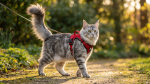
Rabbitgoo Cat Harness (Large/XL)
This is the go-to for many Maine Coon owners. It has breathable mesh, robust clips, and fits deep chests. Ensure you measure your cat's girth before ordering!
Check Price on Amazon →The “H-Style” Alternative#
If your cat hates the feeling of a vest (many do, acting paralyzed when you put it on), the H-Style harness is the alternative. It consists of two loops connected by a bar.
- Pros: Less fabric, cooler in summer, less restrictive on movement.
- Cons: Easier to escape if not fitted perfectly snug.
- Recommendation: Look for thick, flat nylon webbing (like a dog harness). Thin strings can cut into their skin if they pull.
The Leash: Bungee is Best#
Do not use a retractable dog leash. The tension teaches the cat to pull.
Use a Bungee Leash. These have an elastic core that stretches.
- Why? When a cat hits the end of the leash, they don’t stop; they panic. A static leash snaps their neck back. A bungee leash absorbs the shock gently, preventing injury and reducing the “flight” response.
Training Steps: The “Indoor Walk”#
- The “Invisible” Phase: Put the harness on your cat inside the house right before mealtime. Feed them. They will associate the harness with food and forget they are wearing it. Take it off immediately after eating.
- The “Drag” Phase: Let them walk around the house with the leash attached (dragging behind them). This gets them used to the weight. Supervise this so it doesn’t snag.
- The “Garden” Phase: Carry them outside to a quiet spot. Put them down. Do not pull. Let them sniff. If they get scared, pick them up.
Conclusion#
Walking a Maine Coon is a brilliant way to burn off teenage energy. But safety comes first. Invest in a heavy-duty harness that fits their odd proportions, and never, ever trust a simple collar.
Resources & Further Reading#
- Adventure Cats. (2023). Gear Guide for Big Cats.
- Journal of Veterinary Behavior. (2019). Enrichment effects of leash walking.