Moving House: A Low-Stress Guide for Relocating with a Maine Coon#
Moving house is one of the most stressful events in a cat’s life. Cats, and especially large, intelligent breeds like the Maine Coon, rely heavily on their sense of territorial familiarity and scent. The chaos of packing, the journey itself, and the introduction to a foreign environment can trigger severe anxiety, leading to behavioral issues or exacerbating underlying health concerns. Successful relocation with a Maine Coon requires methodical planning that prioritizes the cat’s security and scent profile above all else.
This guide provides a phase-by-phase approach to ensure your gentle giant transitions smoothly from the old home to the new.
1. Pre-Move Phase: Preparation and Safe Zones#
The preparation stage, which involves packing and chaos, can last weeks and is often the most anxiety-inducing time for your Maine Coon.
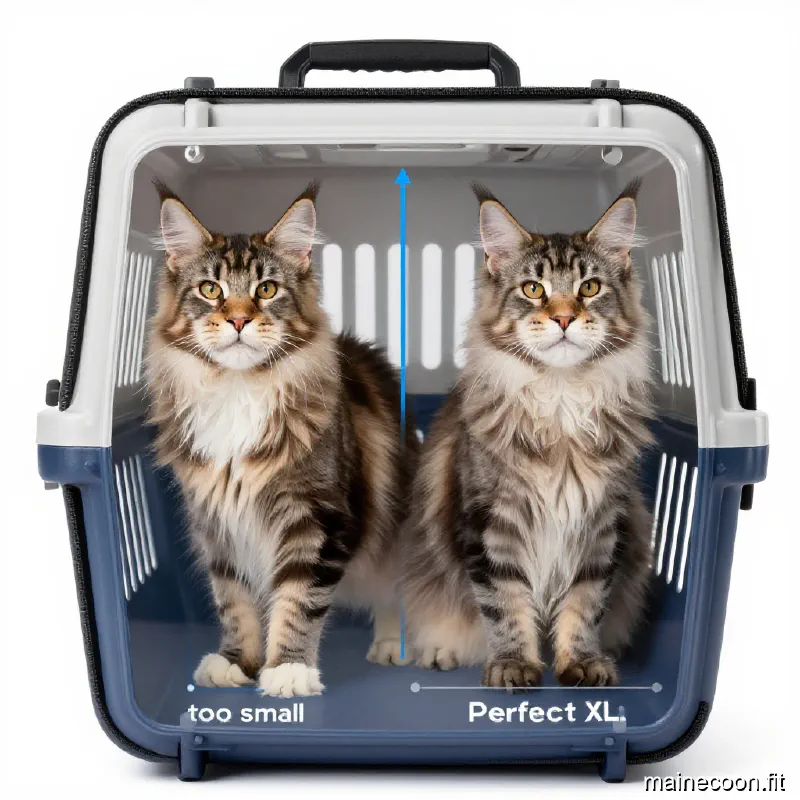
A. Carrier Desensitization and Security#
Long before moving day, ensure the Maine Coon is comfortable with its travel carrier. Use a large, Heavy Duty Carriers: Safety, Comfort, and Choosing XL Carriers for Maine Coons that serves as a temporary safe room. Leave it open with bedding and treats inside to build positive association.
B. Establishing the Safe Room (Old House)#
Designate one small room (e.g., a bathroom or spare closet) as the cat’s secure zone. Move their essential items—food, water, XL Litter Boxes: Sizing, Containment, and Hygiene for the Maine Coon, and familiar bedding—into this room. This room is the last to be packed and the last place the cat leaves. This protects them from anxiety and injury during the packing process.
2. Moving Day: Managing the Chaos#
Moving day is inherently chaotic, posing the highest risk for escape or extreme stress.
A. Confinement#
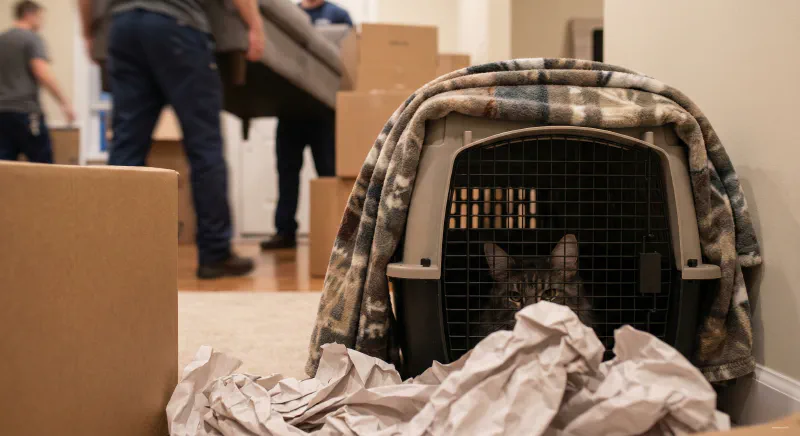
Before any movers or significant activity begins, place your Maine Coon securely in its carrier and move the carrier into the designated safe room.
- Isolation: Cover the carrier with a heavy, familiar blanket to dampen noise and visual stimuli (Image 2/3). The sound of doors slamming and strangers moving furniture is terrifying; isolation is the best defense.
- Transport: The cat should travel with its owner in the car, never unsupervised in the back of a moving van. Secure the carrier properly (refer to Travel Tips: Navigating the World with a Maine Coon).
3. Post-Move Phase: The New Home Introduction#
The transition to the new house must be gradual and methodical.
A. Establishing the Safe Room (New House)#
The cat must be the first thing set up in the new home.
- Placement: Carry the covered carrier directly into the pre-selected, quiet, temporary safe room (e.g., a bedroom with a door).
- Essentials: Unpack their food, water, litter box, and familiar bedding immediately and set them up in the room.
- Release: Once the room is secure (windows closed, vents checked), open the carrier door and allow the Maine Coon to emerge on its own terms. Do not force them out.
- Confinement: Keep the cat confined to this safe room for at least 24-48 hours. This allows them to adjust to the new scents and sounds without the overwhelming vastness of the entire house.
B. Scent Integration#
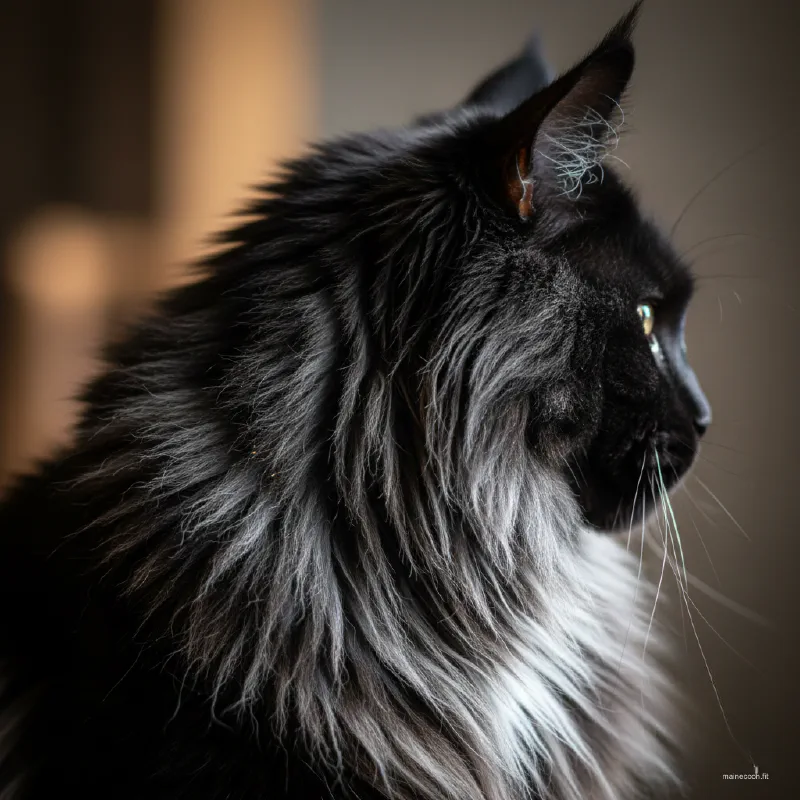
Scent marking is how a cat establishes ownership and security. Help your Maine Coon integrate by spreading its familiar scent.
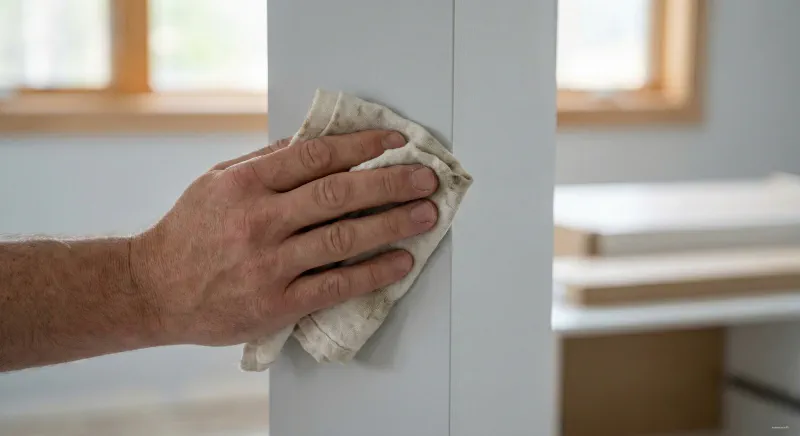
- Scent Transfer: Take a soft cloth, gently rub it around your cat’s cheeks (where scent glands are located), and then rub that cloth on door frames, walls, and furniture in the common areas of the new house. This mixes their scent with the new environment, making it feel less threatening (Image 3/3).
- Gradual Exploration: After 24–48 hours of calm confinement, supervise a slow, room-by-room introduction to the rest of the house. Always ensure the original safe room remains open as a refuge.
4. Post-Move Health Watch#
Stress can temporarily suppress the immune system. Watch for signs of illness or stress-related problems.
- Appetite and Hydration: Ensure your Maine Coon is eating and drinking normally. Extreme stress can lead to appetite loss, which is dangerous for cats. Use a fountain if necessary to encourage their Water Obsession: Why Maine Coons Play, Dip, and Drink from Faucets.
- Litter Use: Check the litter box for inappropriate use or changes in volume, which can be a sign of both stress and potential health issues (like FLUTD).
Conclusion#
Moving a large, sensitive Maine Coon is a marathon, not a sprint. By meticulously controlling the environment—creating a secure safe room, minimizing visual chaos, and slowly integrating them into the new territory via scent—you minimize stress. This methodical approach is the best way to safeguard your gentle giant’s emotional and physical health during this major life change.
🔗 References & Further Reading#
- American Veterinary Society of Animal Behavior (AVSAB). Moving with Your Cat: Tips for a Smooth Transition. (Step-by-step professional advice for reducing feline relocation stress).
- International Cat Care (iCatCare). Settling a Cat into a New Home. (Expert guidance on the importance of gradual introduction and providing hiding places).
- Journal of Feline Medicine and Surgery. Stress-Related Illness in Domestic Cats. (Review of how environmental stress impacts the physical health and immune system).
- TICA Health Committee. Minimizing Environmental Stress for Large Breeds. (Advice focusing on the need for stability and security for confident cat breeds).