Travel Tips: Navigating the World with a Maine Coon#
Traveling with a pet of the Maine Coon’s size, intelligence, and sensitivity requires significantly more preparation than traveling with a small cat. While they are highly social and adapt well to new people, the process of transport—especially vehicle noise, new scents, and confinement—can cause immense stress. Stress, in turn, can compromise their immune system and exacerbate genetic health conditions. Successful travel with your gentle giant hinges on early preparation, investing in the right heavy-duty gear, and prioritizing a low-stress environment.
1. Pre-Travel Preparation: The Low-Stress Mindset#
The key to a successful journey is convincing your Maine Coon that the experience is not a terrifying emergency.
A. Carrier Conditioning#
The carrier should not be the symbol of trips to the vet (a frequent event for managing issues like HCM and Hip Dysplasia, as discussed in The Hip Paradox: Prevention, Diagnosis, and Management in Maine Coons).
- Habituation: Leave the extra-large, Heavy Duty Carriers: Safety, Comfort, and Choosing XL Carriers for Maine Coons out as permanent furniture. Feed meals or treats inside and place familiar bedding within it long before the trip.
- Pheromone Therapy: Utilize synthetic feline pheromone sprays (like Feliway) by spraying the carrier 15-30 minutes before departure. This helps reduce anxiety inside the confined space.
B. Health and Documentation#
Always pack essential health documents: vet contact information, vaccination history, and, if applicable, medication (especially crucial if your cat requires blood thinners for heart conditions).

2. Car Travel: Safety and Stress Reduction#
Car travel is the most common form of transport and carries risks if the carrier is not secured properly.
A. Carrier Safety#
- Secure the Carrier: Never allow your Maine Coon to roam freely in the car; it is an extreme safety hazard. The carrier must be secured in the back seat using the vehicle’s seat belt or tie-downs to prevent it from moving or becoming a projectile in a sudden stop.
- Optimal Placement: Position the carrier so the cat can see you, which can provide a sense of reassurance, but not directly facing bright sunlight or constantly moving objects that could cause motion sickness.
B. Managing Motion Sickness#
If your Maine Coon is prone to car sickness (salivation, vomiting), speak to your veterinarian about motion sickness medication or mild sedatives tailored for travel. Avoid feeding your cat for 4 hours before the trip to ensure the stomach is empty.
3. During the Journey: Stops and Breaks#
For long journeys, controlled breaks are necessary for hygiene and comfort.
A. Litter Box Access#
Use a small, disposable, high-sided litter box inside the car or during rest stops. Do not open the main carrier door until the cat is inside a small, confined space (like the car interior with all doors locked).
- Hydration: Offer water every 2-3 hours. Use a spill-proof bowl or, better yet, offer water via a syringe (without the needle) to control intake and mess.
B. Supervised Outdoor Breaks (Optional)#
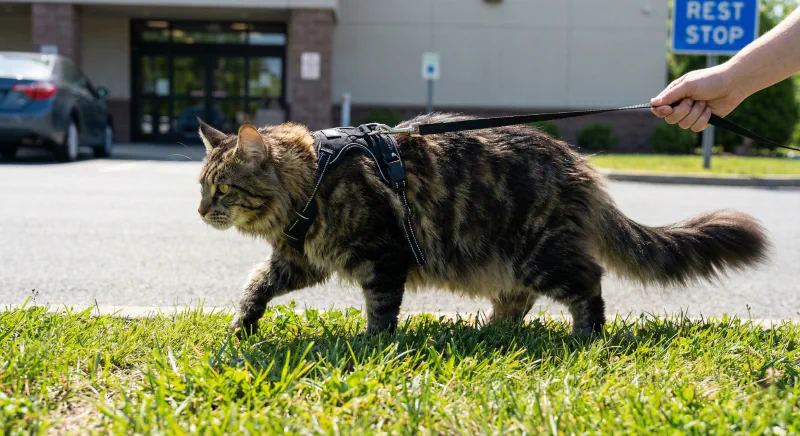
If your Maine Coon is reliably harness-trained (see Training Your Gentle Giant: Leash Training, Fetch, and Clicker Commands), a brief, supervised walk in a quiet area can relieve stress and allow for a natural stretch. Only attempt this with a secure, escape-proof harness and in a low-traffic area. Never use just a collar, as their thick ruff makes collars unreliable.
4. Final Destination: Settling In#
The arrival is as critical as the journey. A large, unfamiliar space can be overwhelming.
- Confinement Zone: Upon arrival, confine your Maine Coon and its essential gear (carrier, food, XL Litter Boxes, toys) to a single, small room (like a bathroom or spare bedroom) for the first few hours. This allows them to adjust to the new scents and sounds without feeling overwhelmed by a massive new territory.
- Familiarity: Set up familiar feeding and sleeping areas immediately. This provides a consistent routine, which is key to reducing feline stress.
Conclusion#
Traveling with a Maine Coon is manageable, but requires anticipation of their size and sensitivity. By investing in heavy-duty, safe carriers, committing to low-stress loading and conditioning, and securing the cat properly during transit, you can ensure that the adventure is safe and minimally stressful. Preparation is the bridge between a chaotic trip and a calm journey for you and your gentle giant.
🔗 References & Further Reading#
- American Veterinary Society of Animal Behavior (AVSAB). Low-Stress Travel and Transport for Cats. (Professional guidelines on reducing anxiety during car travel).
- International Cat Care (iCatCare). Preparing Your Cat for Veterinary Visits and Transport. (Advice on habituation and pheromone use).
- TICA Health Committee. Carrier Safety and Transport Requirements for Large Breeds. (Breed-specific recommendations for carrier size and structure).
- Journal of Feline Medicine and Surgery. Environmental Stress and Its Effect on the Feline Immune System. (Research highlighting the need to minimize stress in cats, especially those with pre-existing conditions).