The Impossible Cat#
One of the most frequent questions breeders and shelters receive is, “I have a cat that looks exactly like a Maine Coon, big and blocky, but it has short hair. Is it a purebred?” The answer, rooted deeply in genetics and breed standards, is a definitive no.
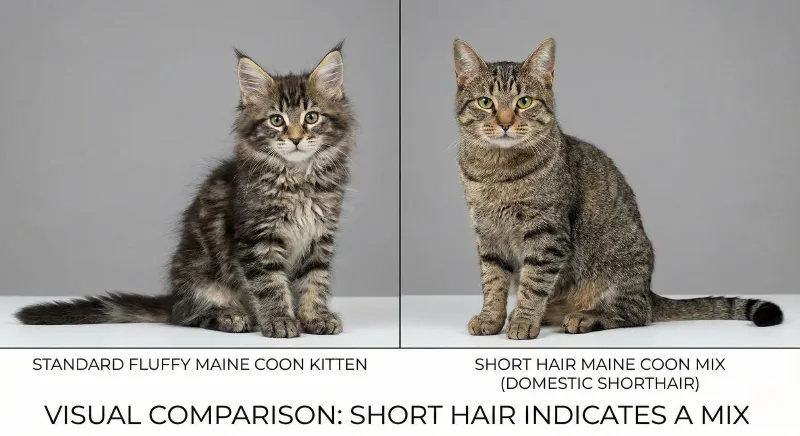
The Maine Coon is, by definition, a semi-longhair breed. The very essence of the cat—its history as a rugged barn mouser in the harsh winters of New England—required a coat that could withstand snow, ice, and wind. A short-haired Maine Coon would have frozen to death in the 19th century. Therefore, nature (and later, breeders) selected strictly for the longhair gene. If a cat has short hair, it may have Maine Coon ancestry, but it is not a Maine Coon.
The Science: Why It Is Genetically Impossible#
To understand why this is impossible, we have to look at the “L” gene, which controls hair length. The gene for short hair is dominant, while the gene for long hair is recessive. For a cat to be a Maine Coon, it must carry two copies of the recessive longhair gene (ll).
Because all purebred Maine Coons carry this double recessive pairing, when you breed two Maine Coons together, they can only pass on the longhair gene. There is no hidden “short hair” gene lurking in the gene pool that can suddenly pop up. It is genetically impossible for two purebred Maine Coons to produce a short-haired kitten. This is why breeders can say with absolute certainty that the “Short Hair Maine Coon” is a biological fiction.
The “Variant” Confusion#
However, there is a nuance that often confuses owners. In some cat breeds, like the Manx or the Munchkin, you have “Longhair” and “Shorthair” varieties. This is not the case for Maine Coons.
There is, however, a phenomenon known as a “poor coat” or a “slow coat.” Some purebred kittens go through a teenage phase where their coat looks deceptively short. Between the ages of five months and one year, a Maine Coon often sheds its kitten fuzz but has not yet grown its adult guard hairs. During this “lanky phase,” they can look remarkably like a shorthair cat with a slightly bushy tail. But do not be fooled; if you part the fur, you will see the undercoat density that marks the breed. By the time they reach two years of age, the ruff and pantaloons will fill in.
Identification: Is It a Mix?#
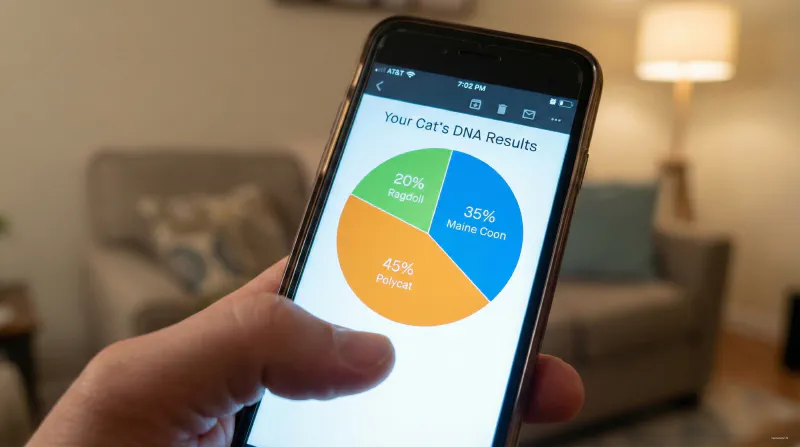
If your cat is fully grown (over three years old) and still has sleek, short fur, you are likely looking at a “Maine Coon Mix.” This happens when a purebred Maine Coon mates with a Domestic Shorthair.
Because the short hair gene is dominant, the kittens from this mating will almost always have short hair. They might inherit the massive size, the square muzzle, the ear tufts, and the dog-like personality of the Maine Coon parent, but the short coat reveals their mixed heritage immediately. These cats are often wonderful companions, combining the “Gentle Giant” temperament with a coat that is much easier to maintain. They get fewer mats and require less grooming, which many owners consider a bonus.
The Personality Test#
Owners often cling to the “Short Hair Maine Coon” label because their cat acts exactly like the breed. They chirp, they play fetch, they love water, and they follow their owners from room to room.
This is a testament to the potency of Maine Coon genetics. The personality traits of the breed are often so strong that they shine through even in a mix. If you have a short-haired cat that acts like a Maine Coon, you have the best of both worlds: the soul of a giant in a low-maintenance package. But for the sake of accuracy (and to avoid being corrected by purists), it is best to refer to them as a “Maine Coon Mix” rather than a rare variety of the breed.
Basepaws Cat DNA Test (Breed + Health)
Curious about your short-haired giant? This DNA test can confirm if they carry Maine Coon markers.
Check Price on Amazon →Summary#
The “Short Hair Maine Coon” is a myth. The genetics of the breed simply do not allow for it. However, if you have a large, short-haired cat with a square jaw and a loving personality, you likely have a wonderful mix that carries the Maine Coon legacy, if not the coat.
References#
- Feline Coat Color and Pattern Genetics - The Cat Fanciers’ Association.
- The Maine Coon Breed Standard - TICA (The International Cat Association).