The Picky Eater: Whisker Fatigue, Temperature, and Texture#
There is a common misconception among novice owners that the Maine Coon, being a rugged “barn cat” by heritage, possesses an indiscriminate appetite. While they are famously food-motivated and often described as having a dog-like enthusiasm for meals, they can also be notoriously finicky. It is a frustrating scenario for any owner to purchase the most expensive, high-protein wet food on the market, only to have their cat sniff it once, give a look of betrayal, and walk away. Even worse is the behavior where they paw the food out of the bowl to eat it off the dirty rug.
Before labeling your Maine Coon a diva, it is crucial to understand the sensory biology of the feline species. A cat’s refusal to eat is rarely about stubbornness; it is usually about physical discomfort or a conflict with their biological instincts. Maine Coons, with their massive whiskers and sensitive muzzles, face specific challenges that standard cats do not. By adjusting the mechanics of how you feed them—specifically the bowl shape, the temperature, and the texture—you can often resolve these issues without changing the diet itself.
1. Whisker Fatigue: The Sensory Overload#
The most common reason a Maine Coon refuses to eat from a perfectly good bowl is a condition known as Whisker Fatigue, or more accurately, whisker stress. Maine Coons possess some of the longest and most magnificent whiskers in the animal kingdom. These vibrissae are not merely coarse hairs; they are highly tuned sensory organs, deeply embedded in the face and packed with nerve endings. They are designed to detect the slightest change in air currents or measure the width of a gap in total darkness.
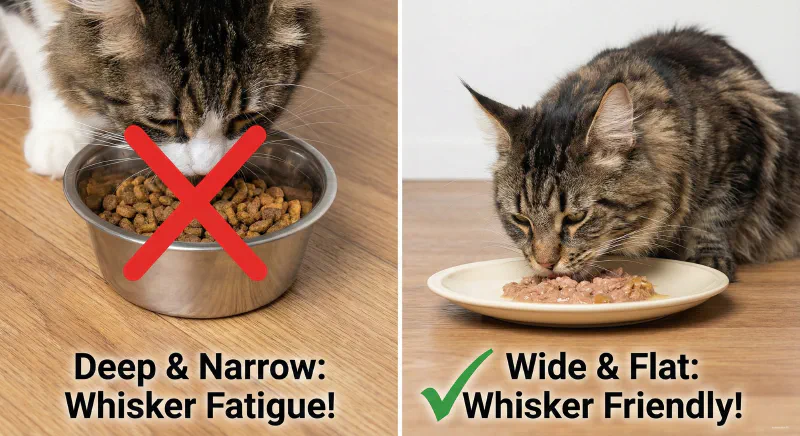
When a Maine Coon eats from a standard, deep pet bowl, these sensitive whiskers are forced to brush against the sides of the dish with every single bite. This sends a constant, overwhelming barrage of unnecessary touch signals to the brain. Imagine trying to eat your dinner while someone tickles your nose with a feather duster every time you take a bite. It is over-stimulating, annoying, and eventually becomes physically painful.
You can identify whisker stress by observing specific behaviors. The “Scoop” is a classic sign, where the cat dips a paw into the bowl to drag a piece of food onto the floor, allowing them to eat without their face touching the rim. Another indicator is the “Center Eat,” where the cat eats a perfect hole in the center of the food but refuses to touch the leftovers clinging to the edges, often crying for more despite the bowl being half full. In severe cases, a cat suffering from sensory overload may even show aggression, swatting at you or grumping if you approach them during a meal.
The solution to this problem is simple and immediate: change the geometry of the bowl. You need a surface that allows the whiskers to hang freely in the air without contacting the rim. A standard human salad plate or saucer often works perfectly for this purpose. Alternatively, there are specialized stainless steel bowls designed with wide, shallow slopes that force the food to the center while keeping the edges low, ensuring the whiskers remain untouched.
2. The “Mouse Body” Temperature Rule#
In the wild, a cat is a predator that catches its prey and consumes it immediately. The body temperature of a fresh mouse or bird is approximately 100 degrees Fahrenheit (38 degrees Celsius). This warmth is critical because it releases volatile organic compounds—the aroma of the meat—which triggers the cat’s olfactory system and stimulates their appetite.
The modern habit of storing wet food in the refrigerator creates a biological conflict. When you take a can out of the fridge and dump it into a bowl, the food is a chilly 40 degrees. To a cat’s primal brain, cold food does not smell like food; it smells like a dead carcass that has been rotting for days. It has no aroma, and therefore, it registers as inedible.
To fix this, you must mimic the temperature of fresh prey. Adding a tablespoon of hot water to the cold paté and mixing it into a slurry can warm the food to an acceptable temperature while simultaneously releasing the meaty aroma. You can also microwave the food for seven to ten seconds, but you must be extremely careful to stir it thoroughly to eliminate any “hot spots” that could burn the cat’s tongue. If you are using a freshly opened can that has been stored in the pantry, it is already at room temperature, which is usually acceptable to most cats.
3. Texture Aversion: Paté vs. Shreds#
Feline eating preferences are often imprinted during kittenhood. If a breeder weaned a litter onto smooth mousse, those kittens may grow up finding chunky stews or shreds confusing or difficult to manipulate.
The two main texture categories are paté (or mousse) and shreds (cuts in gravy). Paté is a smooth, uniform consistency that is usually the easiest for cats to eat, especially if they are suffering from any dental pain such as Stomatitis. Shreds consist of chunky meat in a liquid gravy. While some cats enjoy the chewing action, many Maine Coons will simply lick the gravy off and leave the dried-out chunks of meat behind. If you notice your cat is a “gravy licker,” stop buying shredded food. You are wasting money on the solids they refuse to eat. Switching to a high-protein mousse or paté forces them to consume the meat along with the moisture, ensuring they get the full nutritional value of the meal.
Material Matters: The Chin Acne Factor#
Finally, the material of the bowl itself can affect a cat’s willingness to eat. Plastic bowls are porous and develop microscopic scratches over time. These scratches harbor bacteria that cannot be removed by standard washing. When the cat eats, this bacteria transfers to their chin, clogging the hair follicles and causing Feline Chin Acne—painful blackheads and pustules that can become infected.
To prevent this, you should exclusively use ceramic or stainless steel bowls. Hygiene is also paramount; the bowl must be washed daily with hot, soapy water. You would not eat off the same unwashed plate for a week, and expecting your fastidious Maine Coon to do so is a recipe for refusal.
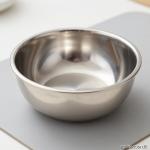
Dr. Catsby's Food Bowl for Whisker Relief
A wide, shallow stainless steel bowl designed specifically to prevent whisker stress. Perfect for the broad Maine Coon muzzle.
Check Price on Amazon →Conclusion#
If your cat is a “messy eater,” look at your equipment before you blame their personality. A ten-dollar switch to a wide, flat ceramic plate or a specialized whisker-relief bowl can instantly solve years of food anxiety. By respecting their whiskers, warming their food to mimic prey, and ditching the plastic, you can turn a picky grazer into a healthy eater.
References#
- Journal of Feline Medicine and Surgery. Evaluation of whisker stress in cats. (2020).
- Bradshaw, J. The Behaviour of the Domestic Cat. (Feeding behavior).
- New York Times. Feline Whisker Fatigue: It’s Real. (2017).