Fueling the Queen: Nutrition for Pregnancy and Lactation#
A female Maine Coon might weigh 12lbs. But when she is nursing a litter of 6 giant kittens, her metabolic rate triples. She is basically running a marathon every single day.
If you feed her “Adult Maintenance” food, she will starve. Her body will strip the meat off her own bones to make milk. Robinson’s Genetics notes that poor nutrition is a leading cause of “fading kittens” and weak queens.
Here is how to feed the factory.
The “Kitten Chow” Rule#
From the last trimester of pregnancy (Week 6) until the kittens are weaned (Week 12), the Queen should eat Kitten Food.
- Why: Kitten food is higher in Fat, Protein, and Calcium than adult food.
- The Quantity: Unlimited. Free-feed dry kitten kibble 24/7, and offer wet kitten food 3-4 times a day. She cannot get fat during this time; she burns it all.
The Calcium Crisis (Eclampsia)#
Milk production drains Calcium. If the Queen’s blood calcium drops too low, she gets Eclampsia (Milk Fever).
- Symptoms: Panting, pacing, muscle tremors, stiffness. This is fatal if untreated.
- Prevention: Do not supplement calcium during pregnancy (it messes up her hormone regulation). Start supplementing Calcium (like oral Tums or liquid calcium) only after she starts nursing, specifically during peak lactation (Weeks 3-5).
The “Weaning Paste” (Gruel)#
At 4-5 weeks, the kittens need to start eating to relieve the Queen. Amelia’s Weaning Recipe:
- 1 can Royal Canin Babycat Mousse (ultra-fine texture).
- 2 tbsp Goat’s Milk (KMR).
- Warm water to make a soup. Serve on a flat plate. The kittens will walk in it, then lick their paws, and figure it out.
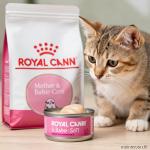
Royal Canin Mother & Babycat Ultra-Soft Mousse
The only texture fine enough for 4-week-old kittens. It bridges the gap between milk and meat.
Check Price on Amazon →Conclusion#
A lactating Queen is the hardest working animal in your house. Feed her like a champion athlete. If her backbone starts to stick out, you aren’t feeding her enough fat.
References#
- Pedersen, N.C. (1991). Feline Husbandry. “Reproduction,” p. 129.
- Vella, C. et al. (1999). Robinson’s Genetics. “Reproduction and Development,” p. 13.
- Little, S. Feline Reproduction and Pediatrics.
- National Research Council. Nutrient Requirements for Lactation.