Raw Feeding the Maine Coon: Science, Safety, and Ratios#
There is a movement in the Maine Coon world that rejects the “brown pebbles” of commercial kibble in favor of the diet nature intended: raw meat, bones, and organs. Proponents claim it produces massive growth, glossy coats, and zero-smell litter boxes. Opponents warn of Salmonella risks and fractured teeth. As with most things in the cat fancy, the truth lies in the middle—and, more importantly, in the chemistry.
Feeding a 20lb cat is not as simple as throwing a chicken breast in a bowl. According to standard veterinary texts like Feline Husbandry, improper raw feeding is a leading cause of nutritional osteodystrophy (soft bones) in kittens. This condition is particularly devastating for a giant breed like the Maine Coon, whose heavy skeletal structure requires precise mineral support. If you choose to feed raw, you cannot be a casual chef; you must become a chemist.
The Calcium:Phosphorus Ratio (1.2:1)#
This is the single most critical number for a Maine Coon owner to memorize. In the wild, a cat eats a mouse: meat, organs, and bones.
- Meat (Muscle): High in Phosphorus, but dangerously low in Calcium.
- Bone: The primary source of Calcium.
The Danger: If you feed your Maine Coon a diet of pure muscle meat (chicken breast, steak) without bone or a calcium supplement, you invert this delicate ratio. The body, sensing a calcium deficiency in the blood, will begin to pull calcium out of the cat’s own skeleton to maintain cardiac function.
- Result: The bones become paper-thin and brittle. In kittens, this leads to spontaneous fractures, bowing of the legs, and “Rubber Jaw” (fibrous osteodystrophy).
The Fix: You must feed edible bone (such as ground chicken necks or rabbit ribs) or add a calcium supplement (like Bone Meal or Eggshell powder) to every single meal. The ideal ratio for felines is 1.2 parts Calcium to 1 part Phosphorus.
The Thiamin (Vitamin B1) Risk#
Feline Husbandry warns of a specific, often overlooked danger for raw feeders: Thiaminase. This is an enzyme found in certain raw fish (especially carp, herring, and some tuna) and shellfish.
- The Mechanism: Thiaminase destroys Vitamin B1 (Thiamin) in the cat’s body.
- Symptoms: Thiamin is essential for neurological function. A Maine Coon with a deficiency will develop “star gazing” (staring rigidly at the ceiling), head tremors, seizures, and eventually coma.
- The Rule: Never feed raw fish. Cooking destroys the thiaminase enzyme, making cooked fish safe as a treat. However, for a raw diet, stick to poultry, rabbit, and beef.
The “Pathogen” Problem: Salmonella & E. Coli#
Can cats get Salmonella? Yes, but the risk is nuanced. A cat’s digestive tract is short and highly acidic, designed to process pathogens that would hospitalize a human. They often pass Salmonella without showing clinical symptoms.
The Real Risk is You. The danger of raw feeding is often environmental. A cat shedding Salmonella in their stool can contaminate your litter box, your carpet, and you.
- The Cattery Risk: If you have kittens, seniors, or immune-compromised cats (such as those managing FIP), raw food introduces a bacterial load that can overwhelm a weak immune system.
- Protocol: If you feed raw, you must treat your kitchen like a biohazard lab. Use stainless steel bowls (which can be sterilized), clean surfaces immediately, and never leave raw food out for “grazing.”
The Balanced Recipe: The 80/10/10 Rule#
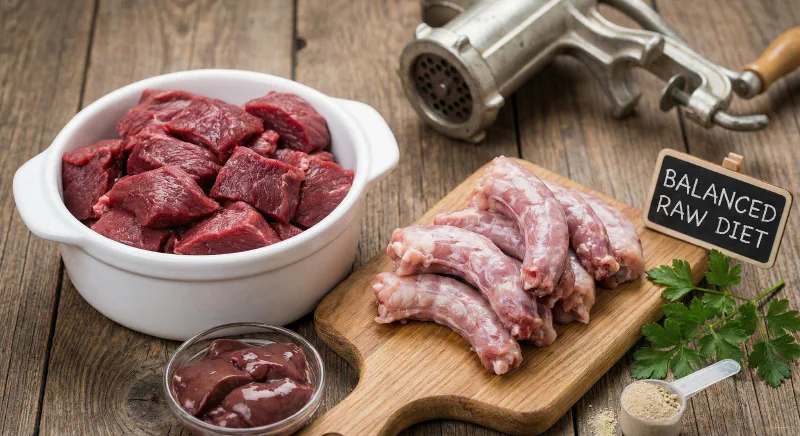
A safe “Frankenprey” or Ground Raw diet generally follows this ratio to mimic a whole prey animal:
- 80% Muscle Meat: Chicken thighs, beef chunks, rabbit, turkey.
- Note: Heart counts as muscle meat, not organ, in nutritional terms. It is the richest natural source of Taurine, the amino acid critical for preventing HCM and heart failure.
- 10% Edible Bone: Chicken wings, necks, or rabbit ribs. These must be raw; cooked bones splinter and can pierce the stomach.
- 10% Secreting Organ:
- 5% Liver: Essential for Vitamin A. (Too much causes Vitamin A toxicity/bone spurs).
- 5% Other Organ: Kidney, Spleen, Pancreas.

STX Turboforce Electric Meat Grinder
If you are serious about raw feeding, you need a grinder that can crush chicken bones. This is the entry-level workhorse for catteries.
Check Price on Amazon →Conclusion#
Raw feeding can transform a Maine Coon’s health, leading to smaller, less odorous stools and vibrant energy. However, it requires precision. “All meat” is not a complete diet; it is a slow death sentence for a growing skeleton. If you cannot commit to the math of the 80/10/10 rule or the hygiene of handling raw meat, a high-quality canned food is a safer, healthier alternative.
References#
- Pedersen, N.C. (1991). Feline Husbandry. “Nutrition and Nutritional Disorders,” p. 325.
- Pierson, L. (DVM). CatInfo.org: Making Cat Food.
- National Research Council (NRC). Nutrient Requirements of Dogs and Cats.
- Journal of Feline Medicine. Thiamin deficiency in cats.