Renting with a Giant: Navigating Landlords & Weight Limits#
Finding a pet-friendly apartment is hard. Finding one that accepts a cat the size of a bobcat is even harder. Many landlords have strict pet policies, and often those policies include a weight limit. A common rule is “Dogs under 40lbs, Cats under 15lbs.” For a male Maine Coon owner, this is a disaster. Your cat might weigh twenty-two pounds, technically putting him in violation of the lease.
When a landlord sees a Maine Coon, they often don’t see a cat; they see a potential for destruction. They imagine giant claws shredding their carpet and door frames. To secure housing with a giant, you cannot just check the “Cat” box on the application. You need to be proactive and professional. You need a Pet Resume.
Creating the Pet Resume#
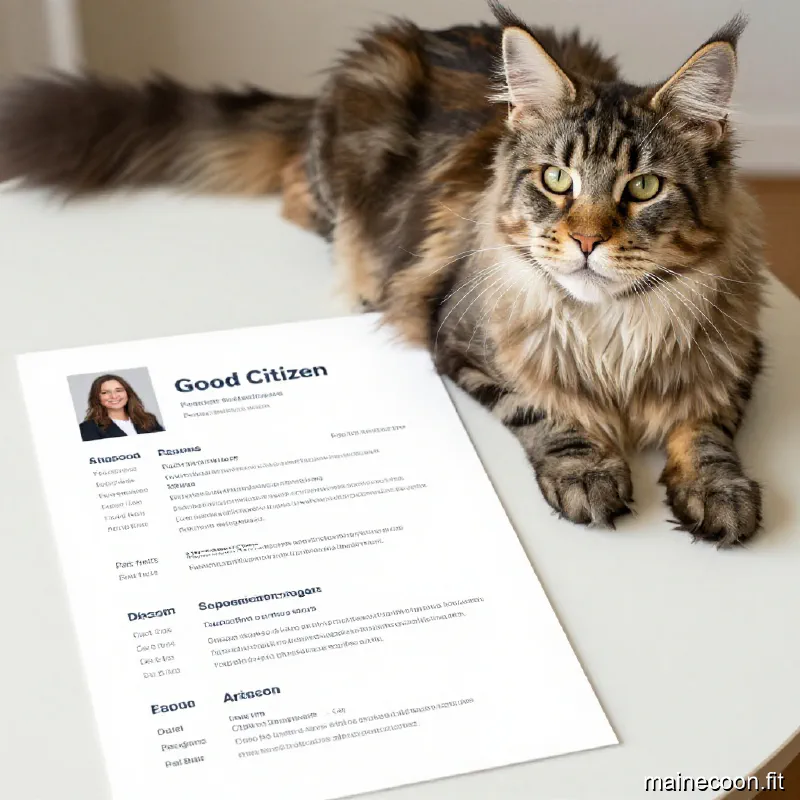
A Pet Resume distinguishes you from the average applicant. It shows you are a responsible owner who understands the landlord’s concerns. Your resume should include a high-quality photo of your cat looking calm and sleeping, not hunting or running. You want to project “lazy rug,” not “wild animal.”
Include a section on Veterinary Records. Proof of neutering is essential, as landlords fear spraying above all else. Proof of flea and tick prevention shows you care about hygiene. Most importantly, list your References. Include contact info for your current landlord and your veterinarian. A quote from a previous landlord saying, “The apartment was left in perfect condition,” is worth its weight in gold.
Addressing the “Weight Limit”#
If the lease says “Cats under 15lbs,” do not lie. If the maintenance man sees your giant cat, you could be evicted. Instead, have a conversation. Explain that Maine Coons are the “Great Danes” of the cat world. They are large, but they are famously lazy and low-energy compared to a high-strung, 8-pound Bengal. Offer to pay a slightly higher pet deposit to cover the “weight variance.” Most landlords are worried about noise and damage, not the actual number on the scale. If you can prove your cat is a neutered, declawed (or soft-pawed) couch potato, they will often waive the weight rule.
Protecting Your Deposit#
Once you move in, you must cat-proof the apartment to protect your security deposit. Maine Coons are heavy; their claws can do significant damage to door frames if they stretch. Install clear plastic guards on door frames and corners. Use double-sided tape on the corners of the sofa and carpets to deter scratching.
Most importantly, bring your own heavy-duty scratching posts. If you provide a tall, sturdy sisal post in every room, your cat has no reason to touch the landlord’s carpet. Maine Coons scratch to stretch; if you give them a superior stretch, they will leave the apartment structure alone. By being upfront, professional, and prepared, you can prove that a giant cat is actually the perfect tenant.
References#
- The Humane Society. Renting with Pets.
- ApartmentGuide. Pet Resumes and deposits.