Record Breakers: The Science and Tragedy of the Longest Cats in History#
In the world of the Maine Coon fancy, size is the currency of prestige. Every owner secretly hopes their kitten will grow up to be a monster, measuring them against the family dog and posting photos of them stretching across three-seater sofas to prove their scale. We are fascinated by the outliers—the cats that defy the logic of biology and grow to the size of a bobcat. However, there is a profound difference between a big cat and a giant.
The Guinness World Record for “Longest Cat” is almost exclusively the domain of the Maine Coon. These cats are not just large; they are genetic anomalies that have pushed the boundaries of the feline form. But behind the ribbons and the photoshoots lies a complex reality of genetics, physics, and health trade-offs. To truly understand the “Record Breakers,” we must look beyond the measuring tape and understand the lives of the cats themselves, and the biological cost of their extraordinary stature.
The Hall of Fame: The Giants Among Us#
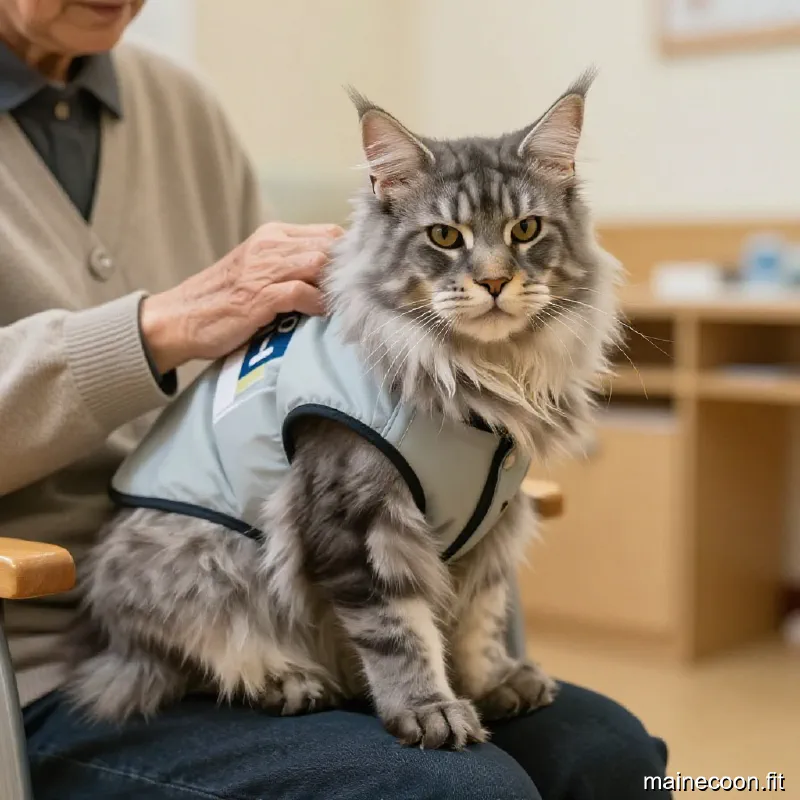
The most legendary holder of this title was Mymains Stewart Gilligan, known to the world simply as Stewie. A grey tabby from Reno, Nevada, Stewie measured an astounding 48.5 inches from the tip of his nose to the tip of his tail bone. To put that in perspective, he was longer than a six-year-old child is tall. But Stewie was not just a spectacle of size; he was a testament to the breed’s temperament. He was a certified therapy cat who spent his days visiting senior centers, proving that the biggest cats often possess the gentlest hearts. His size made him a celebrity, but his personality made him an ambassador. Tragically, Stewie passed away in 2013 at only eight years old after a battle with lymphosarcoma, a reminder that extreme size often correlates with a shorter lifespan.
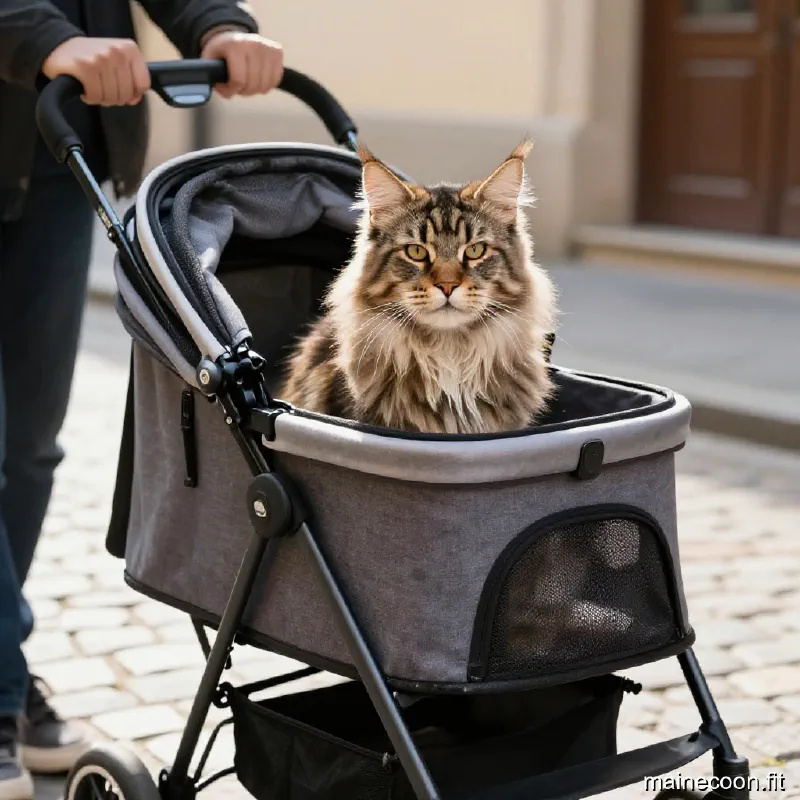
Following in Stewie’s massive paw prints is Barivel, the current living record holder residing in Vigevano, Italy. Measuring 47.2 inches, Barivel is a dignified, majestic Maine Coon who lives a life of quiet luxury. Unlike the working barn cats of the breed’s history, Barivel is a pampered celebrity with his own social media following. His owners report that he is treated like royalty, often being taken for walks in a customized buggy because he is simply too heavy and long to be carried comfortably for any significant distance. His existence highlights the shift in the breed from “working cat” to “showpiece,” where size is cultivated for aesthetics rather than function.
Before Barivel, the crown was held by Ludo from Wakefield in the United Kingdom, who measured 46.6 inches. Ludo famously shared his house with two other Maine Coons and a Ragdoll, dwarfing them all while maintaining the lazy, gentle temperament the breed is famous for. Ludo’s size was apparent from kittenhood; his owner noted that he was already larger than the average adult cat before his first birthday. These cats represent the extreme upper percentile of the breed, the result of specific genetic combinations that unlocked unrestricted skeletal growth.
We must also mention Cygnus Regulus Powers, a Silver Maine Coon from Michigan who held the record for the “Longest Tail” at a staggering 17.58 inches. While his body was of normal (albeit large) proportions, his tail was a biological marvel, exceeding the length of most domestic cats’ entire bodies. Cygnus serves as a reminder that the Maine Coon’s “length” is often driven by the vertebrae of the tail, a feature originally evolved to wrap around the body for warmth in New England winters, now exaggerated to extreme proportions.
The Physics of Giants: The Square-Cube Law#
While we marvel at these records, it is crucial to understand the physics that constrain them. Breeders cannot simply create bigger and bigger cats without consequence. This biological limit is governed by the Square-Cube Law, a principle of biomechanics that states that as an object grows in size, its volume and weight grow much faster than its surface area or bone strength.
If you double the height and length of a cat, you do not simply double its weight; you roughly octuple it. A cat that is 48 inches long puts exponentially more strain on its heart, spine, and joints than a cat that is 36 inches long. The skeleton must be denser to support the mass, and the heart must be stronger to pump blood to the distant extremities. This is why record-breaking giants often move with a lumbering, heavy gait rather than the agile grace of a smaller cat. They are operating at the limits of their structural engineering.
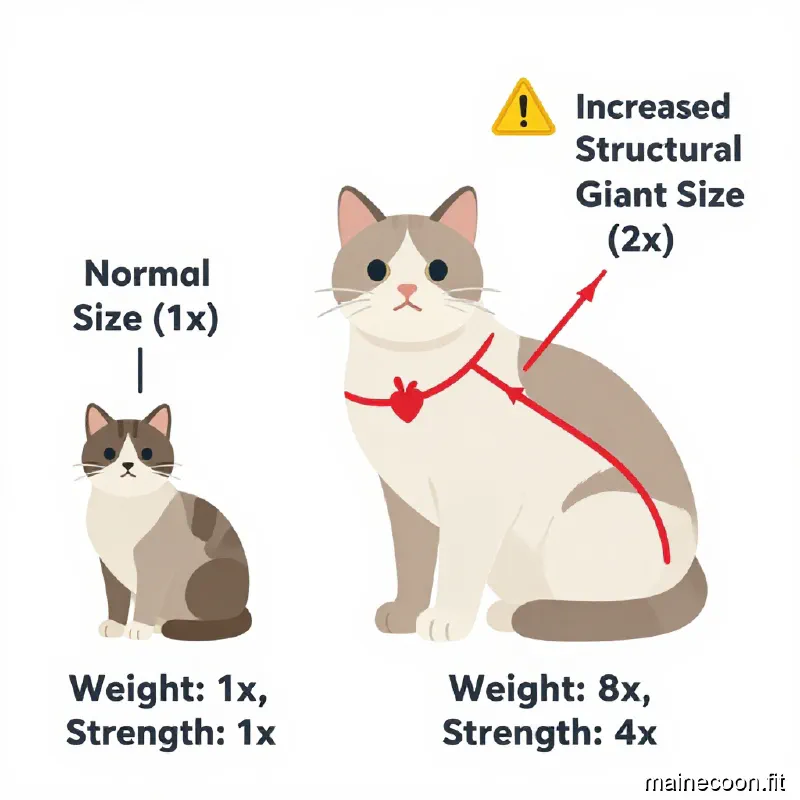
This physical reality creates a “Glass Ceiling” for the breed. We are unlikely to see Maine Coons get significantly larger than Stewie or Barivel because the feline heart—specifically the left ventricle—cannot sustain the blood pressure required for a larger body without failing. The incidence of Hypertrophic Cardiomyopathy (HCM) rises in these extreme populations because the heart muscle thickens in a desperate attempt to handle the workload, eventually leading to failure.
The “XXL” Controversy: Breeding for Health vs. Hype#
The allure of the record books has created a dangerous trend in the breeding community: the “XXL” marketing gimmick. Unethical breeders, often operating kitten mills or backyard operations, will market their kittens as “Giant Lines” or “30-pounders” to charge exorbitant prices. They achieve this size not through careful selection of bone structure, but often by allowing their cats to become morbidly obese or by ignoring health testing in favor of mating the two biggest cats they can find.
A true record-breaker like Stewie is a genetic accident, a beautiful anomaly born from healthy lines. A breeder who guarantees you a 30-pound cat is lying to you. Most healthy male Maine Coons top out at 18 to 22 pounds. To push a cat beyond 25 pounds often requires making them overweight, which is a death sentence for their joints. The weight on the scale should come from heavy bone and muscle, not adipose tissue. An obese giant is not a record-breaker; it is a tragedy of Hip Dysplasia waiting to happen.
How to Measure Your Cat (The Official Way)#
Do you think your cat might be a contender? Many owners measure incorrectly, adding the fur or measuring while the cat is stretched out on the floor. The Guinness protocol is strict and specific.
- The Stance: The cat must be standing naturally on all four paws. You cannot pull or stretch the cat; they must be extending themselves.
- The Points: The measurement is taken from the tip of the nose to the very tip of the tail bone (the last vertebrae). You must feel through the plume of the tail to find the bone; the three inches of fur extending past the bone do not count.
- The Evidence: For an official record, the measurement must be performed by a veterinarian and witnessed by independent observers, often with video evidence to ensure the cat was not forcibly stretched.

If your Maine Coon measures between 38 and 40 inches, you have a very large, impressive example of the breed. If your cat hits 45 inches, you are in the rarefied air of the record books.
Conclusion#
We love the record breakers because they look like mythical creatures brought to life. They satisfy our desire for the extraordinary. But it is vital to remember that Stewie, Barivel, and Ludo are the exceptions, not the rule. The best Maine Coon is not necessarily the biggest one; it is the healthy one. Whether your cat is fifteen pounds or twenty-five pounds, they are all giants in personality. By focusing on health over hype, we ensure that this magnificent breed survives for generations to come, rather than collapsing under its own weight.
References#
- Guinness World Records. (2024). Longest Cat Living and Historical Records.
- Journal of Veterinary Internal Medicine. Body size and cardiac dimension correlations in large breed cats.
- TICA. (n.d.). Breed Standards: The Balance of Size and Type.